Obțineți un fișier gata de imprimare care depășește cu mult calitatea previzualizării web. Fiecare imagine digitală pe care o vindem provine dintr-un master de înaltă rezoluție din baza noastră de date — având, de regulă, o lățime între 5.000 și 15.000 de pixeli — astfel încât să puteți printa în format mare, să decupați strâns sau să reproduceți detalii fine cu încredere.
Niciun fișier nu părăsește studioul nostru fără să fie tratat. Un expert digital verifică nuanțele de culoare în raport cu pictura originală și le corectează acolo unde este necesar, apoi îmbunătățește claritatea și detaliile folosind instrumente profesionale de retușare — rămânând întotdeauna fidel gestului pictural și stilului artistului. Rezultatul este o imagine care seamănă cu tabloul propriu-zis, nu cu o scanare filtrată.
Aprobați înainte de finalizare: expertul nostru vă va trimite imaginea prin e-mail în termen de 72 de ore pentru revizuire. Nu sunteți mulțumit? Solicitați îmbunătățiri sau corecturi, ori cereți o restituire a plății dacă calitatea nu este pe măsura așteptărilor.
Aceasta este calitatea pe care se bazează editorii, studiourile de design, galeriile și tipăriturile.
Descărcați un fișier la rezoluție înaltă pentru afișare personală, imprimare și proiecte creative. ( Comută pe versiunea Print Comandă pictură realizată manual)
Când alegeți WahooArt.com, nu primiți doar o simplă imagine – primiți o operă de artă digitală îmbunătățită profesional, creată cu precizie și susținută de o garanție de satisfacție. Iată tot ceea ce primești odată cu comanda ta, în mod automat:
Fișierul imaginii digitale la rezoluție înaltă vă va fi trimis prin e-mail în termen de 72 de ore de la finalizarea comenzii – gata pentru utilizare imediată.
Opera ta de artă este optimizată profesional prin intermediul unor instrumente AI avansate și al editării manuale, asigurând un nivel maxim de detalii, claritate și acuratețe a culorilor.
Ai șters sau ai pierdut din greșeală fișierul? Nu îți face griji – ți-l vom retrimite oricând, gratuit.
Bucură-te instant de noua ta operă de artă, fără taxe vamale, taxe de import sau costuri de livrare – descărcările digitale sunt întotdeauna fără taxe.
Asigurăm o reflectare cât mai fidelă a culorilor originale în imaginea ta digitală, prin utilizarea unor instrumente profesionale și a proceselor de gestionare a culorii.
Dacă nu sunteți mulțumit de imaginea digitală achiziționată, o vom revizui sau vă vom returna 100% în termen de 100 de zile – fără nicio întrebare.
Nu ești mulțumit? Primești rambursarea integrală în termen de 100 de zile de la primirea fișierului digital – fără nicio întrebare.
Cumpără 3 imagini, economisește 10% - Cumpără 5, economisește 15% - Cumpără 10+, economisește 20%. Ideal pentru proiecte creative, galerii și agenții.
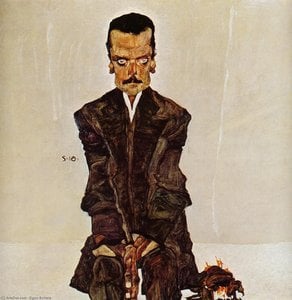
Egon Schiele's 1910 portrait of Eduard Kosmack is not merely a depiction of a man; it’s an excavation of the psyche, rendered with a raw intensity that defines the burgeoning Expressionist movement. Kosmack, a publisher who supported Schiele during a challenging period in his career, becomes less a specific individual and more a vessel for exploring themes of anxiety, introspection, and the unsettling nature of modern existence. The painting’s power lies not in its flattering representation, but in its unflinching honesty – a quality that both captivated and disturbed audiences of its time, and continues to resonate today.
Schiele abandons the traditional pursuit of realistic likeness, instead employing a visual language built on distortion and expressive line. The figure of Kosmack is not smoothly modeled or idealized; rather, he appears almost contorted, his limbs angular and his features subtly exaggerated. This deliberate departure from academic convention reflects Schiele’s rejection of societal norms and his desire to convey inner emotional states over superficial appearances. The brushwork itself is crucial – loose, visible strokes build up a textured surface, creating a sense of restless energy. Impasto, the thick application of paint, further emphasizes this tactile quality, inviting the viewer to not just *see* the portrait but almost *feel* its emotional weight. The muted palette of browns, grays, and ochres contributes to the somber mood, reinforcing the feeling of psychological depth. The flattened perspective adds to the sense of claustrophobia, drawing the viewer into Kosmack’s internal world.
To understand “Eduard Kosmack” fully, one must consider its historical context. Vienna at the turn of the century was a hotbed of artistic and intellectual ferment. The established order was crumbling, giving rise to new ideas about psychology, sexuality, and the human condition. Figures like Sigmund Freud were challenging conventional understandings of the mind, and artists like Gustav Klimt – who served as a mentor to Schiele – were pushing the boundaries of representation. Schiele’s work emerged from this environment, reflecting the anxieties and uncertainties of a rapidly changing world. His willingness to confront taboo subjects, particularly those related to sexuality and mortality, made him a controversial figure, even leading to his brief imprisonment on charges of obscenity. However, it was precisely this uncompromising vision that established him as a pivotal voice in modern art.
The power of “Eduard Kosmack” extends beyond its stylistic innovations to its subtle yet potent symbolism. Kosmack's unsettling smile, coupled with his intense, unwavering gaze, suggests a complex inner life – perhaps one marked by anxiety or hidden desires. The way he holds his hands, bony and clasped tightly, speaks to a sense of restraint or even repression. While the painting doesn’t offer easy answers, it invites us to contemplate the complexities of human emotion and the masks we wear to navigate the world. The very act of portraiture itself becomes a form of psychological inquiry, as Schiele attempts to capture not just Kosmack's physical appearance but also his inner essence. The work is a testament to Schiele’s belief that art should be an expression of subjective experience, rather than a mere imitation of reality.
Culorile din "Eduard Kosmack1910" de Egon Schiele au o intensitate Balanced.
În "Eduard Kosmack1910", o atmosferă Dramatic însoțește o emoție Somber.
Nivelul de contrast al operei "Eduard Kosmack1910" de Egon Schiele este Statement.


1890 - 1918 , Austria
 Previzualizare
 Trimite prin felicitare
 Distribuie
 Detalii despre lucrare
 Ghid
Ghid

 Descarcă imaginea
 Produse similare
 Radiografie
 Galerie foto
 Întrebări și răspunsuri
 Statistici

 Vezi mai mult