Acrilic pe pânzăArtă pentru pereteExpressionism
 1910Modernism
 99.0 x 99.0 cm
Achiziționați o imagine digitală de înaltă rezoluție, îmbunătățită, mult superioară previzualizării online.
Fiecare fișier este pregătit cu meticulozitate de specialiștii noștri interni, utilizând instrumente avansate și retușare manuală expertă. Ne asigurăm că fiecare imagine beneficiază de o claritate excepțională, o acuratețe precisă a culorilor și detalii fine.
Fișierul final este livrat prin e-mail în termen de 72 de ore, optimizat pentru utilizare imediată în medii profesionale, editoriale și de imprimare. Aceasta este aceeași calitate în care au încredere studiouri de design, edituri și galerii de top.
Descărcați un fișier la rezoluție înaltă pentru afișare personală, imprimare și proiecte creative. ( Comandă printul Comandă pictură lucrată manual)
Când alegeți WahooArt.com, nu primiți doar o simplă imagine – primiți o operă de artă digitală îmbunătățită profesional, creată cu precizie și susținută de o garanție de satisfacție. Iată tot ceea ce primești odată cu comanda ta, în mod automat:

Fișierul imaginii digitale la rezoluție înaltă vă va fi trimis prin e-mail în termen de 72 de ore de la finalizarea comenzii – gata pentru utilizare imediată.

Opera ta de artă este optimizată profesional prin intermediul unor instrumente AI avansate și al editării manuale, asigurând un nivel maxim de detalii, claritate și acuratețe a culorilor.

Ai șters sau ai pierdut din greșeală fișierul? Nu îți face griji – ți-l vom retrimite oricând, gratuit.

Bucură-te instant de noua ta operă de artă, fără taxe vamale, taxe de import sau costuri de livrare – descărcările digitale sunt întotdeauna fără taxe.

Asigurăm o reflectare cât mai fidelă a culorilor originale în imaginea ta digitală, prin utilizarea unor instrumente profesionale și a proceselor de gestionare a culorii.

Dacă nu sunteți mulțumit de imaginea digitală achiziționată, o vom revizui sau vă vom returna 100% în termen de 100 de zile - fără nicio întrebare.

Nu ești mulțumit? Primești rambursarea integrală în termen de 100 de zile de la primirea fișierului digital – fără nicio întrebare.

Cumpără 3 imagini, economisește 10% - Cumpără 5, economisește 15% - Cumpără 10+, economisește 20%. Ideal pentru proiecte creative, galerii și agenții.
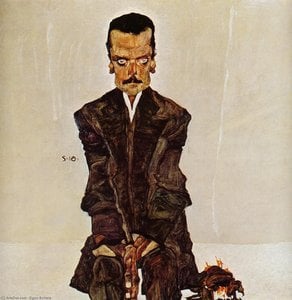
Egon Schiele's 1910 portrait of Arthur Roessler is not merely a depiction of a man; it is a visceral exploration of psychological tension, rendered with the raw intensity that defines the Expressionist movement. The painting captures Roessler, an Austrian art critic and early champion of Schiele’s work, in a state of palpable unease. He leans against a wall, his body angled away from the viewer, creating a sense of withdrawal and guardedness. The suit and tie suggest societal expectation, perhaps even formality, yet they are utterly at odds with the internal turmoil radiating from Roessler's face and posture. Schiele doesn’t present us with a celebratory portrait of a patron; instead, he offers an unflinching glimpse into a private moment of vulnerability, a man seemingly burdened by unseen anxieties.
Schiele’s technique in ‘Arthur Roessler’ is central to its emotional power. He eschews the smooth, idealized surfaces favored by earlier portraitists, opting instead for visible brushstrokes that seem to claw at the canvas. The color palette is dominated by muted browns and ochres, creating a somber atmosphere that amplifies the sitter's melancholy. This deliberate restriction of color isn’t accidental; it serves to focus attention on Roessler’s face – specifically his eyes and mustache – which become anchors for the viewer’s gaze. The angularity of the figure, particularly in the hands and limbs, is characteristic of Schiele’s style, a departure from traditional anatomical representation that prioritizes emotional expression over realistic form. The large scale of the painting—99 x 99 cm—further intensifies this effect, enveloping the viewer in Roessler's disquiet.
The creation of ‘Arthur Roessler’ occurred at a pivotal moment in Schiele’s career. Having recently broken away from the more conservative teachings of the Academy of Fine Arts Vienna, he was forging his own path, one that embraced subjectivity and psychological depth. Arthur Roessler played a crucial role in this development. He recognized Schiele's talent early on, providing not only financial support but also intellectual encouragement. Roessler’s belief in Schiele allowed him to exhibit his work and gain recognition within the Viennese art scene. However, it is important to note that Schiele wasn’t simply creating a thank-you portrait; he was engaging with Roessler as a complex individual, exploring the hidden layers beneath the surface of social decorum. The painting reflects a period where Schiele was experimenting with portraiture, seeking to capture not just likeness but also the inner life of his subjects.
While seemingly straightforward in its depiction, ‘Arthur Roessler’ is rich in symbolic potential. The very act of portraying a man in such a vulnerable state challenges conventional notions of portraiture, which traditionally aimed to project power and status. The hands, prominently displayed, are often interpreted as representing the creative force or intellectual labor – yet here they appear tense and constricted, suggesting a sense of frustration or limitation. Roessler’s gaze, averted from the viewer, hints at an internal struggle, a reluctance to fully reveal himself. Schiele's work frequently grapples with themes of mortality, sexuality, and alienation; while not explicitly present in this portrait, these undercurrents contribute to its overall sense of unease. The painting invites us to contemplate the complexities of human emotion and the masks we wear to navigate social interactions.
Ultimately, ‘Arthur Roessler’ is a testament to Schiele's ability to transform a simple portrait into a profound psychological study. It remains a compelling work for its honesty, its technical brilliance, and its enduring relevance in an age still grappling with questions of identity and emotional authenticity.


1890 - 1918 , Austria

 Previzualizare
 Trimite
 Distribuie
 Detalii despre lucrare

 Descarcă
 Produse similare
 Radiografie
 Diapozitive automate
 Vezi mai mult