Pictură în ulei pe pânză, realizată manual de artiștii noștri la dimensiunea și ramele dorite de dumneavoastră, pe comandă. ( Comută pe versiunea Print
Treci la imagine digitală)
Alegeți dintre dimensiunile noastre prestabilite, care respectă proporțiile originale ale operei de artă.
Puteți introduce propriile dimensiuni pentru a se potrivi unui anumit cadru sau spațiu. Dacă dimensiunea selectată nu corespunde proporțiilor imaginii originale, vom decupa opera de artă sau vom extinde pictura cu elemente suplimentare pictate manual. O simulare digitală vă va fi trimisă pentru aprobare înainte de începerea producției.
Vă rugăm să rețineți că previzualizarea de pe ecran nu reflectă decuparea sau extinderea reală. Doar macheta va arăta cu exactitate compoziția finală.
Deși sunt disponibile dimensiuni personalizate, vă recomandăm să selectați o dimensiune din lista predefinită pentru a păstra proporțiile originale.
Livrare în întreaga lume () în 3-4 săptămâni, în loc de cele 5 săptămâni standard. (3 Octombrie). Fără compromisuri în ceea ce privește calitatea.
Cuenca
Dimensiune reproducere
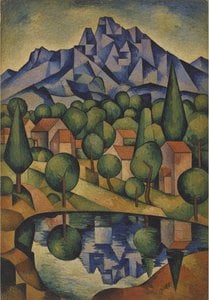
In his 1934 masterpiece, Cuenca, David Bomberg invites the viewer into a profound meditation on solitude and the enduring resilience of life amidst the overwhelming grandeur of nature. This oil on canvas transcends a mere topographical record of a Spanish hillside; it is an evocative window into a landscape where human presence and geological majesty exist in a delicate, poetic tension. The painting captures a panoramic view of a town nestled precariously yet harmoniously upon a rugged slope, where humble dwellings are scattered like quiet thoughts across the vast, undulating terrain. Through his masterful command of the medium, Bomberg distills the essence of this mountainous vista, offering an experience that is as much about emotional depth as it is about visual splendor.
The composition is anchored by a sense of monumental scale, with towering mountains dominating the horizon and creating a backdrop of immense power. In the foreground, trees punctuate the view, providing essential textural contrast and guiding the eye into the expansive scene. The sky, draped in soft, cloudy layers, lends an atmospheric weight to the work, suggesting the shifting moods of a mountain climate. This deliberate framing creates a captivating dialogue between the intimacy of the human settlement and the infinite scale of the natural world, fostering a contemplative space where themes of permanence and vulnerability intertwine.
Rooted in the transformative principles of Modernism, Cuenca showcases Bomberg’s sophisticated engagement with the legacies of Cubism and the structural insights of Cézanne. The artist employs a technique that prioritizes geometric simplification and multiple perspectives to sculpt spatial depth within the landscape. Rather than relying on rigid outlines, he utilizes loose, expressive brushstrokes that capture the very dynamism of the mountain air, imbuing the scene with a palpable sense of movement and life. This fluid application of paint allows the forms of the mountains and buildings to emerge organically from the canvas.
The color palette is masterfully restrained, leaning toward muted, earthy tones—predominantly rich browns and deep greens—that reflect the subdued, soulful hues characteristic of an autumnal landscape. Bomberg’s skillful use of tonal gradations allows him to define mass and volume, creating a sense of "the artist's consciousness of mass." This approach ensures that every element, from the smallest stone structure to the most distant peak, possesses a physical presence that feels both grounded and ethereal. For the discerning collector or interior designer, this work offers a sophisticated interplay of texture and tone, making it a timeless addition to any curated space.
To understand Cuenca is to understand a pivotal moment in Bomberg’s artistic evolution. Created during a period when the artist was moving away from the radical, fractured geometries of his earlier Cubo-Futurist years, this work represents a return to an aesthetic rooted in nature and organic form. The trauma of the First World War and the subsequent shift toward a more figurative, landscape-driven style are palpable here; there is a search for the sublime within the natural world that replaces the mechanical fervor of his youth. The painting reflects a period of profound transition, where the artist sought to realize the poetry found in mankind's contemplation of nature.
The emotional impact of the piece lies in its ability to evoke a sense of quiet awe. It is a work that speaks to the heart of anyone moved by the beauty of the untamed world and the quiet strength of those who inhabit it. Whether viewed as a study of light and shadow or as a symbolic representation of human endurance, Cuenca remains a visually arresting composition. For those seeking to bring a sense of historical depth and tranquil majesty into their surroundings, this reproduction serves as a powerful testament to Bomberg’s ability to capture the very breath of the landscape.
"Cuenca" de David Bomberg a fost creat(ă) în 1934.
Pagina Ghid pentru "Cuenca" de David Bomberg oferă o fișă informativă imprimabilă în două pagini: opera de artă însoțită de tabelul său de identificare, o bandă decenală care o plasează în intervalul de viață al artistului, alte lucrări ale acestuia, paleta de culori măsurată și citări gata de copiat în patru stiluri diferite.
Da - opera de artă este păstrată în țara de origine a artistului. Țara natală a artistului este Regatul Unit, iar muzeul care păstrează originalul se află în Regatul Unit.
Artistul din spatele operei „Cuenca” este David Bomberg. Lucrarea este catalogată sub numele lui David Bomberg.
Originalul „Cuenca” se află la Walker Art Gallery, iar opera este încă protejată de drepturile de autor.
"Cuenca" de David Bomberg combină tehnica Oil On Canvas cu stilul Cubist Landscape. Tehnica și mișcarea descriu modul de execuție și stilul operei.
Când „Cuenca” a fost creat în 1934, David Bomberg – născut în 1890 – avea 44 ani.
Născut din părinți imigranți polonezi de origine evreică, Abraham și Rebecca Bomberg, artistul a studiat inițial la City and Guilds Technical Art School, înainte de a se specializa ca litograf în Birmingham.
A studiat sub îndrumarea lui Walter Sickert la Westminster School of Art (1908-1910), fiind influențat de accentul pus de Sickert pe formă și pe viața urbană. O expunere semnificativă la opera lui Paul Cézanne a avut loc prin intermediul expoziției din 1910 organizată de Roger Fry, intitulată „Manet and the Post-Impressionists”. A absolvit Slade School of Art (1911), unde a câștigat Premiul Tonks pentru desenul său realizat după colegul de studii, Isaac Rosenberg.
Experiențele trăite ca soldat de rang simplu în timpul Primului Război Mondial i-au impactat profund viziunea artistică, conducându-l spre o îndepărtare de abstractism.
Anii 1920 au marcat adoptarea unui stil mai figurativ de către Bomberg, concentrându-se pe portrete și pe peisaje desprinse direct din natură. Artistul a dezvoltat o tehnică tot mai expresionistă, marcată de un impasto texturat și de o intensitate emoțională profundă.
Călătoriile sale extensive prin Orientul Mijlociu (în special în Palestina) și prin Europa și-au influențat semnificativ opera ulterioară. Reprezentările sale ale Ierusalimului sunt deosebit de remarcabile.
1890 - 1957 , Regatul Unit