

Lucrarea de artă afișată pe această pagină este protejată de legile privind drepturile de autor, ceea ce înseamnă că nu putem crea sau vinde în mod legal o reproducere identică. Această protecție este garantată prin acorduri internaționale, precum Convenția de la Berna și de legile naționale, inclusiv cele prevăzute de Legea dreptului de autor din S.U.A. – Titlul 17. Toate drepturile rezervate. Orice reproducere neautorizată este interzisă.
Această metodă respectă pe deplin reglementările privind drepturile de autor, deoarece nu implică copierea sau duplicarea operei protejate. În schimb, este o reinterpretare creativă – o pictură nouă, influențată de original, dar care nu este identică cu acesta.
Printuri giclée sau pe canvas de calitate muzeală, cu proces de producție rapid și opțiuni flexibile de finisare. ( Comandă pictură realizată manual Comută pe Imagine Digitală)





























Alegeți dintre dimensiunile noastre prestabilite, care respectă proporțiile originale ale operei de artă.

Introduceți lățimea și înălțimea necesare pentru a se potrivi ramei sau peretelui dumneavoastră. O printare poate fi doar tăiată, niciodată extinsă dincolo de dimensiunea imaginii originale, astfel încât o dimensiune cu o formă diferită va pierde o parte din imagine. Vă trimitem o simulare digitală pentru aprobare înainte de a imprima orice. Imaginea afișată pe această pagină nu prezintă tăierea reală — doar simularea arată acest lucru.
Livrare în întreaga lume () în 2 săptămâni, în loc de cele 4/5 săptămâni standard. (10 Noiembrie)
Alaïa Fashion Drawing
Dimensiune reproducere
Claude Parent’s 2016 “Alaïa Fashion Drawing” isn't merely a depiction of a dress; it’s a distilled essence of modernism, a geometric meditation on form and movement. The drawing immediately commands attention with its stark simplicity – a grayscale world dominated by the assertive presence of Alaïa’s design. It feels both intensely contemporary and deeply rooted in Parent’s pioneering architectural philosophy, particularly his concept of the “Oblique Function,” which sought to liberate architecture from rigid right angles and embrace dynamic, flowing spaces. The image isn't about replicating a photograph; it’s an interpretation, a reduction to its most essential elements – line, shape, and contrast – mirroring Parent’s approach to designing buildings that responded intuitively to the human body in motion.
Understanding this drawing requires acknowledging Claude Parent's broader artistic vision. He wasn’t simply an architect; he was a theorist who questioned conventional design principles, advocating for architecture that anticipated and accommodated human movement. This philosophy is powerfully reflected in the “Alaïa Fashion Drawing.” The dress isn’t just clothing; it’s a study in dynamic form – a visual representation of how a garment can interact with the body in motion. The diagonal line, a recurring motif in Parent's architectural work, symbolizes this fluidity and suggests a continuous, flowing movement.
His background as an apprentice under Ionel Schein, coupled with his early involvement in the Espace group – a collective of artists exploring radical new ideas about space and form – profoundly shaped his approach to design. Parent’s work consistently challenged established norms, pushing boundaries and seeking innovative solutions that prioritized human experience. The drawing embodies this spirit of experimentation and intellectual rigor.
The deliberate use of the diagonal line carries a potent symbolic weight. It can be interpreted as representing disruption, fragmentation, or even a sense of instability – mirroring Parent’s critique of rigid architectural forms. However, it also suggests dynamism and forward momentum, reflecting his belief that architecture should respond to human movement. The simplified representation of the figure itself contributes to this emotional resonance; by stripping away extraneous details, Parent focuses on the essential form, inviting viewers to contemplate the underlying structure and principles at play.
The drawing’s overall effect is one of quiet intensity – a powerful statement about design, movement, and the relationship between form and function. It's not an invitation to romanticize fashion; rather, it’s a rigorous exploration of geometric principles and their application to visual representation.
Created in 2016, this drawing represents a late-career work for Claude Parent, building upon his decades of architectural innovation. It's significant not just as a standalone piece but as a testament to his enduring influence on modern design. Parent’s legacy extends far beyond architecture; his ideas have resonated with artists and designers across various disciplines. The “Alaïa Fashion Drawing” serves as a compelling example of how his principles – emphasizing dynamism, geometric precision, and a critical engagement with established norms – can be applied to seemingly disparate fields.
Further research into Parent’s work reveals a consistent thread of intellectual curiosity and a relentless pursuit of innovative design solutions. The drawing stands as a powerful reminder of his unique vision and its lasting impact on the world of art and architecture.
Tehnica utilizată pentru "Alaïa Fashion Drawing" de Claude Parent este Acrylic On Paper, iar lucrarea datează din 2016.
Pagina Statistici pentru "Alaïa Fashion Drawing" de Claude Parent prezintă statistici privind vizitele publice: numărul de vizite lunare ale acestei opere, o comparație cu cele mai vizionate lucrări ale artistului și proveniența vizitatorilor.
În "Alaïa Fashion Drawing", un Statement contrast se împletește cu o Unified Palette armonie.


1923 - 2016 , Franța

Embark on a visual journey through the evolution of fashion photography. Discover how masters like Gianfranco Ferré blended geometry, surrealism, and texture to redefine high-fashion art for collectors and connoisseurs of luxury imagery.
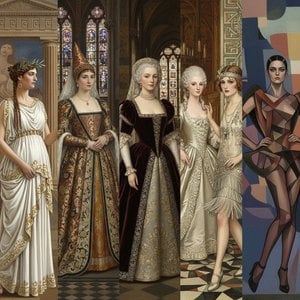
Explore the breathtaking intersection of fine art and high fashion. Discover how iconic masterpieces from Art Deco to Impressionism have shaped the world of luxury couture and timeless design in this curated visual journey.

Elevate your artistic practice with this expert guide to mastering the line. Discover advanced techniques in graphite, charcoal, and contour drawing designed for art students seeking technical precision and expressive depth in their fine art studies.

Explore the profound elegance of minimalist art. Discover how the precision of a single line transforms simple geometry into timeless masterpieces for the discerning collector seeking sophistication and depth in fine art acquisitions.
 Previzualizare
 Trimite prin felicitare
 Distribuie
 Detalii despre lucrare
 Ghid
Ghid

 Descarcă imaginea
 Produse similare
 Radiografie
 Galerie foto
 Întrebări și răspunsuri
 Statistici


 Vezi mai mult









 Opțiunea cu sticlă este disponibilă doar pentru dimensiuni de sub 110 cm


