PrevizualizarePrevizualizare Previzualizare ARPrevizualizare AR Comută pe Print Comută pe PrintComandă pictură lucrată manual Comandă pictură lucrată manual TrimiteTrimite
Detalii despre lucrareDetalii despre lucrare Adaugă la favorite Adaugă la favorite DescarcăDescarcă Produse similareProduse similare RadiografieRadiografie Diapozitive automateDiapozitive automate StatisticiStatistici

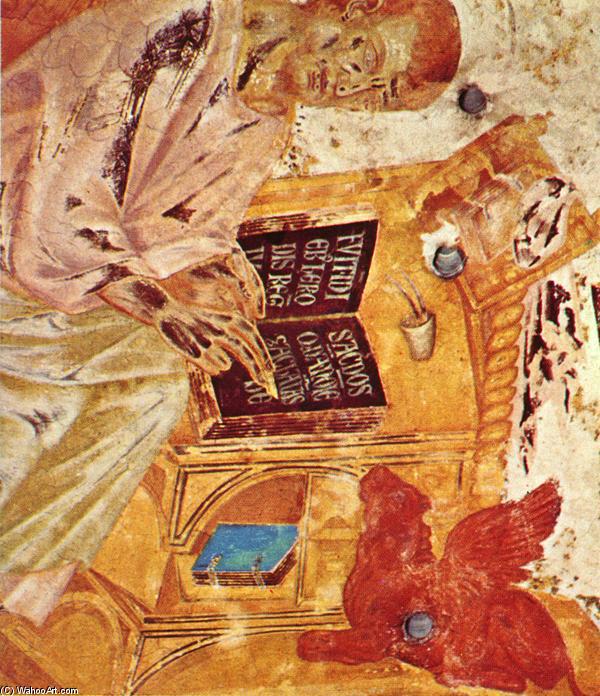
St Luke (detail)

Explore Cimabue’s ‘St Luke (detail)’ – a pivotal Early Renaissance fresco showcasing Byzantine influence & linear realism. Discover 13th-century Italian art at its finest!

Cimabue (1240-1302): Pionierul picturii italiene! Explore stilul său bizantin & renascentist, figuri realiste și influența asupra lui Giotto. Descoperă capodoperele sale acum!

Achiziționați o imagine digitală de înaltă rezoluție, îmbunătățită, mult superioară previzualizării online.

Fiecare fișier este pregătit cu meticulozitate de specialiștii noștri interni, utilizând instrumente avansate și retușare manuală expertă. Ne asigurăm că fiecare imagine beneficiază de o claritate excepțională, o acuratețe precisă a culorilor și detalii fine.

Fișierul final este livrat prin e-mail în termen de 72 de ore, optimizat pentru utilizare imediată în medii profesionale, editoriale și de imprimare. Aceasta este aceeași calitate în care au încredere studiouri de design, edituri și galerii de top.

Imagine Digitală

Descărcați un fișier la rezoluție înaltă pentru afișare personală, imprimare și proiecte creative. (Comută pe Print Comută pe PrintComandă pictură lucrată manual Comandă pictură lucrată manual)

Preț total

$ 24,90

Inclus în fiecare comandă de imagini digitale

Livrare digitală de expertiză, garantată

Când alegeți WahooArt.com, nu primiți doar o simplă imagine – primiți o operă de artă digitală îmbunătățită profesional, creată cu precizie și susținută de o garanție de satisfacție. Iată tot ceea ce primești odată cu comanda ta, în mod automat:

shipping_icon
Livrare rapidă prin e-mail

Fișierul imaginii digitale la rezoluție înaltă vă va fi trimis prin e-mail în termen de 72 de ore de la finalizarea comenzii – gata pentru utilizare imediată.

canvas_icon
Fișier digital optimizat prin IA

Opera ta de artă este optimizată profesional prin intermediul unor instrumente AI avansate și al editării manuale, asigurând un nivel maxim de detalii, claritate și acuratețe a culorilor.

insurance_icon
Retransmitere gratuită pe viață

Ai șters sau ai pierdut din greșeală fișierul? Nu îți face griji – ți-l vom retrimite oricând, gratuit.

tax_icon
Fără taxe de import – Întotdeauna

Bucură-te instant de noua ta operă de artă, fără taxe vamale, taxe de import sau costuri de livrare – descărcările digitale sunt întotdeauna fără taxe.

color_icon
Garanția acurateții culorilor

Asigurăm o reflectare cât mai fidelă a culorilor originale în imaginea ta digitală, prin utilizarea unor instrumente profesionale și a proceselor de gestionare a culorii.

return_icon
Garanție de satisfacție de 100 de zile

Dacă nu sunteți mulțumit de imaginea digitală achiziționată, o vom revizui sau vă vom returna 100% în termen de 100 de zile - fără nicio întrebare.

guarantee_icon
Garanție de returnare 100% a banilor

Nu ești mulțumit? Primești rambursarea integrală în termen de 100 de zile de la primirea fișierului digital – fără nicio întrebare.

discount_icon
Reduceri pentru comenzi în volum

Cumpără 3 imagini, economisește 10% - Cumpără 5, economisește 15% - Cumpără 10+, economisește 20%. Ideal pentru proiecte creative, galerii și agenții.

Informații rapide

  • medium: Fresco
  • subject: St. Luke the Evangelist
  • influences: Byzantine art
  • dimensions: 450 x 900 cm
  • movement: Early Renaissance
  • artist: Cimabue

Test de cultură artistică

Fiecare întrebare are un singur răspuns corect.

Întrebare 1:
To what artistic period does Cimabue's 'St Luke (detail)' primarily belong?
Întrebare 2:
Cimabue is recognized for moving *away* from which dominant artistic style of his time?
Întrebare 3:
What painting technique was used to create 'St Luke (detail)'?
Întrebare 4:
The open books held by St. Luke symbolically represent what?
Întrebare 5:
What is a defining characteristic of Cimabue's style as he moved towards greater realism?

A Glimpse into a Changing World: Cimabue’s *St Luke (detail)*

This captivating detail from Cimabue's fresco of St. Luke offers a profound window into the pivotal moment when Italian art began to break free from the rigid conventions of the Byzantine tradition. Painted around 1280, this section – measuring an impressive 450 x 900 cm in its entirety – isn’t merely a religious depiction; it's a testament to artistic innovation and the dawn of a new era in painting.

Subject & Narrative

The fragment focuses on St. Luke, traditionally considered the author of the Gospel of Luke and the Acts of the Apostles, and patron saint of artists. He is depicted as a scholar or cleric, deeply engrossed in his work. He holds open several books, likely representing the scriptures he penned, and extends a hand in what appears to be a gesture of teaching or revelation. The surrounding architectural elements suggest an interior setting – perhaps a study or scriptorium – conducive to learning and contemplation. While part of a larger narrative scene, this detail powerfully conveys Luke’s intellectual pursuit and devotion.

Style & Technique: Bridging Byzantium and the Renaissance

Cimabue (born Cenni di Pepo), active in Florence and Pisa, was instrumental in transitioning from the Italo-Byzantine style to a more naturalistic approach. While still exhibiting hallmarks of Byzantine art – such as the use of gold leaf (not visible in this detail but present in the full fresco), flattened perspective, and hierarchical scale – this work demonstrates Cimabue’s burgeoning interest in realism. Notice the attempts at modeling forms through subtle shading, a departure from the flat, iconic representations prevalent in earlier Byzantine works. The technique employed is *fresco*, where pigments are applied to wet plaster, creating a durable and vibrant surface. This explains the textured appearance with visible brushstrokes and variations in paint application.

Color & Composition

The color palette is dominated by warm earth tones – ochres, yellows, and reds – lending the scene an air of antiquity and solemnity. The composition is dense and layered, characteristic of fresco work, with figures overlapping and receding into a shallow depth of field. Linearity is key; defined lines structure the figures and architectural elements, contributing to the overall sense of order. Geometric shapes – rectangular books, arched doorways, rounded drapery – further reinforce this structured aesthetic.

Symbolism & Historical Context

The open books are potent symbols of knowledge, scripture, and divine inspiration. St. Luke’s gesture signifies instruction or the transmission of sacred truth. Created during a period of significant social and religious change in Italy, Cimabue's work reflects a growing humanistic interest alongside continued devotion to Christian themes. He was a contemporary of Giotto, often considered his student, and both artists played crucial roles in laying the foundations for the Renaissance. Vasari’s “Lives of the Most Excellent Painters, Sculptors, and Architects” provides valuable (though sometimes debated) insights into Cimabue's life and career.

Emotional Impact & Aesthetic Appeal

Despite its age, this detail from *St Luke* evokes a sense of quiet contemplation and reverence. The artist’s skillful use of line, color, and composition draws the viewer into the scene, inviting reflection on themes of faith, knowledge, and artistic creation. For collectors and interior designers, a high-quality reproduction of this work offers a timeless piece that blends historical significance with aesthetic beauty – a subtle yet powerful statement for any space. It’s a reminder of art's capacity to both reflect and shape our understanding of the world.

Biografie artist

The Florentine Dawn: Cimabue and the Transition from Byzantium

Giovanni Cimabue, born Cenni di Pepo around 1240 in Florence, stands as a monumental figure—a bridge between the established artistic traditions of the Byzantine world and the burgeoning innovations that would define the Italian Renaissance. His life, though partially obscured by time and romanticized accounts – most notably those penned by Giorgio Vasari centuries later – marks an undeniable turning point in Western art history. Cimabue wasn’t simply a painter; he was a courageous innovator who dared to subtly challenge artistic conventions, laying the groundwork for the revolutionary changes that would soon sweep across Italy. Even his nickname, believed to mean “bull-headed,” hints at a strong will and perhaps a rebellious spirit—qualities demonstrably present in his willingness to experiment with form and expression. He represents a crucial moment where art began to shift from being solely devotional imagery towards something more humanistic and emotionally resonant.

Early Influences and Artistic Development

Initially immersed in the Italo-Byzantine style prevalent throughout Florence, Cimabue’s early work adhered closely to established aesthetic principles: flattened figures adorned with shimmering gold leaf, symbolic rather than realistic depictions of space, and a profound focus on religious iconography. These were the hallmarks of Byzantine art, deeply ingrained in the artistic landscape of Italy during his formative years. However, even within these constraints, a nascent desire for naturalism began to emerge. He wasn’t content merely replicating existing forms; he sought to imbue his paintings with a greater sense of life and emotional depth. The influence of Giunta Pisano, a Florentine painter who had worked on Byzantine mosaics in Pisa, is often cited as a key factor in this shift. Cimabue also studied the works of Coppo di Marcovaldo, another prominent artist of the time. While the precise nature of his early training remains debated, it’s likely he honed his skills within Florentine workshops, absorbing the techniques and influences of the time while simultaneously developing his own unique artistic voice. The Byzantine style, characterized by its formality and spiritual focus, provided him with a solid foundation, but Cimabue began to subtly introduce elements that would foreshadow the coming Renaissance—a greater attention to volume, more expressive facial features, and a nascent understanding of spatial relationships. This wasn’t a sudden break from tradition, but rather a gradual evolution, a delicate balancing act between honoring the past and embracing new possibilities.

Masterpieces and Artistic Innovations

Cimabue's legacy is cemented through a series of breathtaking works that showcase his evolving style. The *Maestà* (Louvre), originally created for the Church of San Francesco in Pisa, stands as one of his most celebrated masterpieces. This monumental altarpiece exemplifies his mastery of composition and use of color, while simultaneously hinting at the shift away from rigid Byzantine conventions. The figures, though still possessing a degree of formality, exhibit a newfound sense of volume and presence. The *Crucifixion* (San Domenico, Arezzo), dating around 1270, is particularly significant as an early demonstration of his departure from strict Byzantine norms. Here, the proportions are more realistic, and the emotional weight of the scene is palpable—a stark contrast to the often-distant depictions found in earlier religious art. Further evidence of Cimabue’s innovative spirit can be seen in works like the *Flagellation of Christ* (Frick Collection), generally attributed to his workshop. This complex composition reveals an evolving understanding of perspective and spatial relationships, showcasing a growing interest in creating more immersive and believable scenes. His contributions weren't limited to panel paintings; Cimabue also excelled as a mosaicist, contributing significantly to the decoration of the Baptistery of Florence—though these mosaics have unfortunately suffered from deterioration over time.

A Pivotal Teacher: Giotto and Beyond

Perhaps Cimabue’s most enduring legacy lies in his role as the teacher of Giotto di Bondone. While historical accounts vary regarding the exact nature of their relationship, it is widely accepted that Giotto received crucial training under Cimabue's guidance. However, Giotto would ultimately surpass his master, revolutionizing Italian painting with an even more radical embrace of naturalism and emotional realism. It’s a testament to Cimabue’s skill as a teacher that he fostered such talent, even knowing it might eclipse his own achievements. The story, often recounted by Vasari, of Giotto playfully painting a fly on Cimabue's face speaks volumes about the dynamic between master and pupil—a playful rivalry that ultimately pushed both artists to greater heights. Cimabue’s influence extended beyond Giotto, impacting numerous other artists of the period. He challenged the artistic norms of his time, demonstrating that art could be more than just religious symbolism; it could also reflect human emotion and experience. His willingness to experiment with form, proportion, and expression paved the way for the innovations of the Renaissance, establishing him as a crucial transitional figure in the history of Western art.

Enduring Significance

Cimabue passed away in 1302 in Pisa, leaving behind a body of work that continues to captivate and inspire. Despite his significant contributions, details surrounding his later life remain scarce. However, his artistic legacy resonates powerfully through the works of his students and the evolution of Italian art. He represents a crucial step in the development of Western painting, moving away from the stylized conventions of the Byzantine era towards a more humanistic and naturalistic approach. His paintings are not merely historical artifacts; they are windows into a pivotal moment in artistic history—a time when artists began to question established norms and explore new possibilities. He was a pioneer, a visionary who dared to challenge the status quo and lay the foundations for the artistic brilliance that would define the Renaissance.

Cimabue

Cimabue

1240 - 1302 , Italia

Detalii rapide

  • Artistic Movement Or Style: Bizantino & Renasc.
  • Artists Or Movements Influenced By This Artist:
    • Giotto
    • Duccio
  • Artists Who Influenced This Artist:
    • Giunta Pisano
    • Coppo
  • Date Of Birth: c. 1240
  • Date Of Death: 1302
  • Full Name: Giovanni Cimabue
  • Nationality: Italian
  • Notable Artworks:
    • Maestà
    • Crucif.
    • Flagel.
  • Place Of Birth: Florence, Italia