CONSULTAȚIE GRATUITĂ ÎN ARTE VIZUALE

x
Comandă reproducere pictată Comandă reproducere pictatăCumpără imaginea Cumpără imaginea TrimiteTrimite
DetaliiDetalii Adaugă la favorite Adaugă la favorite DescarcăDescarcă SimilareSimilare Raze XRaze X DiaporamaDiaporama

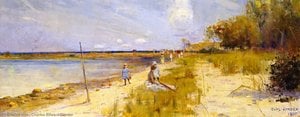
Springime

Experience 'Springime' by Charles Edward Conder (1892). A stunning neo-romantic landscape featuring vibrant pink flowers & warm hues. Hand-painted reproductions available.

Charles Edward Conder (1868-1909) a fost un pictor australian influent, parte a școlii Heidelberg, renumit pentru scenele sale de porturi și peisaje cu influențe impresioniste. Descoperiți opere memorabile precum "Departure of the Orient" și "A Holiday at Mentone" pe WahooArt!

Giclée / Imprimare artistică

Print giclée sau pe canvas de calitate muzeală, cu producție rapidă și opțiuni flexibile de finisare.

P118B $10
P118H $10
P118W $10
P438Z $10
P508JH $12
P508YH $12
P805H $10
P805Z $10
P919BZ $10
P919G $10
P919XJ $10
P959ZH $10
P968JZ $12
W106C $8
W218G $10
W218JH $8
W218Y $10
W307PJ $10
W316G $10
W316PJ $8
W316Y $10
W398PJ $8
W4111J $10
W500HY $15
W500JH $15
W692G $12
W849H $8
W940BG $15
W953PJ $8

Standard
custom
CM
INCH

Alegeți dintre dimensiunile noastre prestabilite, care respectă proporțiile originale ale operei de artă.

lățime
înălțime

Puteți introduce propriile dimensiuni pentru a se potrivi unui anumit cadru sau spațiu. Dacă dimensiunea selectată nu corespunde proporțiilor imaginii originale, vom decupa lucrarea de artă sau vom extinde imaginea cu margini oglindite sau cu o culoare uniformă. Un mockup digital va fi trimis pentru aprobarea dumneavoastră înainte de începerea producției.
Vă rugăm să rețineți că previzualizarea de pe ecran nu reflectă decuparea sau extinderea reală. Doar mockup-ul va arăta cu exactitate compoziția finală.
Deși dimensiunile personalizate sunt disponibile, vă recomandăm să selectați o dimensiune din lista predefinită pentru a păstra proporțiile originale.

Livrare în întreaga lume () în 2 săptămâni, în loc de cele 4/5 săptămâni standard. (4 Iulie)

why_choose_icon
Livrare expres gratuită la nivel mondial
why_choose_icon
Pânză de in de înaltă calitate
why_choose_icon
Asigurare completă pentru transport
why_choose_icon
Garanție de rambursare a taxelor vamale
why_choose_icon
Garanția fidelității culorilor
why_choose_icon
Politica de retur de 60 de zile (doar pentru defecte)
why_choose_icon
Garanție 100% de rambursare
why_choose_icon
Reducere la comenzi multiple

Preț total

-

reproduction

Springime

Giclée / Imprimare artistică

Dimensiune reproducere

-

Preț total calculat

-

Informații rapide

  • Medium: Oil on canvas
  • Year: 1892
  • Subject or theme: Springtime scene
  • Notable elements: Pink flowers, warm hues
  • Title: Springime
  • Artistic style: Neo-romantic landscape
  • Influences: British neo-romantic

Test de cunoștințe despre artă

Fiecare întrebare are un singur răspuns corect.

Întrebare 1:
What is the primary subject of Charles Edward Conder’s ‘Springime’?
Întrebare 2:
In what year was ‘Springime’ painted by Charles Edward Conder?
Întrebare 3:
The painting ‘Springime’ is currently housed at which gallery?
Întrebare 4:
Which artistic movement is ‘Springime’ most closely associated with?
Întrebare 5:
What is a key characteristic of Conder’s style as demonstrated in ‘Springime’?

Descriere obiect de colecție

A Moment of Renewal: Introducing Charles Edward Conder’s “Springime”

Charles Edward Conder's "Springime," painted in 1892, isn’t merely a depiction of springtime; it’s an immersion into the very essence of renewal. This oil on canvas, currently residing within the hallowed halls of the Tate Gallery in London, captures a fleeting moment of vibrant beauty – a celebration of burgeoning life against a backdrop of warm, inviting hues. Conder, a pivotal figure in Australia's Heidelberg School movement, masterfully blends Impressionistic techniques with a distinctly Australian sensibility, creating an artwork that resonates with both tranquility and dynamic energy.

The painting immediately draws the eye to its foreground: a profusion of delicate pink blossoms clustered around a graceful tree. These aren’t simply flowers; they are symbols of rebirth, mirroring the season's promise of new beginnings. Behind this vibrant display, a smaller, more distant tree provides depth and scale, anchoring the scene within a broader landscape. The careful layering of colors – from the warm yellows dominating the sky to the subtle greens of the foliage – establishes a harmonious balance between light and shadow, creating an atmosphere that is both luminous and deeply felt.

The Heidelberg School: A New Vision of Australian Art

To fully appreciate “Springime,” it’s crucial to understand its context within the Heidelberg School. Emerging in late 19th-century Australia, this group of artists sought to capture the unique beauty and spirit of their homeland – a landscape vastly different from the European traditions dominating the art world at the time. Rejecting academic formality, they embraced *plein air* painting, working directly outdoors to observe and record nature’s nuances with immediacy and sensitivity. Conder, along with Tom Roberts and Frederick McCubbin, became central figures in this movement, developing a distinctive style characterized by loose brushstrokes, vibrant colors, and an emphasis on everyday Australian life.

Conder's work often reflected his own experiences – his early years in India, his move to Australia, and his travels throughout Europe. “Springime,” however, feels distinctly rooted in the Australian landscape, capturing not just a visual representation but also a feeling of optimism and connection to the natural world. The painting’s composition subtly evokes the vastness of the Australian outback, hinting at both its beauty and its inherent challenges.

Technique and Symbolism: A Dance of Light and Color

Conder's masterful use of color is a defining characteristic of “Springime.” He employs broken brushstrokes to create an impressionistic effect, allowing the colors to blend and shimmer in the viewer’s eye. The warm yellows and oranges of the sky are juxtaposed with the cooler greens and pinks of the foliage, creating a dynamic interplay of light and shadow. The artist's attention to detail is evident in the delicate rendering of the flowers and leaves, as well as the subtle variations in tone that suggest depth and texture.

Beyond its aesthetic qualities, “Springime” carries symbolic weight. The blossoming tree represents hope and regeneration, while the distant landscape suggests a connection to something larger than oneself. The painting’s overall mood is one of serenity and contemplation – an invitation to pause and appreciate the simple beauty of nature. It's a testament to Conder's ability to capture not just what he saw but also what he felt.

Bringing “Springime” Home: Reproductions and Artistic Inspiration

“Springime” is more than just a painting; it’s an experience. High-quality reproductions offer a remarkable way to bring this captivating artwork into your home or office, adding a touch of timeless beauty and tranquility to any space. Whether you're drawn to the painting's vibrant colors, its evocative symbolism, or simply its undeniable charm, “Springime” is sure to inspire and delight.

Opere de artă similare


Biografie artist

Early Life and Artistic Journey

Charles Edward Conder (1868 – 1909) was an English-born painter, lithographer and designer who left an indelible mark on the art world. Born in Tottenham, Middlesex, the second son of six children, of James Conder, civil engineer and Mary Ann Ayres, he spent several years as a young child in India until the death of his mother (aged 31 years) on 14 May 1873 in Bombay, when Charles was four; he was then sent back to England and attended a number of schools including a boarding school at Eastbourne, which he attended from 1877. He left school at 15, and his very religious, non-artistic father, against Charles’s natural artistic inclinations, decided that he should follow in his footsteps as a civil engineer.

Artistic Career in Australia

In 1884, at the age of 16, he was sent to Sydney, Australia, where he worked for his uncle, a land surveyor for the New South Wales government. However he disliked the work, much preferring to draw the landscape rather than surveying it. In 1886, he left the job and became an artist for the *Illustrated Sydney News*, where he was in the company of other artists such as Albert Henry Fullwood and Frank Mahony. He also attended the painting classes of Alfred James Daplyn and had joined the Art Society of New South Wales. During his time in Melbourne, Conder collaborated with Tom Roberts, whom he had previously met in Sydney, sharing a studio and exploring new artistic horizons. The influence of Roberts’s expressive style undoubtedly shaped Conder's own approach to painting.

The Heidelberg School and Notable Works

Conder’s masterpiece, *Departure of the Orient – Circular Quay* (1888), showcased his newfound mastery of form and brushwork. This dockside scene, depicting the bustling harbour at Sydney Cove at the moment when the *has cast off for her voyage to England*, was quickly purchased by the Art Gallery of New South Wales, making it Conder’s first work to enter a public collection. It exemplifies the Heidelberg School's fascination with capturing fleeting moments of light and atmosphere—a technique honed through meticulous observation and experimentation. Alongside Roberts and Arthur Streeton, Conder contributed significantly to the Heidelberg School movement, establishing it as a distinctive Australian tradition in Western art.

Legacy and Later Life

Conder’s later years were marked by persistent illness, including paralysis and a bout of delirium tremens. Despite these challenges, he continued to paint, producing evocative landscapes and portraits that reflect his profound engagement with the natural world and human experience. His work gained recognition in England, where it contrasted sharply with its reception in Paris—a testament to Conder’s artistic vision and enduring appeal. Henri de Toulouse-Lautrec immortalized Conder's likeness in a portrait that now resides in the National Gallery of Australia, securing his place as one of Melbourne’s most celebrated artists. His legacy continues to inspire art enthusiasts worldwide, reminding us of the transformative power of creativity and perseverance.
Charles Edward Conder

Charles Edward Conder

1868 - 1909 , Regatul Unit

Detalii rapide

  • Artistic Movement Or Style: Heidelberg School
  • Artists Who Influenced This Artist:
    • Alfred Daplyn
    • Victor Mann
    • Julian Ashton
  • Date Of Birth: October 24, 1868
  • Date Of Death: February 9, 1909
  • Full Name: Charles Edward Conder
  • Nationality: British
  • Notable Artworks:
    • Departure of the Orient – Circular Quay
    • A holiday at Mentone
    • Under The Southern Sun
  • Place Of Birth: Tottenham, United Kingdom
Explorați opere de artă organizate pe teme, stiluri și caracteristici.