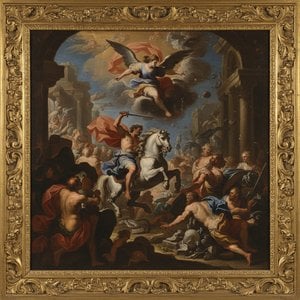
Un maestru roman al stilului baroc clasicizant
Carlo Maratta, cunoscut adesea sub numele de Maratti, reprezintă o figură pivot în pictura italiană din secolul al XVII-lea, întruchipând tranziția de la Barocul înalt către o estetică mai rafinată și inspirată de clasicism. Născut pe 15 mai 1625, la Camerano, în cadrul Statelor Papale — acum parte din Italia — călătoria sa artistică a început odată cu mutarea timpurie la Roma, la vârsta de unsprezece ani. Această relocare s-a dovedit a fi transformatoare, deoarece a intrat în atelierul lui Andrea Sacchi, un pictor renumit pentru compozițiile sale măsurate și pentru devotamentul față de idealurile clasice. Influența lui Sacchi avea să modeleze profund stilul în devenire al lui Maratta, instilându-i o dedicare pentru claritate, echilibru și un emoționalism reținut care îl distingea de contemporanii săi baroci mai flamboyant. Acest ucenicie nu a fost doar un antrenament tehnic; a fost o imersiune într-o abordare filozofică a artei, una care prioritiza rigoarea intelectuală și designul armonios în detrimentul spectacolului dramatic. Maratta a absorbit aceste principii, însă nu a rămas limitat doar în aceste confinuri, demonstrând o capacitate remarcabilă de a sintetiza fundamentele clasice cu curentul dominant al sensibilității baroce.
O carieră înfloritoare în Roma
Talentul lui Maratta a înflorit rapid și, spre mijlocul anilor 1650, începuse deja să atragă comenzi semnificative. Primele sale lucrări, precum
Vizitarea (1656) pentru Santa Maria della Pace, dezvăluie o stăpânire magistrală a luminii și mișcării, însoțită de o capacitate emergentă de a îmbui scena religioasă cu un sentiment palpabil de profunzitate spirituală. El nu se limita pur și simplu la replicarea modelelor stabilite; le infuza cu propria viziune unică, caracterizată prin figuri grațioase, draperii elegante și o utilizare subtilă, dar puternică, a culorii. Această perioadă a marcat, de asemenea, creația operei
Misterul Trinității Revelat Sfântului Augustin (circa 瓣655), o lucrare ce exemplifică abilitatea sa de a echilibra idealismul clasic cu dinamismul baroc. Pe măsură ce reputația sa creștea, așa făceau și amploarea și prestigiul comenzilor sale. A devenit un artist preferat al prominentelor familii romane și, esențial, al însăși papatului. Pe parcursul a șase decenii, Maratta a beneficiat de patronajul a nu mai puțin de șase pape — o dovadă a priceperii sale artistice și a înțelegerii politice. Acest sprijin papal constant nu i-a oferit doar siguranță financiară, ci l-a poziționat chiar în inima vieții artistice și culturale a Romei.
O sinteză de stiluri și influențe
Stilul lui Maratta este adesea descris ca fiind „baroc clasicizant”, un termen care încapsulează poziția sa unică în peisajul istoriei artei. Deși profund înrădăcinat în tradiția clasică derivată din Rafael, el nu a fost imun la influența tendințelor mai teatrale ale Barocului. Contemporanul său, Giovanni Bellori, a recunoscut această sinteză, documentând abordarea artistică a lui Maratta într-o biografie timpurie. Artistul a integrat cu măiestrie utilizarea dramatică a luminii și umbrei, caracteristică picturii baroce, cu claritatea formei și echilibrul compozițional preferat clasiciștilor. Această fuziune a dat naștere unor lucrări care erau atât captivante din punct de vedere emoțional, cât și satisfăcătoare din punct de vedere intelectual. Paleta sa, deși vibrantă, era adesea reținută, prioritizând relațiile cromatice armonioase în locul contrastelor îndrăznețe. A excelat în reprezentarea narațiunilor religioase, îmbuiindu-le cu un sentiment de venerație și intensitate spirituală.
Aparitia Fecioarei în fața Sfântului Filip Neri (circa 1675), găzduită acum în Palatul Pitti din Florența, este un exemplu de primă dorință a capacității sale de a interpreta astfel de teme cu grație și o profundă rezonanță emoțională.
Dincolo de pictură: Restaurare și moștenire
Contribuțiile lui Maratta s-au extins dincolo de crearea de noi opere de artă; i s-a încredințat, de asemenea, conservarea patrimoniului artistic al Romei. În perioada 1702-1703, Inocențul XI l-a numit
surintendent des chambres du vatican și l-a însărcinat cu repararea frescelor lui Rafael din Stanzele Vaticanului — o responsabilitate care i-a subliniat statutul de autoritate de vârf în arta clasică. Această întreprindere nu a fost doar o chestiune de restaurare tehnică; a fost un act de venerație față de una dintre cele mai mari comori artistice ale Italiei, încredințat unui maestru care îi înțelegea semnificația. Maratta a continuat să lucreze prolific până la moartea sa în Roma, pe 15 decembrie 1713, lăsând în urmă un corpus de lucrări vast și influent. Moștenirea sa ca maestru al manierismului clasicizant din Barocul tardiv a persistat pe tot parcursul secolului al XVIII-lea, influențând generații de artiști prin accentul său pe claritate, echilibru și compoziție armonioasă. Astăzi, picturile sale pot fi găsite în muzee din întreaga lume, asigurându-se că viziunea sa artistică continuă să inspire și să fascineze publicul pentru anii ce vor veni.
Lucrări cheie și impact durabil
- Apollo urmărește Dafne: O reprezentare dinamică a mitului clasic, evidențiind îndemânarea lui Maratta de a surprinde mișcarea și emoția.
- Adorația Magilor (în garlandă): O compoziție bogat detaliată care exemplifică măiestria sa asupra culorii și formei.
- Adorația Păstorilor: O capodoperă barocă din 1690, celebrată pentru simbolismul său divin și dispunerea dinamică.
- <Vizitarea: O lucrare timpurie ce demonstrează talentul emergent al lui Maratta pentru lumină și mișcare într-un context religios.
- <Misterul Trinității Revelat Sfântului Augustin: Un exemplu convingător al capacității sale de a îmbina idealismul clasic cu elemente baroce.
Influența lui Maratta depășește anumite tablouri specifice; ea constă în articularea unui stil care a unit două ere, oferind o alternativă rafinată și intelectualmente captivantă față de tendințele mult mai dramatice ale Barocului înalt. El rămâne o figură semnificativă pentru înțelegerea evoluției artei italiene și a moștenirii sale durabile în tradiția artistică occidentală.



 Vezi în context
 Comută pe versiunea Print
 Trimite
 Distribuie
 Detalii
 Ghidul

 Descarcă
 Produse similare
 Radiografie
 Diaporama
 Statistici


 Citește mai mult






































 Opțiunea cu sticlă este disponibilă doar pentru dimensiuni de sub 110 cm