


Printuri giclée sau pe canvas de calitate muzeală, cu proces de producție rapid și opțiuni flexibile de finisare. ( Comandă pictură realizată manual Comută pe Imagine Digitală)





























Alegeți dintre dimensiunile noastre prestabilite, care respectă proporțiile originale ale operei de artă.

Introduceți lățimea și înălțimea necesare pentru a se potrivi ramei sau peretelui dumneavoastră. O printare poate fi doar tăiată, niciodată extinsă dincolo de dimensiunea imaginii originale, astfel încât o dimensiune cu o formă diferită va pierde o parte din imagine. Vă trimitem o simulare digitală pentru aprobare înainte de a imprima orice. Imaginea afișată pe această pagină nu prezintă tăierea reală — doar simularea arată acest lucru.
Livrare în întreaga lume () în 2 săptămâni, în loc de cele 4/5 săptămâni standard. (8 Noiembrie)
Angels Pity
Dimensiune reproducere
In the quiet, hallowed atmosphere of the Early Renaissance, few works capture the intersection of human sorrow and divine grace as poignantly as Carlo Crivelli’s "Angels Pity." Painted in 1470, this masterpiece serves as a profound meditation on tenderness and spiritual devotion. The scene unfolds with an intimate warmth, presenting Jesus cradling two children within his arms—a gesture that transcends mere historical depiction to become a universal symbol of protection and innocence. Surrounded by a celestial assembly of angels and watchful figures, the composition draws the viewer into a sacred circle of empathy. Even the subtle presence of a solitary bird in the upper corner acts as a silent witness, lending an air of tranquility to a moment heavy with emotional significance.
The artistry of Crivelli is on full display through his masterful command of color and light. Utilizing soft, luminous hues and delicate brushstrokes, the artist creates a sense of palpable intimacy that makes the divine feel reachable. The painting is a triumph of the Early Renaissance style, where every detail is rendered with an almost obsessive realism. Crivelli’s technique involves the meticulous application of oil glazes on wood panel, building layers of color to achieve a radiant depth. This method allows light to appear as if it is emanating from within the figures themselves, highlighting the soft textures of skin and the intricate folds of drapery, thereby inviting the observer to linger on the subtle nuances of the composition.
Beyond its visual splendor, "Angels Pity" is a rich tapestry of Christian iconography designed to provoke deep reflection. The arrangement of the figures within an arched niche creates a sense of sacred enclosure, separating the holy event from the mundane world. Every element serves a symbolic purpose: the tender way Jesus holds the children reflects the theological concept of divine mercy, while the surrounding angels represent the bridge between heaven and earth. Crivelli’s use of trompe l'oeil—a technique intended to trick the eye into perceiving three-dimensional reality—adds a layer of tactile presence to the work, making the spiritual themes feel grounded in a tangible, physical reality.
For the discerning collector or interior designer, this painting offers more than mere decoration; it provides an emotional anchor for any space. The somber yet serene mood makes it an ideal centerpiece for rooms dedicated to contemplation, study, or quiet luxury. Whether one is drawn to its historical significance as a product of the Venetian-influenced March of Ancona or moved by its profound expression of compassion, "Angels Pity" remains a timeless testament to the power of art to evoke the sublime. Owning a high-quality reproduction of this work allows for the preservation of this Renaissance spirit, bringing a sense of historical weight and aesthetic harmony into the modern home.
Poți vizualiza "Angels Pity" de Carlo Crivelli pe propriul tău perete folosind pagina Previzualizare în AR a operei de artă, prin intermediul realității augmentate pe un dispozitiv compatibil.
Descoperă lucrări similare cu „Angels Pity” în pagina Lucrări similare a operei de artă.
"Angels Pity" de Carlo Crivelli datează din perioada Renaissance. Această epocă oferă contextul istoric al lucrării.

Carlo Crivelli, pictor al Renașterii italiene, s-a născut în Veneția în jurul anului 1430-35. Provenind dintr-o familie de pictori, el și-a urmat vocația primind o formare artistică riguroasă atât în Veneția, cât și în Padova. Se crede că primele sale lecții au fost sub îndrumarea lui Jacobello del Fiore, un maestru încă activ în anul 1arg436. De asemenea, studiile sale s-au desfășurat în cadrul celebrei școli Vivarini din Veneția.
Anii săi de început au fost petrecuți în regiunea Veneto, unde a absorbit influențe profunde de la maeștri precum Vivarini, Squarcione și Mantegna. Până în 1458, Crivelli a părăsit zona Veneto și și-a petrecut cea mai mare parte a carierei în Marchia de Ancona, unde a reușit să dezvolte un stil personal distinctiv, care contrastează puternic cu cel al contemporanului său venețian, Giovanni Bellini. Opera sa este definită de o sensibilitate decorativă conservatoare, specifică stilului tardogotic, fiind marcată de o calitate liniară remarcabilă, de o atenție meticuloasă la detalii și de utilizarea magistrală a tehnicilor de „trompe l'oeil
* Tabloul lui Carlo Crivelli, „Madonna și Copilul pe Tron” (106 x 55 cm, Muzeul de Arte Frumoase, Budapesta, Ungaria), reprezintă un exemplu sublim al stilului său. * Artistul a colaborat la diverse proiecte cu fratele său mai tânăr, Vittorio Crivelli. * De asemenea, Pietro Alemanno, un pictor care a emigrat în Marchia de Ancona din Germania sau Austria, a fost ucenicul și colaboratorul său.
* Pinacoteca di Brera din Milano, Italia, găzduiește câteva dintre lucrările lui Crivelli, inclusiv „Pietà” (128 x 241 cm). * Muzeul San Giovanni in Bragora din Veneția, Italia, deține o colecție de opere de artă din diverse perioade și stiluri, inclusiv unele atribuite lui Crivelli.
Moștenirea lui Crivelli continuă să îi inspire pe iubitorii de artă și pe cercetători deopotrivă, opera sa rămânând o mărturie a puterii durabile a sensibilității decorative tardogotice.

1435 - 1495 , Italia

Discover the enduring legacy of oil on board painting. Explore how historical techniques, rich impasto textures, and structural durability create timeless masterpieces that bridge Renaissance grandeur with modern art collecting excellence.

Discover the profound allure of oil on canvas. Explore the mastery of impasto textures, the science of pigment longevity, and expert guides to selecting museum-quality reproductions that elevate your collection with timeless elegance and tactile depth.

Discover the enduring allure of oil on canvas. Explore how master techniques like impasto and glazing create the depth, texture, and emotional resonance found in the world's greatest masterpieces. An essential guide for fine art enthusiasts and discerning collectors.

Discover the enduring allure of hand-painted oil reproductions. WahooArt offers museum-quality, archival masterpieces designed for discerning collectors seeking timeless beauty and a lasting legacy. Invest in fine art that transcends generations with our expert craftsmanship.
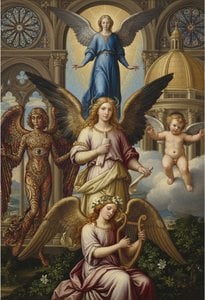
Explore the profound beauty of angelic figures in art history. From Renaissance masterpieces to celestial symbolism, our expert guide offers a sophisticated journey through the divine imagery of the Old Masters for discerning collectors and art enthusiasts.
 Previzualizare
 Trimite prin felicitare
 Distribuie
 Detalii despre lucrare
 Ghid
Ghid

 Descarcă imaginea
 Produse similare
 Radiografie
 Galerie foto
 Întrebări și răspunsuri
 Statistici

 Vezi mai mult









 Opțiunea cu sticlă este disponibilă doar pentru dimensiuni de sub 110 cm


