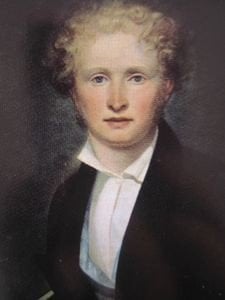
Biografie artist
Raymond Bonheur: The Quiet Foundation of a Legacy
Raymond Bonheur (1796–1849) remains a somewhat shadowy figure in the annals of 19th-century art, often overshadowed by his more celebrated daughter, Rosa. Yet, to dismiss him as merely a supporting player would be a profound oversight. He was, in fact, a pivotal influence, a landscape and portrait painter deeply rooted in Saint-Simonianism – a utopian Christian socialist movement that profoundly shaped his artistic philosophy and approach. Born into an artistically inclined family—his father, Oscar-Raymond Bonheur, was himself a respected painter—Raymond’s life unfolded against the backdrop of revolutionary France, a period marked by social upheaval and intellectual ferment. His early years were spent in Bordeaux, absorbing the artistic traditions of the region while simultaneously grappling with the complexities of his father's unconventional beliefs. The Saint-Simonian movement, advocating for education reform and social harmony through art, instilled in Raymond a belief in the transformative power of creativity and its potential to contribute to a better world. This conviction led him to abandon a conventional career path and dedicate himself entirely to painting, a decision that ultimately distanced him from his family and children. His departure with the community marked a significant turning point, one that would profoundly impact the lives of those he left behind, including his young daughter Rosa.
A Landscape Painter and Saint-Simonian Idealist
Raymond’s artistic style was characterized by a meticulous attention to detail and a deep appreciation for the natural world. He primarily focused on landscape painting and portraiture, often depicting scenes of rural life with remarkable realism. His works are imbued with a sense of tranquility and harmony, reflecting the Saint-Simonian ideal of social unity and spiritual enlightenment. Unlike many of his contemporaries who sought grand historical or mythological subjects, Raymond chose to capture the everyday beauty of the French countryside—rolling hills, verdant fields, and charming villages. His brushwork was precise and controlled, conveying a sense of order and balance. He frequently employed atmospheric perspective to create depth and distance in his compositions, skillfully rendering the effects of light and shadow. While not widely exhibited during his lifetime, Raymond’s paintings were admired by fellow Saint-Simonians who recognized the value of his work as an embodiment of their philosophical principles. His dedication to capturing the essence of nature and promoting social harmony through art established a crucial foundation for Rosa Bonheur's future artistic endeavors.
The Influence on Rosa Bonheur’s Artistic Development
Rosa Bonheur’s extraordinary success as a painter of animals owes, in no small part, to her father’s early influence. Raymond provided her with an unparalleled artistic education, fostering her innate talent and instilling in her a deep love for the natural world. He encouraged her to study animal anatomy meticulously, often bringing live animals into their home studio for observation and sketching. This hands-on approach—a rarity for young female artists of the time—allowed Rosa to develop a profound understanding of animal form and movement. Raymond’s own landscape paintings served as models for Rosa, demonstrating his meticulous technique and appreciation for atmospheric perspective. Furthermore, he instilled in her a strong sense of self-reliance and independence, qualities that would prove invaluable throughout her career. The family's Saint-Simonian beliefs also shaped Rosa’s artistic vision, encouraging her to depict animals with empathy and respect, rather than as mere subjects of scientific study. It is often noted that Raymond’s influence on Rosa was not merely technical but profoundly philosophical, shaping the way she approached her art and her relationship with the natural world.
A Family Divided: Loss and Reconnection
Raymond Bonheur's life took a tragic turn when he joined the Saint-Simonian community in 1839, leaving his wife, Sophie, and their four children behind. This decision, driven by his commitment to the movement’s ideals, resulted in a painful separation and ultimately led to Sophie’s death from tuberculosis in 1833. The abandonment of his children created a complex and emotionally fraught situation. He sent his two sons to boarding school, while Rosa remained with her mother. This period of isolation profoundly affected Raymond's life, marked by regret and a sense of responsibility for the hardship he had caused his family. Remarkably, Raymond’s dedication to the Saint-Simonian community did not diminish; instead, it intensified, leading him to dedicate himself entirely to art. Years later, after Sophie’s death, Raymond returned to care for his children, demonstrating a remarkable capacity for redemption and a deep love that transcended the years of separation. This poignant story highlights the personal cost of ideological commitment and the enduring bonds of family.
Legacy and Historical Significance
While Raymond Bonheur’s own artistic output was relatively modest compared to his daughter’s, his influence on Rosa Bonheur's career is undeniable. He provided her with a solid foundation in art, instilled in her a love for the natural world, and fostered her independent spirit. His commitment to Saint-Simonian ideals—emphasizing education, social harmony, and the transformative power of creativity—shaped her artistic vision and contributed to her success as one of the most celebrated animal painters of the 19th century. Furthermore, Raymond’s story serves as a compelling example of an artist who defied conventional expectations and pursued his passion despite personal hardship. He represents a quiet but significant force in the history of French art—a foundational figure whose legacy continues to resonate through the work of his extraordinary daughter, Rosa Bonheur. His dedication to capturing the beauty of the natural world and promoting social harmony remains a testament to the enduring power of art as a means of expressing human values and aspirations.



 Previzualizare
 Comută pe versiunea Print
 Trimite prin felicitare
 Distribuie
 Detalii despre lucrare
 Ghid
Ghid

 Descarcă imaginea
 Produse similare
 Radiografie
 Galerie foto
 Statistici
 Vezi mai mult






































 Opțiunea cu sticlă este disponibilă doar pentru dimensiuni de sub 110 cm