Achiziționați o imagine digitală de înaltă rezoluție, îmbunătățită, mult superioară previzualizării online.
Fiecare fișier este pregătit cu meticulozitate de specialiștii noștri interni, utilizând instrumente avansate și retușare manuală expertă. Ne asigurăm că fiecare imagine beneficiază de o claritate excepțională, o acuratețe precisă a culorilor și detalii fine.
Fișierul final este livrat prin e-mail în termen de 72 de ore, optimizat pentru utilizare imediată în medii profesionale, editoriale și de imprimare. Aceasta este aceeași calitate în care au încredere studiouri de design, edituri și galerii de top.
Descărcați un fișier la rezoluție înaltă pentru afișare personală, imprimare și proiecte creative. ( Comută pe versiunea Print
Comandă pictură realizată manual)
Când alegeți WahooArt.com, nu primiți doar o simplă imagine – primiți o operă de artă digitală îmbunătățită profesional, creată cu precizie și susținută de o garanție de satisfacție. Iată tot ceea ce primești odată cu comanda ta, în mod automat:
Fișierul imaginii digitale la rezoluție înaltă vă va fi trimis prin e-mail în termen de 72 de ore de la finalizarea comenzii – gata pentru utilizare imediată.
Opera ta de artă este optimizată profesional prin intermediul unor instrumente AI avansate și al editării manuale, asigurând un nivel maxim de detalii, claritate și acuratețe a culorilor.
Ai șters sau ai pierdut din greșeală fișierul? Nu îți face griji – ți-l vom retrimite oricând, gratuit.
Bucură-te instant de noua ta operă de artă, fără taxe vamale, taxe de import sau costuri de livrare – descărcările digitale sunt întotdeauna fără taxe.
Asigurăm o reflectare cât mai fidelă a culorilor originale în imaginea ta digitală, prin utilizarea unor instrumente profesionale și a proceselor de gestionare a culorii.
Dacă nu sunteți mulțumit de imaginea digitală achiziționată, o vom revizui sau vă vom returna 100% în termen de 100 de zile – fără nicio întrebare.
Nu ești mulțumit? Primești rambursarea integrală în termen de 100 de zile de la primirea fișierului digital – fără nicio întrebare.
Cumpără 3 imagini, economisește 10% - Cumpără 5, economisește 15% - Cumpără 10+, economisește 20%. Ideal pentru proiecte creative, galerii și agenții.
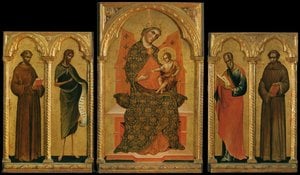
In the heart of the Venetian Renaissance, where the light of the lagoons meets the profound devotion of the era, Bartolomeo Vivarini crafted a masterpiece of spiritual storytelling. His Polyptych, completed in 1464, is not merely a painting but a sacred window into the late Gothic and early Renaissance soul. This exquisite tempera on panel work, measuring an intimate yet commanding 132 x 41 cm, serves as a breathtaking testament to the artist's ability to weave together human emotion and divine iconography. As one gazes upon these five interconnected panels, they are transported to an era where art served as the primary bridge between the earthly realm and the heavens.
The composition is a rhythmic dance of figures, structured with the architectural grace typical of the period. At its heart sits the Virgin Mary, cradling the Christ Child upon a throne, her presence radiating a maternal tenderness that anchors the entire work. Surrounding this central miracle are four saints, each meticulously rendered to evoke their unique sanctity. From the scholarly gravity of the bearded figures holding sacred manuscripts to the youthful, haloed innocence of the surrounding saints, Vivarini utilizes a sophisticated use of perspective and human anatomy to breathe life into the divine. The golden backgrounds do more than just signify holiness; they create an eternal, unshakeable space that transcends time, reflecting the light in a way that would have mesmerized 15th-century worshippers.
To behold this Polyptych is to witness the mastery of tempera technique. Vivarini’s hand is evident in the delicate transitions of skin tones and the heavy, sculptural folds of the garments. The artist employs a rich, saturated palette where deep blues and regal golds dominate, creating a visual hierarchy that guides the eye through the narrative. The interplay between the dark, somber robes of the male figures and the vibrant pinks and yellows of others creates a chromatic tension that is both harmonious and stimulating. This careful balance of color ensures that each panel retains its individual identity while contributing to a unified, symphonic whole.
For the discerning collector or interior designer, this work offers an unparalleled opportunity to introduce a sense of historical weight and classical elegance into a space. The intricate details—the fine lines of a beard, the subtle glow of a halo, the texture of a manuscript—provide endless points of visual interest. A high-quality reproduction of this piece does more than decorate a wall; it anchors a room with a sense of permanence and cultural depth. Whether placed in a quiet study or as a focal point in a grand hall, the Polyptych invites contemplation, offering a serene yet powerful presence that resonates with the timeless beauty of the Italian Renaissance.
Luminozitatea percepută a operei "Polyptych" de Bartolomeo Vivarini este deep_shadow. Aceasta poate fi adaptată la lumina spațiului în care va fi expusă.
Statutul drepturilor de autor pentru "Polyptych" de Bartolomeo Vivarini este clar: opera este în domeniul public - drepturile de autor au expirat. Prezența sa la Gallerie dell’Accademia nu schimbă acest statut.
„Polyptych” este definit de o paletă Earthy, condusă de culoarea Driftwood (#af9465).

In the vibrant, shimmering atmosphere of the Quattrocento, Bartolomeo Vivarini emerged as a pivotal figure in the evolution of Venetian painting. Born in the storied glassmaking hub of Murano, Italy, he was part of an influential dynasty of artists that helped shape the visual identity of the Republic of Venice. As a member of the Vivarini family, his life and work were deeply intertwined with the artistic pulse of his homeland, bridging the transition from the ornate, gilded traditions of the late Gothic period to the burgeoning humanism of the early Renaissance.
The artistry of Vivarini is characterized by a profound sense of spiritual depth and technical precision. While he was a master of tempera, often utilizing gold leaf to imbue his compositions with a celestial luxury, he was also an innovator in the use of new mediums. It is noted that he learned the art of oil painting from Antonello da Messina, and he is credited with producing what is believed to be the first oil painting in Venice around 1473. This mastery allowed him to manipulate light and texture in ways that brought a new level of intimacy and serenity to his religious subjects.
Vivarini’s work often presents a striking balance between hard, defined outlines and a rich, emotive color palette. His figures frequently possess a dignified and devout expression, capturing the solemnity required for the altarpieces that adorned Venetian basilicas. This ability to convey human emotion through structured forms made him a sought-after painter for significant religious commissions. A notable example of his skill is found in his Madonna and Child, where he uses light entering through windows and deep red drapery to create a sense of sacred space.
Beyond the figures themselves, Vivarini’s paintings are often layered with symbolic meaning:
The historical importance of Bartolomeo Vivarini lies in his role as a bridge between eras. He stood at the crossroads of the Byzantine-influenced traditions of his predecessors and the revolutionary Renaissance styles brought by artists like Fra Angelico and Giovanni Bellini. By blending these diverse influences, he helped establish a unique Venetian visual language—one that prioritized luminous color and emotional resonance.
His influence extended through his family lineage, notably impacting the work of his nephew, Alvise Vivarini, who would become a leading artist in Venice before the rise of Bellini. Through his meticulous detail and his pioneering adoption of oil techniques, Bartolomeo Vivarini left an indelible mark on the history of Italian art, ensuring that the spiritual and aesthetic grandeur of Murano and Venice would be preserved for generations to come.
1440 - 1499