


 Acrylic On CanvasWallArtBaroque
 105.0 x 77.0 cm
 Muzeul Hermitaj
Achiziționați o imagine digitală de înaltă rezoluție, îmbunătățită, mult superioară previzualizării online.
Fiecare fișier este pregătit cu meticulozitate de specialiștii noștri interni, utilizând instrumente avansate și retușare manuală expertă. Ne asigurăm că fiecare imagine beneficiază de o claritate excepțională, o acuratețe precisă a culorilor și detalii fine.
Fișierul final este livrat prin e-mail în termen de 72 de ore, optimizat pentru utilizare imediată în medii profesionale, editoriale și de imprimare. Aceasta este aceeași calitate în care au încredere studiouri de design, edituri și galerii de top.
Descărcați un fișier la rezoluție înaltă pentru afișare personală, imprimare și proiecte creative. ( Comandă printul Comandă pictură lucrată manual)
Când alegeți WahooArt.com, nu primiți doar o simplă imagine – primiți o operă de artă digitală îmbunătățită profesional, creată cu precizie și susținută de o garanție de satisfacție. Iată tot ceea ce primești odată cu comanda ta, în mod automat:

Fișierul imaginii digitale la rezoluție înaltă vă va fi trimis prin e-mail în termen de 72 de ore de la finalizarea comenzii – gata pentru utilizare imediată.

Opera ta de artă este optimizată profesional prin intermediul unor instrumente AI avansate și al editării manuale, asigurând un nivel maxim de detalii, claritate și acuratețe a culorilor.

Ai șters sau ai pierdut din greșeală fișierul? Nu îți face griji – ți-l vom retrimite oricând, gratuit.

Bucură-te instant de noua ta operă de artă, fără taxe vamale, taxe de import sau costuri de livrare – descărcările digitale sunt întotdeauna fără taxe.

Asigurăm o reflectare cât mai fidelă a culorilor originale în imaginea ta digitală, prin utilizarea unor instrumente profesionale și a proceselor de gestionare a culorii.

Dacă nu sunteți mulțumit de imaginea digitală achiziționată, o vom revizui sau vă vom returna 100% în termen de 100 de zile - fără nicio întrebare.

Nu ești mulțumit? Primești rambursarea integrală în termen de 100 de zile de la primirea fișierului digital – fără nicio întrebare.

Cumpără 3 imagini, economisește 10% - Cumpără 5, economisește 15% - Cumpără 10+, economisește 20%. Ideal pentru proiecte creative, galerii și agenții.
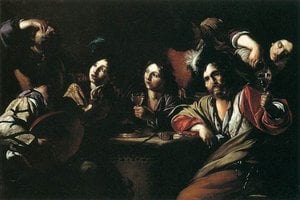
Bartolomeo Manfredi's "Lute Playing Young Man," painted circa 1603-1622, is not merely a portrait; it’s a carefully constructed tableau of contemplative beauty and subtle drama. Attributed to the artist during his formative years under the immense influence of Michelangelo Merisi da Caravaggio, this work embodies the Baroque fascination with light, shadow, and psychological depth – elements that would become hallmarks of Manfredi's distinctive style. The painting captures a young man, likely a gentleman of means, lost in the quiet intensity of playing a lute, an instrument associated with courtly entertainment and intellectual pursuits during the Renaissance.
The composition is remarkably restrained, yet profoundly effective. Manfredi masterfully employs chiaroscuro – Caravaggio’s signature technique – to sculpt the figure from darkness. The young man's face, partially obscured by shadow, draws immediate attention, his brow furrowed in concentration, suggesting a deep engagement with the music he produces. The stark contrast between light and dark isn’t merely an aesthetic choice; it serves to heighten the sense of mystery surrounding him, inviting the viewer to speculate on his thoughts and emotions. The muted palette – primarily browns, ochres, and subtle blues – further contributes to the painting's somber yet alluring atmosphere.
Manfredi’s connection to Caravaggio is a subject of ongoing scholarly debate, though compelling evidence strongly suggests a significant mentorship. Caravaggio’s revolutionary approach to depicting human emotion and his dramatic use of light profoundly impacted Manfredi's artistic development. While Manfredi never signed his works, the stylistic similarities—particularly in the rendering of flesh tones, the expressive faces, and the masterful manipulation of shadow – are undeniable. This painting exemplifies this influence; observe how Manfredi captures a similar sense of psychological realism and dramatic tension as seen in Caravaggio’s portraits, albeit with a slightly more refined and controlled execution.
The choice of subject matter itself reflects the artistic currents of the time. The lute, a symbol of refinement and intellectualism, was frequently depicted in Renaissance art, often associated with noblemen and scholars. However, Manfredi elevates this commonplace scene by imbuing it with an air of profound introspection. It’s not simply a depiction of musical performance; it's a portrait of a soul lost in thought, a moment suspended in time.
“Lute Playing Young Man” is executed in oil on canvas, a medium that allowed Manfredi to achieve the rich textures and subtle gradations of tone characteristic of Baroque painting. The artist’s meticulous attention to detail is evident in the rendering of the lute's intricate construction – the delicate curves of the body, the strings, and the wood grain are all rendered with remarkable precision. The fabric of the young man’s doublet is also meticulously depicted, showcasing Manfredi’s skill in capturing the textures and folds of clothing.
Interestingly, historical records indicate that the painting underwent a partial restoration in the 19th century, where the lower portion was trimmed away. This alteration has subtly altered the composition, but it doesn't detract from the overall impact of the work. The Hermitage Museum in St. Petersburg currently houses this captivating piece, offering visitors a rare opportunity to witness Manfredi’s masterful artistry firsthand.
Beyond its technical brilliance, “Lute Playing Young Man” resonates with profound symbolic meaning. The young man's solitary contemplation speaks to the complexities of human experience – the yearning for beauty, the pursuit of knowledge, and the quiet moments of introspection that define our lives. The lute itself can be interpreted as a metaphor for the soul, its music representing the inner world of emotions and thoughts.
The painting’s subdued lighting and melancholic atmosphere evoke a sense of wistful beauty, inviting viewers to contemplate the mysteries of human existence. It's a work that transcends mere representation, offering a glimpse into the heart and mind of its subject – a shadowed reverie captured with exquisite skill and profound insight by one of Italy’s most enigmatic Baroque masters.

1582 - 1622 , Italia

 Previzualizare
 Trimite
 Distribuie
 Detalii despre lucrare

 Descarcă
 Produse similare
 Radiografie
 Diapozitive automate
 Vezi mai mult


