PrevizualizarePrevizualizare Previzualizare ARPrevizualizare AR Comută pe Print Comută pe PrintComandă pictură lucrată manual Comandă pictură lucrată manual TrimiteTrimite
Detalii despre lucrareDetalii despre lucrare Adaugă la favorite Adaugă la favorite DescarcăDescarcă Produse similareProduse similare RadiografieRadiografie Diapozitive automateDiapozitive automate StatisticiStatistici

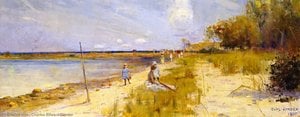
Sirius Cove

În decembrie 1892 Arthur Streeton s-a mutat din Melbourne în Sydney pentru a se reuni cu prietenul său Tom Roberts care locuia la Curlew Camp în Sirius Cove lângă Mosman. Streeton și-a petrecut următorii patru ani bazat în acest camp, captivat de frumusețea cristalină a Orașului Sydney.

Descoperă Arthur Streeton (1867-1943), pictor impresionist australian esential al Heidelberg School! Admire peisaje aurii, stilul plein air și rolul său definitoriu în arta australiană. Vezi operele și biografia.

Achiziționați o imagine digitală de înaltă rezoluție, îmbunătățită, mult superioară previzualizării online.

Fiecare fișier este pregătit cu meticulozitate de specialiștii noștri interni, utilizând instrumente avansate și retușare manuală expertă. Ne asigurăm că fiecare imagine beneficiază de o claritate excepțională, o acuratețe precisă a culorilor și detalii fine.

Fișierul final este livrat prin e-mail în termen de 72 de ore, optimizat pentru utilizare imediată în medii profesionale, editoriale și de imprimare. Aceasta este aceeași calitate în care au încredere studiouri de design, edituri și galerii de top.

Imagine Digitală

Descărcați un fișier la rezoluție înaltă pentru afișare personală, imprimare și proiecte creative. (Comută pe Print Comută pe PrintComandă pictură lucrată manual Comandă pictură lucrată manual)

Preț total

$ 24,90

Inclus în fiecare comandă de imagini digitale

Livrare digitală de expertiză, garantată

Când alegeți WahooArt.com, nu primiți doar o simplă imagine – primiți o operă de artă digitală îmbunătățită profesional, creată cu precizie și susținută de o garanție de satisfacție. Iată tot ceea ce primești odată cu comanda ta, în mod automat:

shipping_icon
Livrare rapidă prin e-mail

Fișierul imaginii digitale la rezoluție înaltă vă va fi trimis prin e-mail în termen de 72 de ore de la finalizarea comenzii – gata pentru utilizare imediată.

canvas_icon
Fișier digital optimizat prin IA

Opera ta de artă este optimizată profesional prin intermediul unor instrumente AI avansate și al editării manuale, asigurând un nivel maxim de detalii, claritate și acuratețe a culorilor.

insurance_icon
Retransmitere gratuită pe viață

Ai șters sau ai pierdut din greșeală fișierul? Nu îți face griji – ți-l vom retrimite oricând, gratuit.

tax_icon
Fără taxe de import – Întotdeauna

Bucură-te instant de noua ta operă de artă, fără taxe vamale, taxe de import sau costuri de livrare – descărcările digitale sunt întotdeauna fără taxe.

color_icon
Garanția acurateții culorilor

Asigurăm o reflectare cât mai fidelă a culorilor originale în imaginea ta digitală, prin utilizarea unor instrumente profesionale și a proceselor de gestionare a culorii.

return_icon
Garanție de satisfacție de 100 de zile

Dacă nu sunteți mulțumit de imaginea digitală achiziționată, o vom revizui sau vă vom returna 100% în termen de 100 de zile - fără nicio întrebare.

guarantee_icon
Garanție de returnare 100% a banilor

Nu ești mulțumit? Primești rambursarea integrală în termen de 100 de zile de la primirea fișierului digital – fără nicio întrebare.

discount_icon
Reduceri pentru comenzi în volum

Cumpără 3 imagini, economisește 10% - Cumpără 5, economisește 15% - Cumpără 10+, economisește 20%. Ideal pentru proiecte creative, galerii și agenții.

Informații rapide

  • Subject or theme: Harbour landscape; Human activity
  • Location: National Gallery of Australia
  • Title: Sirius Cove
  • Artistic style: Impressionism
  • Year: 1895
  • Movement: Heidelberg School
  • Notable elements or techniques: Calligraphic brushstrokes; Positive/negative space

Test de cultură artistică

Fiecare întrebare are un singur răspuns corect.

Întrebare 1:
What is the primary subject matter of Arthur Streeton’s Sirius Cove?
Întrebare 2:
Streeton employed a technique that mimics Japanese scroll painting. What characteristic did he utilize to achieve this effect?
Întrebare 3:
The image description mentions human activities in Sirius Cove. Which element contributes to this depiction?
Întrebare 4:
In what year was Sirius Cove painted by Arthur Streeton?
Întrebare 5:
What artistic movement is Arthur Streeton associated with, and Sirius Cove exemplifies?

Sirius Cove: A Window Into Impressionistic Sydney

December 1892 marked a pivotal moment for Arthur Streeton’s artistic life – he abandoned Melbourne and embraced the vibrant energy of Sydney, joining forces with fellow Heidelberg School artist Tom Roberts at Curlew Camp near Sirius Cove. This location proved to be an irresistible muse, captivating Streeton's imagination for four transformative years.

The resulting painting, “Sirius Cove,” isn’t merely a depiction of the harbour; it’s a masterful distillation of Impressionistic principles. Streeton skillfully exploited the inherent qualities of the wood panel itself – its grain and natural hue – to achieve a striking balance between positive and negative space. This deliberate flattening of forms contributes to a dynamic interplay of tonal contrasts, guiding the viewer's eye across the canvas in a manner reminiscent of Japanese scroll paintings.

Technique and Composition: Embracing Fluid Brushstrokes

Streeton’s technique is characterized by sweeping, calligraphic brushstrokes – fluid and intuitive yet underpinned by meticulous observation. These strokes aren’t simply applied; they are carefully considered to capture the ephemeral effects of light and atmosphere—a hallmark of Impressionism. The artist's sensitivity to detail ensures that every nuance of colour and texture contributes to the overall impression of serenity and grandeur.

Historical Context: Capturing the Spirit of Heidelberg

“Sirius Cove” emerged from the Heidelberg School’s burgeoning artistic movement, which sought to depict the Australian bush landscape with unprecedented honesty and immediacy. Influenced by Impressionist masters like Monet and Renoir, Streeton aimed to convey not just what he saw but how he *felt*—the profound beauty and tranquility of this coastal retreat.

Symbolism and Emotional Resonance

The calm expanse of water mirroring the overcast sky speaks volumes about the mood of the scene. The presence of human activity – a rowing boat, distant ferry, and ascending path – adds depth to the composition, grounding it in the everyday realities of life at Curlew Camp. Yet, above all, “Sirius Cove” evokes a sense of contemplative peace—a celebration of nature’s sublime power to inspire awe and wonder.

A Legacy of Impressionistic Brilliance

National Gallery of Australia acquired this artwork in 1973. It remains an enduring testament to Streeton's artistic vision and the Heidelberg School's contribution to Australian art history, continuing to fascinate viewers with its luminous colours and masterful execution.


Biografie artist

A Pioneer of the Australian Light: The Life and Art of Arthur Streeton

Arthur Ernest Streeton, affectionately known as “Smike” to his contemporaries, stands as a monumental figure in Australian art history. Born on April 8, 1867, at Mount Duneed, Victoria, his life was inextricably linked to the evolving identity of a nation finding its voice through landscape painting. From humble beginnings – his parents were English migrants who met during their voyage to Australia – Streeton’s artistic journey began with studies at the National Gallery School in Melbourne from 1882 to 1887, laying the groundwork for a career that would define Australian Impressionism and the Heidelberg School. These early years weren't merely about technical skill; they were about discovering a way to capture the unique quality of light and atmosphere that characterized the Australian bush – a light unlike anything seen in Europe, and a challenge that captivated Streeton throughout his life. He supplemented his formal training with apprenticeships as a lithographer, experiences which undoubtedly informed his understanding of composition and tonal values.

The Heidelberg School and the Eaglemont Camp

Streeton’s artistic maturation coincided with the burgeoning of the Heidelberg School, a group of artists determined to forge an authentically Australian style. His friendships with Tom Roberts and Frederick McCubbin were pivotal; together they embarked on *plein air* painting excursions, seeking to represent the landscape directly from nature. This commitment to working outdoors, inspired by French Impressionism but adapted to the distinctly Australian context, became a hallmark of their work. The establishment of the Eaglemont Camp in 1888 marked a turning point. Sharing a farmhouse on the outskirts of Melbourne with fellow artists, Streeton entered a period of intense creativity. It was here that he produced some of his most iconic works, including *Golden Summer, Eaglemont* (1889) and *Still glides the stream, and shall for ever glide* (1890). These paintings weren’t simply depictions of scenery; they were evocations of a feeling – the heat haze shimmering over golden fields, the stillness of a summer afternoon. The camp fostered an environment of shared experimentation and mutual encouragement, solidifying the Heidelberg School's reputation as a force to be reckoned with in the Australian art world. The group’s bold approach culminated in the controversial “9 by 5 Impression Exhibition” in 1889, showcasing small, rapidly executed paintings that challenged conventional artistic norms.

Seeking Recognition and Returning Home

Driven by ambition and a desire for wider recognition, Streeton sailed for London on the *Polynesien* in 1897. While he achieved some success exhibiting at the Royal Academy, including representation in 1900, he found it difficult to replicate the acclaim he had enjoyed in Australia. The European art scene was crowded and competitive, and his distinctly Australian vision didn’t always resonate with established tastes. He continued to paint, exploring different subjects – Venetian scenes like *Palazzo Labia, Venice* (1908) demonstrate a shift in focus but retain his characteristic sensitivity to light and color. The outbreak of World War I saw Streeton attempting to contribute through service as an orderly with the Royal Army Medical Corps, later becoming an official war artist in 1918. His wartime paintings, while documenting the devastation of the Western Front, often focused on the landscape itself, reflecting his enduring fascination with the natural world. He returned to Australia in 1923 a celebrated figure, knighted in 1937 for his contributions to art.

Legacy and Lasting Influence

Arthur Streeton’s legacy extends far beyond his individual paintings. He played a crucial role in establishing a uniquely Australian artistic identity, one that celebrated the beauty and vastness of the continent. His work helped to define how Australians saw themselves and their land. His influence can be seen in generations of landscape painters who followed, inspired by his ability to capture the essence of the Australian light and atmosphere. He was a prolific writer and art critic, further shaping the discourse around Australian art. Though he experienced periods of frustration and self-doubt, Streeton remained committed to his artistic vision until his death on September 1, 1943, at Olinda, Victoria. His paintings continue to captivate audiences today, offering a timeless glimpse into the heart and soul of Australia.

Key Works & Themes

  • Golden Summer, Eaglemont (1889): Perhaps his most famous work, embodying the heat and light of an Australian summer.
  • Still glides the stream, and shall for ever glide (1890): A lyrical depiction of the Yarra River, showcasing his mastery of atmospheric perspective.
  • Fire’s on (1891): A powerful representation of the Australian bushfire landscape, capturing both its beauty and danger.
  • Palazzo Labia, Venice (1908): Demonstrates his ability to adapt his Impressionistic style to European subjects.
  • Egyptian Drink Vendor (1897): A vibrant scene reflecting his travels and exploration of different cultures.
Streeton’s art is characterized by a profound connection to the land, a sensitivity to light and color, and a commitment to capturing the essence of the Australian experience. He wasn't merely painting landscapes; he was creating icons of national identity.

Arthur Streeton

Arthur Streeton

1867 - 1943 , Australia

Detalii rapide

  • Artistic Movement Or Style: Impressionism, Heidelberg
  • Artists Or Movements Influenced By This Artist: ['Heidelberg School']
  • Artists Who Influenced This Artist:
    • Buvelot
    • Turner
  • Date Of Birth: 8 aprilie 1867
  • Date Of Death: 1 septembrie 1943
  • Full Name: Arthur Ernest Streeton
  • Nationality: Australian
  • Notable Artworks:
    • Golden Summer
    • Still glides
    • Palazzo Labia
  • Place Of Birth: Mount Duneed, Australia