PrevizualizarePrevizualizare Previzualizare ARPrevizualizare AR Comandă pictură lucrată manual Comandă pictură lucrată manualComută pe Imagine Digitală Comută pe Imagine Digitală TrimiteTrimite
Detalii despre lucrareDetalii despre lucrare Adaugă la favorite Adaugă la favorite DescarcăDescarcă Produse similareProduse similare RadiografieRadiografie Diapozitive automateDiapozitive automate StatisticiStatistici

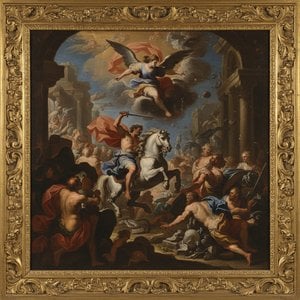
Danaë (detail)

Dramatic chiaroscuro and intense realism define Artemisia Gentileschi's Danaë, a powerful Baroque masterpiece capturing mythological intimacy and female agency that invites you to explore this timeless work of art.

Artemisia Gentileschi: pictoriță barocă revoluționară și puternică! Celebrază puterea feminină prin opere impresionante precum Judith Slaying Holofernes și Susanna & Elders, simbol al rezistenței artistice.

Giclée / Imprimare artistică

Printuri giclée sau pe canvas de calitate muzeală, cu proces de producție rapid și opțiuni flexibile de finisare. (Comandă pictură lucrată manual Comandă pictură lucrată manualComută pe Imagine Digitală Comută pe Imagine Digitală)

P118B $10
P118H $10
P118W $10
P438Z $10
P508JH $12
P508YH $12
P805H $10
P805Z $10
P919BZ $10
P919G $10
P919XJ $10
P959ZH $10
P968JZ $12
W106C $8
W218G $10
W218JH $8
W218Y $10
W307PJ $10
W316G $10
W316PJ $8
W316Y $10
W398PJ $8
W4111J $10
W500HY $15
W500JH $15
W692G $12
W849H $8
W940BG $15
W953PJ $8

Standard
personalizat
CM
INCH

Alegeți dintre dimensiunile noastre prestabilite, care respectă proporțiile originale ale operei de artă.

lățime
înălțime

Puteți introduce propriile dimensiuni pentru a se potrivi unui anumit cadru sau spațiu. Dacă dimensiunea selectată nu corespunde proporțiilor imaginii originale, vom decupa lucrarea de artă sau vom extinde imaginea cu margini oglindite sau cu o culoare uniformă. Un mockup digital va fi trimis pentru aprobarea dumneavoastră înainte de începerea producției.
Vă rugăm să rețineți că previzualizarea de pe ecran nu reflectă decuparea sau extinderea reală. Doar mockup-ul va arăta cu exactitate compoziția finală.
Deși dimensiunile personalizate sunt disponibile, vă recomandăm să selectați o dimensiune din lista predefinită pentru a păstra proporțiile originale.

Livrare în întreaga lume () în 2 săptămâni, în loc de cele 4/5 săptămâni standard. (12 Septembrie)

why_choose_icon
Livrare expres gratuită la nivel mondial
why_choose_icon
Pânză de in de înaltă calitate
why_choose_icon
Asigurare completă pentru transport
why_choose_icon
Garanție de rambursare a taxelor vamale
why_choose_icon
Garanția fidelității culorilor
why_choose_icon
Politica de retur de 100 de zile (doar pentru defecte)
why_choose_icon
Garanție de rambursare 100%
why_choose_icon
Ofertă pentru comenzi multiple

Preț total

$ 68

reproduction

Danaë (detail)

Giclée / Imprimare artistică

Dimensiune reproducere

-

Preț total calculat

$ 68

Informații rapide

  • Medium: Oil on canvas
  • Location: Private Collection
  • Notable elements or techniques: Dramatic chiaroscuro; masterful depiction of emotion
  • Subject or theme: Mythology; Female figure; Biblical narrative
  • Artistic style: Realistic; psychologically intense
  • Year: 1612
  • Title: Danaë (detail)

A Symphony of Gold and Shadow: Reimagining Artemisia Gentileschi’s Danaë

In the quiet, shadowed depths of Artemisia Gentileschi’s Danaë, one encounters more than just a scene from antiquity; one encounters a visceral masterclass in Baroque emotion. Completed around 1612, this work captures the precise moment where myth intersects with the palpable reality of human sensation. The painting depicts the Argive princess Danaë, reclined in a state of profound vulnerability and receptivity, as Zeus descends upon her not as a thunderbolt, but as a gentle, shimmering rain of gold. It is a pivotal scene from Greek mythology, rendered with such psychological depth that it transcends mere storytelling to become a profound statement on the human condition and the power of divine intervention.

The Mastery of Chiaroscuro and Flesh

Executing her vision during the height of Caravaggio’s influence, Gentileschi employs a dramatic chiaroscuro technique that sculpts form through the intense interplay of light and shadow. The stark contrast is most breathtaking in the radiant glow emanating from Danaë's torso, which seems to pulse with an inner life against the surrounding darkness. This luminous skin tone is a deliberate departure from the idealized, porcelain figures common in Renaissance art; instead, Gentileschi offers an unflinching honesty, portraying the human body with textures that feel almost touchable. The way the light catches the golden strands of hair and the soft folds of the drapery demonstrates her extraordinary ability to capture texture and weight, making the scene feel less like a distant myth and more like a captured moment in time.

Symbolism and the Strength Within Vulnerability

Beyond its technical brilliance, the painting is rich with symbolic resonance that speaks to both the era of its creation and the modern viewer. The deep red drapery enveloping Danaë serves as a potent symbol of both shame and vulnerability, yet it simultaneously highlights her inner strength and dignity. While the narrative involves a moment of divine imposition, Gentileschi presents her protagonist not as a passive victim, but as a woman confronting a cosmic force with unwavering composure. This subtle defiance is a hallmark of the artist’s style, reflecting her own journey as a female painter in a male-dominated world. For the collector or interior designer, this piece offers a complex layer of meaning, where the beauty of the aesthetic is inextricably linked to a narrative of resilience and agency.

An Eternal Inspiration for the Modern Space

For those seeking to infuse a space with drama, history, and emotional gravity, a high-quality reproduction of Danaë serves as a magnificent centerpiece. The painting’s palette—dominated by rich golds, deep shadows, and warm reds—provides a sophisticated anchor for luxurious interior designs, particularly in settings that favor classical or moody, contemporary aesthetics. It is an artwork that invites contemplation, drawing the eye into its luminous depths and sparking conversation about the intersection of art, myth, and the enduring strength of the human spirit. To possess such a work is to hold a fragment of the Baroque revolution, a piece that continues to breathe with the vitality of Artemisia’s unparalleled genius.

Biografie artist

A Daughter of Rome: The Life and Art of Artemisia Gentileschi

Artemisia Gentileschi’s name echoes through the halls of art history, resonating not simply as that of a painter, but as an emblem of resilience, defiance, and extraordinary artistic talent in a world determined to silence female voices. Born in Rome in 1593, she entered a milieu steeped in artistry—her father, Orazio Gentileschi, was a respected painter deeply influenced by the revolutionary realism of Caravaggio. From her earliest years, Artemisia’s gift was undeniable, nurtured within her father's workshop where she absorbed techniques of composition and the dramatic use of light and shadow that would become hallmarks of her distinctive style. This formative training wasn’t merely about mastering brushstrokes; it was an immersion into a world of artistic ambition, one typically closed to women. Recognizing his daughter’s exceptional talent, Orazio provided opportunities unavailable to most females of the era, allowing her to study from life models—a crucial step in developing anatomical accuracy and expressive power.

Shadows and Strength: Artistic Development

Gentileschi's artistic development was profoundly shaped by Caravaggio’s tenebrism—the stark contrast between light and darkness that imbued his paintings with an intense emotionality. Yet, she didn’t simply mimic her father or Caravaggio; she forged her own unique voice, characterized by a raw psychological depth and a compelling focus on female subjects often depicted with unprecedented agency and strength. Even in her early works, like *Susanna and the Elders* (1610), a biblical scene depicting Susanna being spied upon by two lecherous old men, Artemisia’s interpretation diverges from traditional portrayals. Here, Susanna isn't passively vulnerable; she displays a quiet dignity and resistance, foreshadowing the powerful female figures that would dominate her later oeuvre. But it is *Judith Slaying Holofernes* (existing in multiple versions between 1614-1620) that cemented her reputation as a master of dramatic narrative and psychological realism. The painting isn’t merely a depiction of violence; it's an exploration of courage, determination, and the righteous fury of a woman defending her people. The visceral intensity, the unflinching portrayal of the act itself, shocked and captivated audiences then—and continues to do so today. Other notable works like *Judith and her Maidservant* (1625) and *Danaë* (c. 1636-1639) further demonstrate her evolving style, showcasing both vulnerability and power in her female protagonists. Her ability to render flesh with such realism, combined with a masterful use of chiaroscuro, created scenes that were both terrifying and deeply moving.

A Trial by Fire: Trauma and Triumph

Artemisia’s life was irrevocably altered by a horrific event: her rape at the hands of Agostino Tassi, a fellow painter and colleague of her father. The ensuing trial (1611-1612) became a public spectacle, subjecting Artemisia to grueling questioning and societal scrutiny. While she bravely testified against Tassi, the proceedings were marred by bias and attempts to discredit her character. This trauma profoundly impacted her life and art, imbuing her work with an emotional intensity that some scholars believe is directly linked to her personal experiences. The trial itself became a symbol of the challenges faced by women seeking justice in a patriarchal society. Despite this ordeal, Artemisia refused to be defined by it. She continued to paint, moving between Rome, Florence, and Naples, establishing herself as a successful artist in her own right. In 1616, she achieved another milestone: becoming the first woman admitted to the Accademia di Arte del Disegno in Florence—a testament to her talent and perseverance. This achievement was not merely symbolic; it opened doors for future generations of female artists.

Key Works

  • Judith Slaying Holofernes (1614-1620): Perhaps her most famous work, showcasing dramatic realism and female empowerment.
  • Susanna and the Elders (1610): An early masterpiece demonstrating her unique interpretation of a classic biblical scene.
  • Judith and Her Maidservant (1625): A compelling portrayal of female solidarity and strength after a violent act.
  • Danaë (c. 1636-1639): A sensual and psychologically complex depiction of the mythological figure.

Legacy of a Pioneer

Artemisia Gentileschi’s career spanned decades, marked by both artistic innovation and personal resilience. She worked for prominent patrons, including the Medici family, and established a thriving workshop, proving that women could not only excel as artists but also succeed in a traditionally male-dominated profession. For centuries, her work was often overshadowed by the circumstances of her life, viewed through the lens of scandal rather than artistic merit. However, beginning in the 20th century, there has been a significant reevaluation of her art, recognizing her as one of the most important and innovative painters of the Baroque period. Her paintings are now celebrated for their emotional depth, dramatic realism, and powerful depictions of women—not as passive objects but as active agents in their own narratives. Artemisia Gentileschi is more than just an artist; she’s a feminist icon, a trailblazer who defied societal expectations and left behind a legacy that continues to inspire generations. Her story serves as a potent reminder of the importance of recognizing and celebrating the contributions of women throughout history—and of ensuring that their voices are never silenced again. She painted not just with her hands, but with her soul.

Artemisia Gentileschi

Artemisia Gentileschi

1593 - 1656 , Italia

Detalii rapide

  • Artistic Movement Or Style: Barocă
  • Artists Or Movements Influenced By This Artist: ['Feminism artistic']
  • Artists Who Influenced This Artist:
    • Caravaggio
    • Orazio Gentileschi
  • Date Of Birth: 8 iulie 1593
  • Date Of Death: 1654
  • Full Name: Artemisia Gentileschi Lomi
  • Nationality: Italiană
  • Notable Artworks:
    • Judita ucigând Holofernes
    • Suzanna și bătrânii
    • Danae
  • Place Of Birth: Roma, Italia
Explorați opere de artă organizate pe teme, stiluri și caracteristici.