Obțineți un fișier gata de imprimare care depășește cu mult calitatea previzualizării web. Fiecare imagine digitală pe care o vindem provine dintr-un master de înaltă rezoluție din baza noastră de date — având, de regulă, o lățime între 5.000 și 15.000 de pixeli — astfel încât să puteți printa în format mare, să decupați strâns sau să reproduceți detalii fine cu încredere.
Niciun fișier nu părăsește studioul nostru fără să fie tratat. Un expert digital verifică nuanțele de culoare în raport cu pictura originală și le corectează acolo unde este necesar, apoi îmbunătățește claritatea și detaliile folosind instrumente profesionale de retușare — rămânând întotdeauna fidel gestului pictural și stilului artistului. Rezultatul este o imagine care seamănă cu tabloul propriu-zis, nu cu o scanare filtrată.
Aprobați înainte de finalizare: expertul nostru vă va trimite imaginea prin e-mail în termen de 72 de ore pentru revizuire. Nu sunteți mulțumit? Solicitați îmbunătățiri sau corecturi, ori cereți o restituire a plății dacă calitatea nu este pe măsura așteptărilor.
Aceasta este calitatea pe care se bazează editorii, studiourile de design, galeriile și tipăriturile.
Descărcați un fișier la rezoluție înaltă pentru afișare personală, imprimare și proiecte creative. ( Comută pe versiunea Print Comandă pictură realizată manual)
Când alegeți WahooArt.com, nu primiți doar o simplă imagine – primiți o operă de artă digitală îmbunătățită profesional, creată cu precizie și susținută de o garanție de satisfacție. Iată tot ceea ce primești odată cu comanda ta, în mod automat:
Fișierul imaginii digitale la rezoluție înaltă vă va fi trimis prin e-mail în termen de 72 de ore de la finalizarea comenzii – gata pentru utilizare imediată.
Opera ta de artă este optimizată profesional prin intermediul unor instrumente AI avansate și al editării manuale, asigurând un nivel maxim de detalii, claritate și acuratețe a culorilor.
Ai șters sau ai pierdut din greșeală fișierul? Nu îți face griji – ți-l vom retrimite oricând, gratuit.
Bucură-te instant de noua ta operă de artă, fără taxe vamale, taxe de import sau costuri de livrare – descărcările digitale sunt întotdeauna fără taxe.
Asigurăm o reflectare cât mai fidelă a culorilor originale în imaginea ta digitală, prin utilizarea unor instrumente profesionale și a proceselor de gestionare a culorii.
Dacă nu sunteți mulțumit de imaginea digitală achiziționată, o vom revizui sau vă vom returna 100% în termen de 100 de zile – fără nicio întrebare.
Nu ești mulțumit? Primești rambursarea integrală în termen de 100 de zile de la primirea fișierului digital – fără nicio întrebare.
Cumpără 3 imagini, economisește 10% - Cumpără 5, economisește 15% - Cumpără 10+, economisește 20%. Ideal pentru proiecte creative, galerii și agenții.
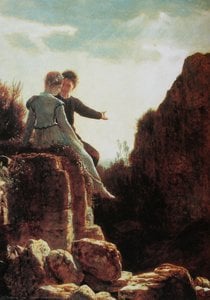
In the quietude of Arnold Böcklin’s 1878 masterpiece, “Centaur Watching Fish,” the viewer is invited into a realm where the boundaries between the mythological and the terrestrial dissolve. This evocative oil on canvas, currently held in the prestigious Kunsthaus Zürich, serves as a profound gateway into the Symbolist movement—a period of art history dedicated to exploring the hidden psychological depths of the human soul. Rather than presenting a mere scene from ancient legend, Böcklin crafts an immersive experience that speaks to the universal themes of solitude and the silent, rhythmic pulse of the natural world. The centaur, a creature of dual nature, reclines upon a serene shoreline, his gaze fixed upon the movement beneath the water's surface, creating a moment of suspended animation that feels both eternal and fleeting.
The composition is masterfully orchestrated to evoke a sense of Romantic reverie. Utilizing a horizontal format, Böcklin emphasizes the reclining posture of the centaur, grounding the mythological figure within a landscape of soft sands and swaying grasses. The artist deliberately eschews the rigid precision of strict realism in favor of an emotional truth. Through the use of diffused lighting and gentle shadows, he establishes an atmosphere of melancholic stillness. This technique allows the viewer to feel the weight of the silence, as if the very air around the creature is heavy with contemplation. It is a painting that does not demand attention through spectacle, but rather earns it through a subtle, haunting intimacy.
Technically, “Centaur Watching Fish” is a triumph of texture and perspective. Böcklin employs the impasto technique with remarkable skill, applying thick, deliberate layers of paint to render the coarse fur of the centaur’s equine half. This tactile richness provides a palpable sense of physicality, making the creature feel present and breathing within the frame. To balance this heavy texture, the artist utilizes atmospheric perspective to create an illusion of infinite depth. By reducing color saturation and softening the details of the distant horizon, he simulates a hazy, dreamlike distance that reinforces the theme of isolation. This method draws a direct lineage from the Romantic masters like Caspar David Friedrich, using the landscape as a mirror for spiritual introspection.
The color palette is a sophisticated arrangement of earthy tones—ochres, deep browns, and muted beiges—which lends the work an organic, timeless quality. These warm, grounded hues are contrasted by the subtle, shimmering light reflecting off the water, drawing the eye toward the focal point of the centaur’s quiet observation. For the collector or interior designer, this piece offers a unique aesthetic versatility; its somber yet tranquil mood provides a sophisticated anchor for a room, offering a sense of historical depth and intellectual gravity that more contemporary works may lack.
Beyond its visual splendor, the painting functions as a complex symbolic tapestry. The centaur itself—a hybrid of human intellect and animal instinct—serves as a powerful metaphor for the duality of existence. As he watches the fish, there is a profound sense of the relationship between humanity and the untamed elements of nature. The act of watching becomes a meditation on mortality; the stillness of the figure suggests a resignation to the cycles of life and death that govern both man and beast. There is a touch of sadness in his solitude, yet it is a beautiful, dignified melancholy that celebrates the quiet dignity of existence.
For those seeking to bring a piece of this profound emotional landscape into their personal spaces, a high-quality reproduction of this work offers more than just decoration. It provides a window into a bygone era of artistic exploration, a constant reminder of the beauty found in silence and the enduring power of myth. Whether placed in a library, a study, or a curated gallery space, “Centaur Watching Fish” continues to provoke thought, inviting all who encounter it to pause, breathe, and reflect upon the silent wonders of the world.
Statutul drepturilor de autor pentru "Centaur Watching Fish" de Arnold Böcklin este clar: opera este în domeniul public – drepturile de autor au expirat. Prezența sa la Kunsthaus Zürich nu schimbă acest statut.
„Centaur Watching Fish” aparține mișcării Symbolism, iar creatorul său a activat în epoca Secolul al XIX-lea.
Paleta lui "Centaur Watching Fish" de Arnold Böcklin este descrisă ca fiind Earthy, oferind o descriere concisă a culorilor lucrării.

Basel, Elveția, reprezintă punctul de plecare al unei vieți definite de tensiunea dintre tangibil și spectral. Născut pe 16 octombrie 1827, de Christian Frederick Böcklin și Ursula Lippe, tânărul ar fi depășit în cele din urmă comerțul cu mătase al tatălui său pentru a ajunge în sălile riguroase ale Academiei din Düsseldorf. Sub îndrumarea lui Schirmer, a început să absoarbă limbajul peisajului, o abilitate care ar fi fost folosită ulterior pentru a cartografia geografia sufletului uman. El nu a pictat doar decoruri; el a construit tărâmuri în care clasicul și macabrul se ciocnesc.
Traseul de la disciplina academică din Düsseldorf la lumina Parisului și greutatea antică a Romei marchează o schimbare fundamentală în viziunea sa. În Louvre, a absorbit istoria maeștrilor, dar atmosfera Italiei a fost cea care i-a modelat cu adevărat mâna. S-a întors în Roma între 1862 și 1866, o perioadă în care paleta sa a început să favorizeze culori mai violente și expresive. Aceasta nu era Italia luminoasă și însorită a Renașterii, ci un loc al umbrelor adânci și al greutății mitologice. Opera sa a început să tindă spre alegoric, utilizând figuri din antichitate pentru a explora prezența greaie și inevitabilă a mortalității.
Până la sfârșitul secolului XIX, reputația sa a fost ancorată de o preocupare specifică, tulburătoare. Între 1880 și 1886, a produs cinci versiuni ale operei Insula Morților. Această lucrare, inspirată de cimitirul englez din Florența, unde și-a fost îngropată fiica sa, a devenit un punct focal pentru mișcarea Simbolistă. Este o scenă de o liniște profundă: o insulă stâncoasă, copaci de cipre întunecați și o barcă ce se apropie de un țărm tăcut. Pictura nu doar descrie un loc; ea descrie o stare de existență. Această capacitate de a exprima intangibilul — șoaptele viselor și greutatea vieții de apoi — l-a plasat în centrul unei noi sensibilități europene.
Abordarea sa tehnică utiliza adesea un impasto gros și expresiv, în special în lucrări precum La Guerre (1896). În această piesă, pânza tremură sub haosul conflictului. El evită liniile curate ale tradiționalismului, optând în schimb pentru o compoziție densă, stratificată, unde figurile se ciocnesc printre ruine arhitecturale. Este o manifestare viscerală a distrugerii, unde vălul dintre mit și realitate se dizolvă într-o furtună de umbre. Stilul său a suprapus elemente cu Pre-Rafaeliții, însă a rămas distinct, concentrat pe un misticism care părea atât de antic, cât și tulburător de modern.
Impactul imaginii sale s-a întins mult dincolo de pânză, ajungând în tărâmul auditiv al muzicii de la sfârșitul perioadei romantice. Picturile sale au oferit un stimul vizual compozitorilor, influențând în mod remarcabil atmosfera lucrărilor lui Gustav Mahler. Capacitatea sa de a face puntea între vizual și psihic a însemnat că influența sa a fost simțită de cei care căutau să reprezinte subconștientul. Rădăcinile sale au atins mai multe generații de artiști:
A murit în Fiesole, Italia, lăsând în urmă o operă care a refuzat să fie ușor categorisită. A fost un pictor al peisajului elvețian, al tavernei romane și al grovei mitologice, însă adevăratul său subiect a rămas prezența tăcută și durabilă a necunoscutului. Lucrările sale rămân păstrate în colecții de importanță, inclusiv în Kunstmuseum Basel și Kunsthaus Zürich, servind ca ancoră pentru cei care explorează intersecția dintre mit și mortalitate.

1827 - 1901 , Elveția
 Previzualizare
 Trimite prin felicitare
 Distribuie
 Detalii despre lucrare
 Ghid
Ghid

 Descarcă imaginea
 Produse similare
 Radiografie
 Galerie foto
 Întrebări și răspunsuri
 Statistici


 Vezi mai mult