Comută pe versiunea Print Comandă pictură realizată manual Trimite
Detalii Ghid Adaugă la favorite Descarcă Produse similare Diaporama Statistici

St Mark

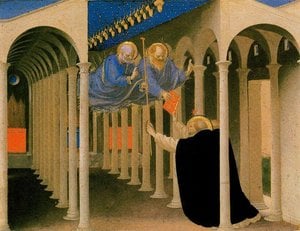
Andrea del Castagno’s ‘St Mark,’ painted in 1442, showcases Saint Mark holding a book on a boat, symbolizing faith and contemplation amidst Venetian culture. This fresco exemplifies early Renaissance artistic style, influenced by Masaccio and Giotto.

Descoperiți măiestria lui Andrea del Castagno (c.1419-1457)! Admirați frescele sale dramatice și inovatoare „Ultima Cină”, precum și semnătura sa asupra artei florentine. Un maestru al realismului și emoției – experiența autentică în galerii virtuale!

Achiziționați o imagine digitală de înaltă rezoluție, îmbunătățită, mult superioară previzualizării online.

Fiecare fișier este pregătit cu meticulozitate de specialiștii noștri interni, utilizând instrumente avansate și retușare manuală expertă. Ne asigurăm că fiecare imagine beneficiază de o claritate excepțională, o acuratețe precisă a culorilor și detalii fine.

Fișierul final este livrat prin e-mail în termen de 72 de ore, optimizat pentru utilizare imediată în medii profesionale, editoriale și de imprimare. Aceasta este aceeași calitate în care au încredere studiouri de design, edituri și galerii de top.

Imagine Digitală

Descărcați un fișier la rezoluție înaltă pentru afișare personală, imprimare și proiecte creative. ( Comută pe versiunea Print Comandă pictură realizată manual)

Preț total

$ 24,90

Inclus în fiecare comandă de imagini digitale

Livrare digitală de expertiză, garantată

Când alegeți WahooArt.com, nu primiți doar o simplă imagine – primiți o operă de artă digitală îmbunătățită profesional, creată cu precizie și susținută de o garanție de satisfacție. Iată tot ceea ce primești odată cu comanda ta, în mod automat:

shipping_icon
Livrare rapidă prin e-mail

Fișierul imaginii digitale la rezoluție înaltă vă va fi trimis prin e-mail în termen de 72 de ore de la finalizarea comenzii – gata pentru utilizare imediată.

canvas_icon
Fișier digital optimizat prin IA

Opera ta de artă este optimizată profesional prin intermediul unor instrumente AI avansate și al editării manuale, asigurând un nivel maxim de detalii, claritate și acuratețe a culorilor.

insurance_icon
Retransmitere gratuită pe viață

Ai șters sau ai pierdut din greșeală fișierul? Nu îți face griji – ți-l vom retrimite oricând, gratuit.

tax_icon
Fără taxe de import – Întotdeauna

Bucură-te instant de noua ta operă de artă, fără taxe vamale, taxe de import sau costuri de livrare – descărcările digitale sunt întotdeauna fără taxe.

color_icon
Garanția fidelității culorilor

Asigurăm o reflectare cât mai fidelă a culorilor originale în imaginea ta digitală, prin utilizarea unor instrumente profesionale și a proceselor de gestionare a culorii.

return_icon
Garanție de satisfacție de 100 de zile

Dacă nu sunteți mulțumit de imaginea digitală achiziționată, o vom revizui sau vă vom returna 100% în termen de 100 de zile – fără nicio întrebare.

guarantee_icon
Garanție de returnare 100% a banilor

Nu ești mulțumit? Primești rambursarea integrală în termen de 100 de zile de la primirea fișierului digital – fără nicio întrebare.

discount_icon
Reduceri pentru comenzi în volum

Cumpără 3 imagini, economisește 10% - Cumpără 5, economisește 15% - Cumpără 10+, economisește 20%. Ideal pentru proiecte creative, galerii și agenții.

Detalii rapide

  • Artist: Andrea del Castagno
  • Subject or theme: Religious iconography
  • Title: St Mark
  • Year: 1442
  • Artistic style: Realistic
  • Medium: Fresco
  • Notable elements or techniques: Perspective construction

Chestionar de artă

Fiecare întrebare are un singur răspuns corect.

Întrebare 1:
What is the primary subject matter depicted in Andrea del Castagno’s painting, ‘St Mark’?
Întrebare 2:
In what year was Andrea del Castagno commissioned to paint portraits of citizens executed after the Battle of Anghiari?
Întrebare 3:
The fresco ‘St Mark’ utilizes a technique known for its pioneering use of perspective, influenced by Masaccio. What is this technique called?
Întrebare 4:
According to historical records, Andrea del Castagno’s nickname ‘Andrea degli Impiccati’ refers to...
Întrebare 5:
What is one notable characteristic of Mark’s depiction of the Crucifixion compared to other artistic representations of similar themes?

A Vision of Venetian Faith: The Divine Presence in St Mark

In the heart of the Early Renaissance, amidst the salt-misted air of Venice, Andrea del Castagno breathed life into a vision of spiritual fortitude that continues to captivate the modern soul. His 1442 fresco, St Mark, is far more than a mere religious depiction; it is a profound meditation on the human journey toward the divine. As the patron saint of Venice, Mark is presented not as a distant icon, but as a palpable, commanding presence seated upon a boat, his gaze directed upward in a moment of celestial connection. The scene unfolds with a sense of movement and purpose, as pilgrims navigate the waters, their very existence a metaphor for the Christian quest for salvation and the arduous pilgrimage toward Jerusalem.

To behold this work is to witness the transformative power of naturalism. Heavily influenced by the revolutionary techniques of Masaccio, Castagno moved away from the ethereal, flattened aesthetics of the Gothic era to embrace a rugged, anatomical realism. Every muscle, every fold of fabric, and every gesture is rendered with an unprecedented precision that lends the figures a sculptural weight. This mastery of form is paired with an innovative use of perspective, creating a spatial depth that draws the viewer into the boat alongside the saint. The artist’s command over the fresco technique—applying pigment to wet plaster—has preserved a luminous vibrancy in the blues and reds, ensuring that the emotional intensity of the scene remains as striking today as it was in the fifteenth century.

Symbolism and the Renaissance Spirit

Every element within Castagno’s composition serves a higher narrative purpose, weaving a complex tapestry of meaning for the observant viewer. The book held aloft by Saint Mark is not merely an object of study but a potent symbol of divine revelation and the enduring power of sacred knowledge. As the figures surround him, their presence underscores the communal nature of faith, suggesting that the path to holiness is one traveled by many. This interplay between the individual saint and the collective group of pilgrims creates a rhythmic tension between solitude and community, much like the historical tensions Venice faced regarding papal authority and humanist progress.

For the collector or the interior designer, a reproduction of St Mark offers more than just aesthetic beauty; it brings a sense of historical gravity and intellectual depth to a space. The painting’s ability to evoke solemn reverence through its masterful use of light and shadow makes it an ideal centerpiece for environments that value contemplation and classical elegance. It is a piece that invites conversation, bridging the gap between the turbulent politics of the 1440s and the contemporary desire for art that possesses both physical presence and spiritual resonance. To display this work is to invite a fragment of the Renaissance spirit—a testament to resilience, faith, and the eternal human search for meaning—into the modern home.


Biografie artist

Andrea del Castagno, A Florentine Renaissance Master

Andrea del Castagno emerged from the Tuscan countryside near Florence around 1419 to leave an indelible mark on the artistic landscape. His life, though shrouded in some mystery, was one of innovation, dramatic realism, and a departure from the more stylized conventions that preceded him. Born in Castagnoli, not far from Monte Falterona, young Andrea’s family resided in Corella during periods of war between Florence and Milan before returning home. It was under the patronage of Bernardo de' Medici in 1440 that he truly entered the Florentine art world, an entry marked by a rather grim commission – painting portraits of citizens executed after the Battle of Anghiari on the facade of the Palazzo del Podestà. This act earned him the chilling nickname “Andrea degli Impiccati” (Andrea of the Hanged), a testament to the political turbulence and stark realities of the era, and a shadow that followed him throughout his career. While details regarding his formal training remain scarce, it is widely believed he studied under both Fra Filippo Lippi and Paolo Uccello, absorbing their techniques while forging his own distinct path. His early works, such as the fresco of the Crucifixion and Saints in the Ospedale di Santa Maria Nuova (1440-1441), already demonstrate a keen interest in perspective and figures that bear the clear influence of Masaccio’s groundbreaking naturalism.

Evolution of Style and Major Works

Castagno's artistic journey was one of continuous development, moving away from decorative approaches towards a more profound realism and psychological depth. His frescoes in San Tarasio Chapel, Venice (1442), represent an early expression of this evolving style, while his work within St Mark’s Basilica (1442-1443), including the poignant “Death of the Virgin,” showcased a growing mastery of dramatic composition. The Last Supper fresco at Sant’Apollonia in Florence, completed around 1447, stands as a monumental achievement—a pivotal moment in Renaissance art; its exceptional detail, naturalistic portrayal of the apostles' reactions, and innovative use of perspective captivated contemporaries and profoundly influenced later artists – most notably Leonardo da Vinci, who is believed to have studied it intently before embarking on his own iconic rendition of the scene. The Assumption with Saints Julian and Miniato (c. 1449-1450), now housed in Berlin, further exemplifies his evolving style, while the frescoes at Villa Carducci (c. 1449-1450) – a series of portraits including luminaries like Pippo Spano, Farinata degli Uberti, Dante, and Petrarch – demonstrate his skill in capturing individual character and intellectual presence. He brought to painting what Banco and Donatello brought to sculpture, as one contemporary observer noted, solidifying his place among the most important artists of his time.

Influences and Artistic Legacy

Andrea del Castagno did not work in isolation; his art was deeply informed by the giants who came before him. The pioneering use of perspective and naturalism championed by Masaccio served as a cornerstone of his artistic philosophy, while the expressive figures of Giotto di Bondone provided an early source of inspiration. He synthesized these influences into something uniquely his own – a style characterized by stark contrasts in light and shadow that heightened dramatic effect, and a commitment to portraying human emotion with unflinching honesty. This emphasis on realism and detailed observation wasn’t confined to Florence; it resonated throughout Italy, significantly impacting subsequent generations of artists, particularly those associated with the Ferrarese school. Cosme Tura, Francesco del Cossa, and Ercole de’ Roberti all demonstrate a clear debt to Castagno's innovations, carrying forward his legacy of naturalistic representation and psychological depth.

Notable Achievements

Castagno’s contribution to Florentine art is undeniable. His frescoes at San Tarasio Chapel and St Mark’s Basilica are testaments to his technical prowess and artistic vision—works that continue to inspire awe and admiration centuries later. The equestrian statue of Niccolò da Tolentino, commissioned by Florence Cathedral, represents a daring undertaking – a monumental fresco that pushed the boundaries of artistic ambition and showcased Castagno's mastery of large-scale compositions with dynamic energy. His portraits at Villa Carducci are equally remarkable for their psychological insight and meticulous attention to detail, capturing the essence of prominent figures from his era. Andrea del Castagno’s legacy extends beyond individual artworks; he helped establish a new aesthetic standard—one that prioritized realism, emotional intensity, and dramatic storytelling—laying the groundwork for the flourishing artistic achievements of the High Renaissance.

Historical Significance

Andrea del Castagno's life was marked by both artistic triumph and personal tragedy. Giorgio Vasari’s account suggests a contentious relationship with his peers, fueled by professional rivalry and speculation regarding accusations of murder – a claim largely discredited by historians today. Nevertheless, Andrea del Castagno remains an indispensable figure in the history of Renaissance art—a pioneer who challenged conventions and championed innovation, shaping the artistic landscape of Florence and influencing generations of artists to come. His work stands as a powerful reminder of the transformative potential of art and its ability to capture the spirit of an era.

Andrea del Castagno

Andrea del Castagno

1419 - 1457 , Italia

Informații esențiale

  • Artistic Movement Or Style: Renaștere timpurie
  • Artists Or Movements Influenced By This Artist: ['Școala Ferrarese']
  • Artists Who Influenced This Artist:
    • Masaccio
    • Giotto
  • Date Of Birth: c. 1419
  • Date Of Death: 1457
  • Full Name: Andrea del Castagno
  • Nationality: Italian
  • Notable Artworks:
    • Ultima Cină
    • Crucifixiune
    • Înviere
  • Place Of Birth: Castagnoli, Italia