Vezi în context Previzualizare AR Comandă pictură realizată manual Treci la imagine digitală Trimite
Detalii Ghid Adaugă la favorite Descarcă Produse similare Radiografie Diaporama Statistici

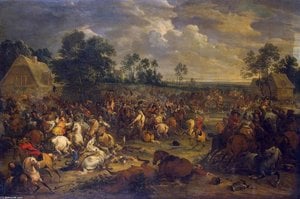
Cavalry Engagement

This reproduction is meticulously crafted by skilled artists, ensuring an authentic representation of Van der Meulen's original work. It serves as a valuable addition to any art collection or historical display.

Adam Frans van der Meulen (1632-1690) - pictor flamand renumit pentru scene de bătălii și peisaje, glorificând domnia lui Ludovic al XIV-lea și influențând arta militară franceză.

Giclée / Imprimare artistică

Printuri giclée sau pe canvas de calitate muzeală, cu proces de producție rapid și opțiuni flexibile de finisare. ( Comandă pictură realizată manual Treci la imagine digitală)

P118B $10
P118H $10
P118W $10
P438Z $10
P508JH $12
P508YH $12
P805H $10
P805Z $10
P919BZ $10
P919G $10
P919XJ $10
P959ZH $10
P968JZ $12
W106C $8
W218G $10
W218JH $8
W218Y $10
W307PJ $10
W316G $10
W316PJ $8
W316Y $10
W398PJ $8
W4111J $10
W500HY $15
W500JH $15
W692G $12
W849H $8
W940BG $15
W953PJ $8

Dimensiuni standard
personalizat
CM
INCH

Alegeți dintre dimensiunile noastre prestabilite, care respectă proporțiile originale ale operei de artă.

lățime
înălțime

Puteți introduce propriile dimensiuni pentru a se potrivi unui anumit cadru sau spațiu. Dacă dimensiunea selectată nu corespunde proporțiilor imaginii originale, vom decupa lucrarea de artă sau vom extinde imaginea cu margini oglindite sau cu o culoare uniformă. Un mockup digital va fi trimis pentru aprobarea dumneavoastră înainte de începerea producției.
Vă rugăm să rețineți că previzualizarea de pe ecran nu reflectă decuparea sau extinderea reală. Doar mockup-ul va arăta cu exactitate compoziția finală.
Deși dimensiunile personalizate sunt disponibile, vă recomandăm să selectați o dimensiune din lista predefinită pentru a păstra proporțiile originale.

Livrare în întreaga lume () în 2 săptămâni, în loc de cele 4/5 săptămâni standard. (23 Septembrie)

why_choose_icon
Livrare expres gratuită la nivel mondial
why_choose_icon
Pânză de in premium
why_choose_icon
Asigurare completă pentru transport
why_choose_icon
Garanție de rambursare a taxelor vamale
why_choose_icon
Garanția fidelității culorilor
why_choose_icon
Politica de retur în 100 de zile (doar pentru defecte)
why_choose_icon
Garanție de rambursare 100%
why_choose_icon
Reducere pentru comenzi multiple

Preț total

$ 68

reproduction

Cavalry Engagement

Giclée / Imprimare artistică

Dimensiune reproducere

-

Preț total

$ 68

Detalii rapide

  • Artist: Adam van der Meulen
  • Medium: Oil on canvas
  • Influences: Louis XIV
  • Dimensions: 118 x 175 cm
  • Subject or theme: Military scene
  • Title: Cavalry Engagement
  • Location: Hermitage Museum

Chestionar de artă

Fiecare întrebare are un singur răspuns corect.

Întrebare 1:
What is the primary subject depicted in Adam Frans van der Meulen’s ‘Cavalry Engagement’?
Întrebare 2:
In what century was ‘Cavalry Engagement’ created?
Întrebare 3:
The painting utilizes a technique that creates depth and texture. What is this technique primarily referred to?
Întrebare 4:
Which of the following best describes Adam Frans van der Meulen’s artistic style as exemplified in ‘Cavalry Engagement’?
Întrebare 5:
The painting is currently housed in which museum?

A Chronicle of Power and Precision: Adam Frans van der Meulen’s Cavalry Engagement

Adam Frans van der Meulen's “Cavalry Engagement” isn’t merely a depiction of battle; it’s a meticulously crafted testament to the burgeoning power of Louis XIV, the ‘Sun King,’ and a stunning example of Baroque artistry. Completed in 1657 and currently residing within the hallowed halls of the Hermitage Museum in St. Petersburg, this oil on canvas painting transcends its historical subject matter to become a vibrant tableau of dynamic movement, opulent detail, and calculated propaganda. Van der Meulen, a key figure in shaping Louis XIV’s image, understood that visual narratives could be as potent as royal decrees, and “Cavalry Engagement” stands as a prime illustration of this strategic approach to art.

The scene unfolds with breathtaking immediacy – a chaotic yet controlled clash of cavalry. Horses, rendered with an almost palpable sense of energy, surge forward in various states of motion; riders, clad in the rich fabrics and gleaming armor characteristic of the period, engage in fierce combat. The artist’s mastery lies not just in capturing the physicality of the scene but also in conveying a profound sense of depth and texture. Light and shadow are deployed with masterful precision, carving out forms and directing the viewer's eye towards the heart of the action – a cluster of soldiers locked in deadly struggle. The attention to detail is remarkable; from the intricate stitching on the armor to the subtle variations in the horses’ manes and tails, every element speaks to Van der Meulen’s dedication to historical accuracy and his profound understanding of equestrian art.

Baroque Brilliance: Technique and Style

Van der Meulen's style is deeply rooted in the Baroque tradition, yet he possesses a distinctly individual voice. He employs a rich palette – deep reds, blues, and golds dominate, creating an atmosphere of dramatic intensity. The brushwork is loose and expressive, contributing to the sense of movement and immediacy. However, it’s not simply about capturing raw emotion; Van der Meulen meticulously builds up layers of paint, achieving remarkable detail in the rendering of textures – the polished steel of the armor, the flowing fabric of the clothing, and the muscular forms of the horses. The composition itself is carefully balanced, guiding the eye through the scene with a clear sense of hierarchy. The background landscape, though somewhat generalized, provides essential context, grounding the action within a recognizable, albeit idealized, setting.

  • Oil on Canvas: The medium lends itself perfectly to capturing both detail and luminosity, crucial elements in Van der Meulen’s style.
  • Dynamic Composition: The arrangement of figures creates a sense of movement and drama, pulling the viewer into the heart of the conflict.
  • Rich Color Palette: Deep reds, blues, and golds evoke a sense of power, wealth, and military might.

A Window to the 17th Century: Historical Context

“Cavalry Engagement” offers a valuable glimpse into the military practices and societal norms of the 17th century. The attire worn by the soldiers – armor, weaponry, and clothing styles – are all meticulously researched and faithfully reproduced, providing insights into the equipment and uniforms used during this period. Beyond its aesthetic qualities, the painting holds historical significance as a visual record of warfare and military strategy. It reflects the importance of cavalry in 17th-century conflicts, showcasing their role in flanking maneuvers and decisive charges. Furthermore, it’s important to consider that Van der Meulen wasn't simply documenting history; he was actively contributing to its narrative by creating images that glorified Louis XIV and his reign.

Bringing the Masterpiece Home: Reproductions for Today

WahooArt offers meticulously crafted hand-painted reproductions of “Cavalry Engagement,” allowing art lovers to experience the beauty and power of this iconic work in their own homes. Our skilled artists replicate Van der Meulen’s techniques with exceptional accuracy, capturing not only the visual details but also the emotional impact of the original painting. Whether you're a collector, an interior designer seeking a statement piece, or simply someone captivated by Baroque art, our reproductions provide a stunning and authentic representation of this remarkable masterpiece. Explore the collection at WahooArt.com to discover the perfect reproduction for your space.


Biografie artist

A Life Dedicated to the Sun King

Adam Frans van der Meulen, a figure often overshadowed by the more flamboyant personalities of 17th-century European art, nevertheless played a pivotal role in shaping the image and legacy of Louis XIV. Born in Brussels in 1632, his life wasn’t one of solitary artistic pursuits but rather a dedicated service to the French monarchy, transforming battlefield scenes and courtly grandeur into powerful visual narratives designed to solidify the King's divine right and project an aura of unparalleled power. His journey began within the traditional confines of a master-apprentice relationship, absorbing techniques from Peter Snayers, a renowned Antwerp painter specializing in dramatic depictions of military encounters and aristocratic life – subjects that would become the bedrock of his own artistic development. This early training instilled in him a profound understanding of composition, perspective, and the art of capturing dynamic movement, skills he would later hone to breathtaking effect. Becoming a master within the Brussels Guild of Saint Luke in 1651 marked a significant milestone, yet it was an invitation from Paris in 1664 – orchestrated by Jean-Baptiste Colbert, Louis XIV’s shrewd and influential Superintendent of Buildings, Arts, and Manufactures – that truly propelled him onto the grand stage of European art.

From Workshop to the Heart of Versailles

Colbert recognized Van der Meulen's exceptional talent for translating action and detail into compelling visual representations, qualities deemed essential for immortalizing Louis XIV’s military triumphs and projecting an image of unwavering authority. He was entrusted with contributing to a series of ambitious tapestries – monumental projects intended as potent symbols of royal power and national pride. This wasn’t merely a commission; it was an immersion into the very heart of the French court, placing Van der Meulen within the orbit of Charles Le Brun, the director of the Gobelins Manufactory, a veritable powerhouse of artistic production under Louis XIV's patronage. Working alongside Le Brun and other skilled Flemish artists like Adriaen Frans Boudewijns and Abraham Genoels, Van der Meulen became an integral part of a team dedicated to constructing the myth of the ‘Sun King.’ He wasn’t simply a painter; he was a conceptualizer, meticulously documenting Louis XIV's campaigns – accompanying the king on expeditions to Flanders and Burgundy, sketching scenes of battles, sieges, and strategic maneuvers with painstaking detail. These sketches served as the blueprints for elaborate tapestry designs, each thread woven with intention to convey a specific message about royal power and military prowess. The annual increases in his wages at the Gobelins reflected not only his artistic skill but also his growing importance within the French court’s propaganda machine.

The Art of Propaganda: Tapestries and Military Glory

Van der Meulen's contribution extended far beyond mere decoration; he was actively involved in shaping the narrative surrounding Louis XIV’s military victories. The “History of the King” series, depicting a succession of battles and campaigns, stands as perhaps his most enduring legacy. These tapestries weren’t simply records of events; they were carefully constructed visual arguments designed to reinforce the idea of Louis XIV's invincibility and divine right to rule. He didn’t shy away from portraying the brutal realities of war – the chaos of battlefields, the carnage of sieges – but always within a framework that glorified the king’s leadership and strategic brilliance. Furthermore, he contributed to the “Maison Royales” series, showcasing the opulent palaces of Versailles and other royal residences, further solidifying the image of Louis XIV as a benevolent and powerful ruler. The meticulous detail with which he rendered architecture, furniture, and courtly attire underscored the grandeur of the monarchy while subtly reinforcing its authority. His work was a testament to the power of art as propaganda, skillfully blending artistic skill with political messaging.

Style and Influence: A Baroque Master

Van der Meulen’s artistic style is characterized by a remarkable dynamism and an almost obsessive attention to detail. His battle scenes are not static representations; they pulsate with energy, capturing the frenetic movement of cavalry charges, the clash of steel, and the desperate cries of soldiers. He possessed an unparalleled ability to render horses with breathtaking realism – their musculature taut, their eyes gleaming with fierce determination – a skill that earned him considerable acclaim and was highly valued in the context of military painting. However, it’s crucial to recognize that his work wasn't solely driven by aesthetic considerations; it served a clear propagandistic purpose, meticulously crafting an image of Louis XIV as a divinely ordained ruler destined for eternal glory. This focus on realism, combined with a deliberate emphasis on spectacle and grandeur, profoundly influenced the development of military painting in France, establishing a style that would be emulated by subsequent generations of artists. His engravings, commissioned by the King himself, further disseminated his work throughout Europe, cementing his reputation as a master painter and courtier.

A Legacy Forged in Service

Adam Frans van der Meulen died in Paris in 1690, leaving behind a legacy that extends far beyond the canvases and tapestries he created. He wasn’t merely an artist; he was a key architect of Louis XIV's image, a skilled propagandist who used his art to shape public perception and solidify the king’s authority. His detailed depictions of battles, landscapes, and courtly life offer invaluable insights into the era, revealing not only the artistic techniques of the time but also the complex interplay between art, politics, and power. His appointment as “Ordinary Painter to the King” in 1673, a remarkable achievement considering he hadn’t submitted a traditional reception piece, stands as a testament to his established reputation and the esteem in which he was held by Louis XIV himself. Van der Meulen's work continues to be studied and admired for its technical brilliance, its historical significance, and its enduring power to evoke the grandeur of the French Baroque era.
Adam Frans van der Meulen

Adam Frans van der Meulen

1632 - 1690 , Belgia

Informații rapide

  • Artistic Movement Or Style: Baroque
  • Artists Or Movements Influenced By This Artist: ['Pictura militară franceză']
  • Artists Who Influenced This Artist: ['Pieter Snayers']
  • Date Of Birth: 1632, Bruxelles
  • Date Of Death: 1690, Paris
  • Full Name: Adam Frans van der Meulen
  • Nationality: Flemish
  • Notable Artworks:
    • Istoriele Regelui
    • Palatul Regal
  • Place Of Birth: Bruxelles, Belgia