Consultoria de arte gratuita

x
Comprar impressão Comprar impressãoEncomendar pintura Encomendar pintura EnviarEnviar
DetalhesDetalhes Adicionar aos favoritos Adicionar aos favoritos BaixarBaixar SemelhantesSemelhantes Raio XRaio X SlideshowSlideshow

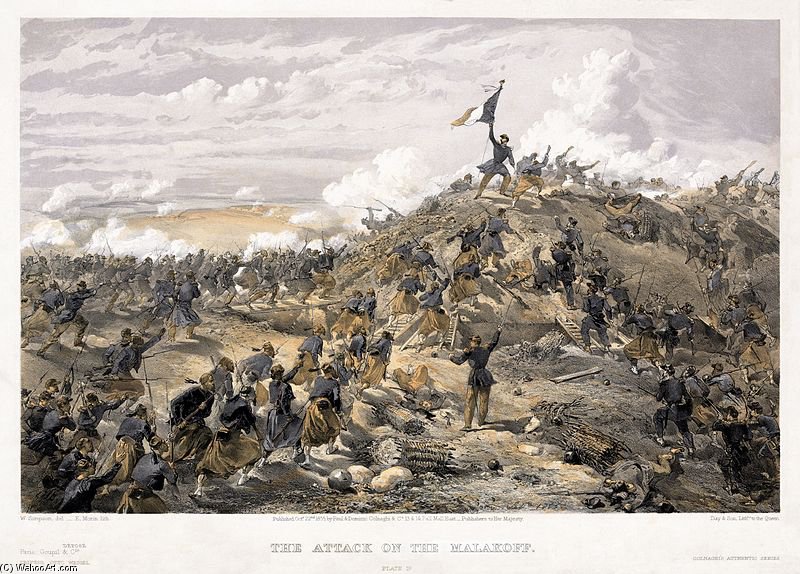
Attack On The Malakoff

Explore William Simpson’s "Attack On The Malakoff," a dynamic lithograph depicting Crimean War chaos. A detailed historical artwork showcasing realism & dramatic battle scenes.

William Simpson (1823-1899): Artista britânico famoso por seus desenhos realistas da Guerra da Crimeia, Índia e culturas diversas. Um cronista visual da época.

Adquira uma imagem digital de alta resolução e aprimorada, muito superior à prévia online.

Cada arquivo é meticulosamente preparado por nossos especialistas internos, utilizando ferramentas avançadas e retoques manuais de alta precisão. Garantimos que cada imagem apresente clareza excepcional, fidelidade de cores e detalhes minuciosos.

O arquivo final é entregue por e-mail em até 72 horas, otimizado para uso imediato em ambientes profissionais, editoriais e de impressão. Esta é a mesma qualidade utilizada por estúdios de design de alto nível, editoras e galerias.

Imagem Digital

Baixe um arquivo de alta resolução para exibição pessoal, impressão e projetos criativos.

Preço Total

$9.99

Incluído em cada pedido de imagem digital

Entrega Digital Especializada, Garantida

Ao escolher o WahooArt.com, você não está apenas recebendo uma imagem — você está recebendo uma obra de arte digital profissionalmente aprimorada, elaborada com precisão e com garantia de satisfação. Aqui está tudo o que acompanha seu pedido, automaticamente:

shipping_icon
Entrega rápida por e-mail

O seu arquivo de imagem digital em alta resolução será enviado por e-mail em até 72 horas após o pedido — pronto para uso imediato.

canvas_icon
Arquivo Digital com IA

Sua obra de arte é otimizada profissionalmente por meio de ferramentas avançadas de IA e edição manual, garantindo o máximo de detalhes, clareza e precisão de cores.

insurance_icon
Reenvio Gratuito Vitalício

Apagou ou perdeu o seu ficheiro acidentalmente? Não se preocupe – nós reenviamos para si a qualquer momento, gratuitamente.

tax_icon
Sem Taxas de Importação - Sempre

Desfrute da sua obra de arte instantaneamente, sem taxas alfandegárias, impostos ou custos de entrega — downloads digitais são sempre isentos de taxas.

color_icon
Garantia de Precisão de Cores

Garantimos que sua imagem digital reflita as cores originais com a maior fidelidade possível, utilizando ferramentas profissionais e gerenciamento de cores.

return_icon
Garantia de Satisfação de 60 Dias

Se você não estiver satisfeito com sua imagem digital, nós a revisaremos ou reembolsaremos 100% dentro de 60 dias — sem perguntas.

guarantee_icon
Garantia de Reembolso 100%

Não está satisfeito? Receba o reembolso total em até 60 dias após o recebimento do seu arquivo digital — sem perguntas.

discount_icon
Descontos para pedidos em lote

Compre 3 imagens, economize 10% - Compre 5, economize 15% - Compre 10+, economize 20%. Ideal para projetos criativos, galerias e agências.

Obras Relacionadas


Biografia do Artista

A Life Etched in Conflict and Culture

William Simpson, a name inextricably linked to the brutal realities of the Crimean War—often whispered as “Crimean Simpson”—was far more than simply a war artist. He was a visual chronicler, an intrepid observer who meticulously documented a rapidly transforming 19th-century world, capturing not just battles but also the profound human cost and cultural nuances of his time. Born into the crushing poverty of Glasgow in 1823, his journey from hardship to recognition stands as a remarkable testament to both innate artistic talent and an unwavering spirit of tenacity. His early years were shadowed by a difficult family situation; burdened by an abusive and alcoholic father, he sought refuge with his grandmother in Perth at the tender age of ten—a move that, while offering stability, curtailed formal schooling but ignited within him a lifelong dedication to self-directed learning and artistic exploration. This pursuit of knowledge continued through apprenticeships at the Glasgow lithographic firm of Macfarlane, an experience he later described as profoundly formative, and evening studies at the Andersonian University and Mechanics’ Institute—institutions that fostered his intellectual curiosity and honed his observational skills. These early experiences laid a solid foundation for a career that would seamlessly blend artistic skill with an insatiable desire to understand and represent the world beyond Britain's shores.

Witness to War: The Crimean Revelation

The outbreak of the Crimean War in 1853 irrevocably altered Simpson’s trajectory. Initially commissioned to create a lithograph based on secondhand accounts of the Battle of Alma, his exceptional talent quickly caught the attention of Colnaghi & Son, who swiftly dispatched him directly to Crimea in November 1854. This wasn't merely about illustrating battles; it was about *experiencing* them firsthand and translating that visceral experience onto paper with painstaking detail. Simpson didn’t shy away from depicting the grim realities of war—the pervasive mud, the agonizing suffering etched on the faces of exhausted soldiers, the sheer, overwhelming exhaustion that permeated every aspect of the conflict. His watercolors weren't romanticized visions; they were unflinching records of a brutal and chaotic reality. These images, rendered with remarkable sensitivity and precision, were then transformed into lithographs for publications like *The Illustrated London News*, bringing the horrors—and occasionally, the heroism—of the Crimean War directly into British homes, shaping public opinion and fostering a deeper understanding of the conflict far removed from the confines of official reports. He became known as “Crimean Simpson” not just for his presence on the peninsula, but for the authenticity and immediacy he brought to his depictions—a quality that distinguished his work from more detached or sanitized accounts. The Seat of War in the East, his seminal series of lithographs based on these sketches, remains a landmark achievement in war reporting and visual storytelling—a testament to his courage, artistic skill, and unwavering commitment to capturing truth on paper under immense pressure.

Beyond Crimea: India, Exploration, and Artistic Ambition

Following his success in Crimea, Simpson’s career took him far beyond the battlefields of southern Russia. He was entrusted with a significant commission by Colnaghi & Son—to document the aftermath of the Sepoy Revolt of 1857 in India. This expedition wasn't simply about recording military events; it represented a profound immersion into Indian landscapes, culture, and daily life. Simpson’s approach was characterized by an extraordinary level of sensitivity and respect for the local population, a rarity for Western artists at the time. He captured bustling marketplaces teeming with activity, serene temples radiating spiritual energy, majestic palaces reflecting imperial grandeur, and portraits of ordinary Indians—all rendered with remarkable detail and nuance. His watercolors from India reveal not just a keen eye for visual beauty but also a deep understanding of the subcontinent’s complex social fabric and historical context. Despite facing numerous challenges – logistical difficulties, cultural barriers, and the ever-present realities of colonial rule – Simpson produced a body of work that stands as one of the most insightful and evocative depictions of India during this turbulent period. He envisioned a comprehensive illustrated volume on India—a monumental undertaking that unfortunately fell through due to financial constraints faced by Day & Son, his intended publisher. However, his Indian watercolors remain invaluable historical records, offering a rare glimpse into a pivotal moment in British colonial history and showcasing the richness and diversity of Indian culture.

Technique and Style: A Master of Watercolor

Simpson’s artistic style was deeply rooted in the conventions of Victorian watercolor painting—a medium he mastered with exceptional skill. He favored loose, expressive brushstrokes, allowing for a sense of spontaneity and immediacy that perfectly complemented his observational approach. His use of color was particularly noteworthy—he employed a vibrant palette to capture the intensity of light and shadow, creating atmospheric effects that conveyed both beauty and drama. He meticulously rendered textures – from the rough bark of trees to the folds of clothing – demonstrating an impressive level of technical proficiency. Furthermore, Simpson’s work is distinguished by his ability to convey emotion—the weariness of soldiers, the solemnity of religious ceremonies, the vibrant energy of Indian markets—all through subtle shifts in tone and composition. His watercolors weren't simply representations of reality; they were imbued with a sense of empathy and understanding, reflecting his own deep engagement with the subjects he depicted.

Legacy and Lasting Influence

William Simpson’s legacy extends far beyond his stunning visual documentation of 19th-century events. He played a crucial role in establishing the nascent field of “special art”—an approach to journalism that involved embedding artists directly within conflict zones, allowing them to provide firsthand visual reporting. His work profoundly influenced subsequent generations of war correspondents and documentary photographers. Simpson’s images continue to be studied by historians, art critics, and students alike, offering invaluable insights into a pivotal era in British history—a time of imperial expansion, social upheaval, and profound cultural change. He was elected an associate of the Institute of Painters in Water Colours in 1874 and became a full member five years later, solidifying his place as a respected figure within the British art establishment. His detailed watercolors and lithographs remain a testament to his artistic skill, journalistic integrity, and enduring legacy as one of the most important visual chroniclers of the Victorian era.
William Simpson (Crimean Simpson)

William Simpson (Crimean Simpson)

1823 - 1899 , Reino Unido

Informações Rápidas

  • Artistic Movement Or Style: Arte Victoriana
  • Artists Or Movements Influenced By This Artist:
    • Fotoperiodismo
    • Realismo
  • Artists Who Influenced This Artist:
    • David Roberts
    • John Brett
  • Date Of Birth: 1823
  • Date Of Death: 1899
  • Full Name: William Simpson
  • Nationality: Britânico
  • Notable Artworks:
    • A Cadeira de Guerra
    • Retirada de Sebastopol
    • Mongólia perto da Grande Muralha
    • Akalis no tanque sagrado
    • Acampamento da Divisão Quarta
  • Place Of Birth: Glasgow, Reino Unido