Visualizar em escala Visualizar em RA Alternar para Impressão Encomendar reprodução pintada à mão Enviar
Ver detalhes Guia Adicionar aos favoritos Baixar imagem Semelhantes Raio X Apresentação de slides Estatísticas

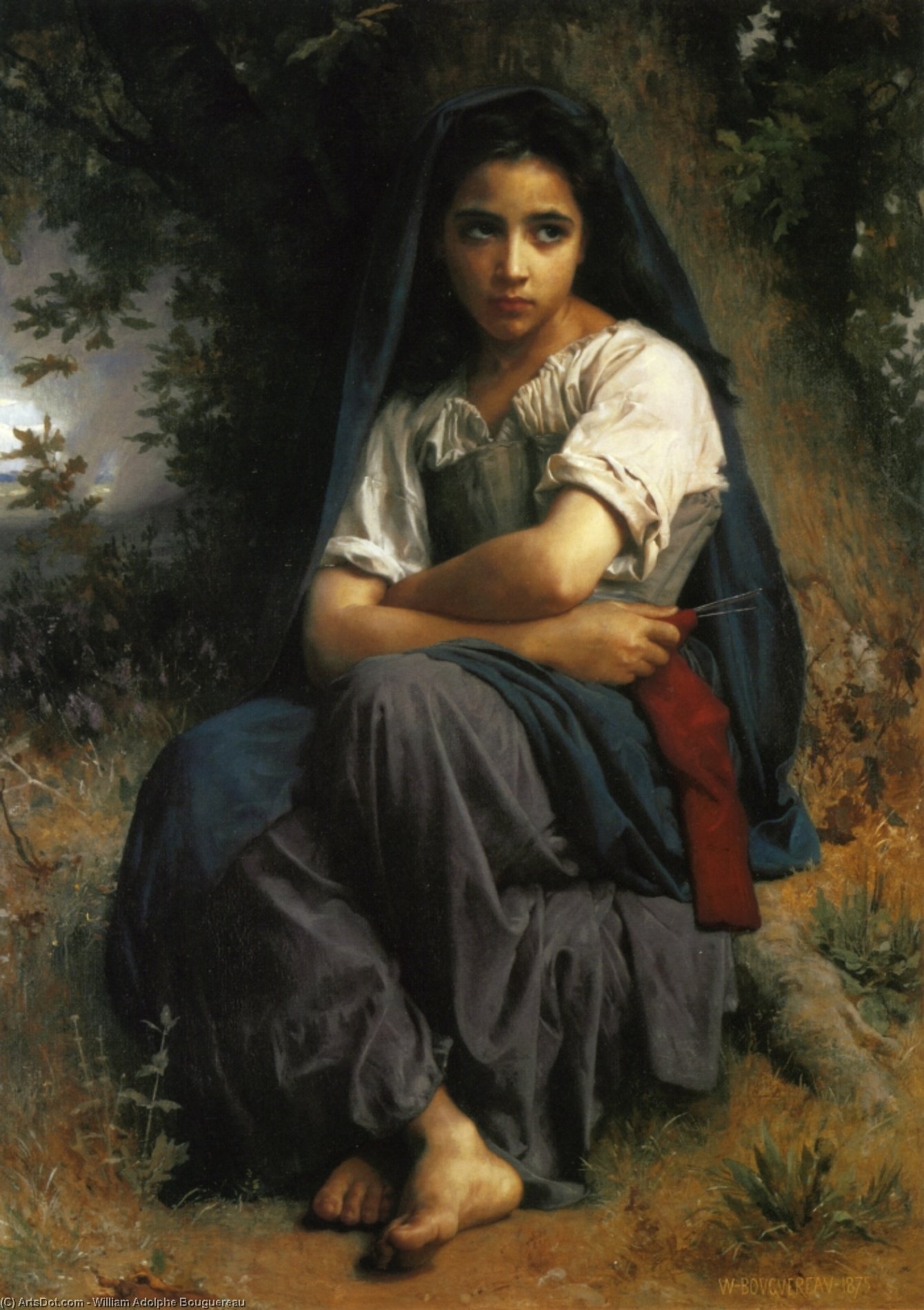
The Little Knitter

Captured in Academicism style by William-Adolphe Bouguereau during the Belle Époque, ‘The Little Knitter’ portrays a serene young girl lost in contemplation amidst dappled sunlight and scattered leaves—a timeless masterpiece inviting you to experience its exquisite beauty.

Descubra William-Adolphe Bouguereau (1825-1905), mestre do realismo acadêmico! Admire suas belas cenas mitológicas, retratos e a forma feminina. Explore sua obra icônica hoje!

Adquira uma imagem digital de alta resolução e aprimorada, muito superior à prévia online.

Cada arquivo é meticulosamente preparado por nossos especialistas internos, utilizando ferramentas avançadas e retoques manuais de alta precisão. Garantimos que cada imagem apresente clareza excepcional, fidelidade de cores e detalhes minuciosos.

O arquivo final é entregue por e-mail em até 72 horas, otimizado para uso imediato em ambientes profissionais, editoriais e de impressão. Esta é a mesma qualidade utilizada por estúdios de design de alto nível, editoras e galerias.

Imagem Digital

Baixe um arquivo de alta resolução para exibição pessoal, impressão e projetos criativos. ( Alternar para Impressão Encomendar reprodução pintada à mão)

Preço Total

$ 24,90

Incluído em cada pedido de imagem digital

Entrega Digital Especializada e Garantida

Ao escolher o WahooArt.com, você não está apenas adquirindo uma imagem — você está recebendo uma obra de arte digital profissionalmente aprimorada, elaborada com precisão e com garantia de satisfação. Aqui está tudo o que acompanha seu pedido, automaticamente:

shipping_icon
Entrega rápida por e-mail

O seu arquivo de imagem digital em alta resolução será enviado por e-mail em até 72 horas após o pedido — pronto para uso imediato.

canvas_icon
Arquivo Digital com IA Otimizado

Sua obra de arte é otimizada profissionalmente por meio de ferramentas avançadas de IA e edição manual, garantindo o máximo de detalhes, clareza e precisão de cores.

insurance_icon
Reenvio gratuito vitalício

Apagou ou perdeu o seu ficheiro acidentalmente? Não se preocupe – nós reenviamos para si a qualquer momento, gratuitamente.

tax_icon
Sem Taxas de Importação - Sempre

Desfrute da sua obra de arte instantaneamente, sem taxas alfandegárias, impostos ou custos de entrega — downloads digitais são sempre isentos de taxas.

color_icon
Garantia de Precisão de Cores

Garantimos que sua imagem digital reflita as cores originais com a maior fidelidade possível, utilizando ferramentas profissionais e gerenciamento de cores.

return_icon
Garantia de satisfação de 100 dias

Se não estiver satisfeito com a sua imagem digital, nós a revisaremos ou reembolsaremos 100% dentro de 100 dias — sem perguntas.

guarantee_icon
Garantia de Reembolso 100%

Não está satisfeito? Receba o reembolso total em até 100 dias após o recebimento do seu arquivo digital — sem perguntas.

discount_icon
Descontos para pedidos em lote

Compre 3 imagens, economize 10% - Compre 5, economize 15% - Compre 10+, economize 20%. Ideal para projetos criativos, galerias e agências.

Detalhes Rápidos

  • Artist: William-Adolphe Bouguereau
  • Title: The Little Knitter
  • Notable elements: Detailed depiction; Tranquil setting
  • Dimensions: 115 x 81 cm
  • Year: 1875
  • Medium: Oil on canvas

A Moment Frozen in Time: The Essence of Innocence

In the quietude of a sun-dappled afternoon, William-Adolphe Bouguereau’s 1875 masterpiece, "The Little Knitter," invites the viewer into a realm of profound serenity and timeless grace. This exquisite oil on canvas serves as more than just a portrait; it is a window into the soul of the Belle Époque, capturing a fleeting moment of childhood contemplation that feels both deeply personal and universally resonant. The painting depicts a young girl seated gently upon the earth, her focus entirely absorbed in the rhythmic, meditative task of knitting. There is an undeniable tenderness in her posture, a soft vulnerability that immediately establishes an emotional bond between the subject and the observer. As she gaz indeed off-camera, her gaze suggests a rich inner world, perhaps lost in a daydream or observing a distant movement in the natural landscape, leaving the viewer to wonder about the thoughts swirling behind her innocent eyes.

The setting, a lush backdrop of verdant trees and scattered leaves, provides a natural sanctuary for this domestic scene. The interplay of light and shadow within the foliage adds a layer of depth and organic beauty, grounding the subject in a realistic yet idealized pastoral environment. For collectors and interior designers alike, this piece offers a sense of tranquility that can transform any space, bringing an air of classical sophistication and peacefulness to a room. It is a work that does not demand attention through loud colors or jarring compositions, but rather earns it through a subtle, magnetic charm that lingers long after the first glance.

The Mastery of Academic Impressionism

Technically, "The Little Knitter" is a triumph of Academic Impressionism, a sophisticated style where Bouguereau masterfully reconciled the rigorous precision of classical tradition with the soft, luminous atmosphere of modern experimentation. His brushwork is nothing short of miraculous; he employs a smooth, polished technique that almost erases the presence of the artist’s hand, creating an ethereal, porcelain-like finish on the girl's skin. This meticulous attention to detail allows for a palpable sense of texture that engages the senses—one can almost feel the weight and softness of the wool scarf wrapped around her head and the delicate, fine weave of her blue dress.

Bouguereau’s palette is a masterclass in subtlety, utilizing muted blues, soft greens, and earthy tones to evoke a serene and harmonious atmosphere. This careful selection of color avoids the harshness of reality, instead leaning into an idealized beauty that was the hallmark of his celebrated career. By blending the structural integrity of the Old Masters—drawing inspiration from the likes of Raphael and Titian—with a more contemporary approach to light and color, Bouguereau created a visual language that feels both historically significant and eternally fresh. For those seeking a high-quality reproduction, this technical brilliance is what makes the painting such a captivating centerpiece for fine art collections.

Symbolism and the Legacy of Virtue

Beyond its aesthetic splendor, "The Little Knitter" is steeped in symbolic meaning, reflecting the moral and social values of late 19th-century France. The act of knitting serves as a powerful metaphor for domesticity, patience, and the quiet transmission of care and tradition from one generation to the next. It represents a nurturing instinct and the beauty found in simple, virtuous labors. In an era of rapid industrialization, Bouguereau’s focus on such a peaceful, domestic vignette offered a nostalgic retreat into a world defined by innocence and moral clarity.

The painting functions as a poignant reminder of the beauty inherent in stillness. In our modern, fast-paced existence, the image of a child lost in a moment of quiet industry offers a much-needed emotional respite. It is this profound psychological truth—the ability of art to capture the sanctity of a single, unhurried moment—that ensures Bouguereau’s enduring legacy. Whether displayed in a private study, a grand salon, or a contemporary living space, "The Little Knitter" continues to inspire awe, serving as a testament to the power of beauty to soothe the spirit and elevate the human experience.


Biografia do Artista

A Life Immersed in Beauty: The World of William-Adolphe Bouguereau

William-Adolphe Bouguereau’s life unfolded within the serene landscapes of La Rochelle, France – a city steeped in maritime history and surrounded by vineyards and olive groves. Born in 1825, his early years were nurtured amidst this idyllic setting, fostering an innate appreciation for beauty and a profound connection to the natural world. From a young age, Bouguereau’s artistic inclinations shone brightly, leading him away from the expected path of commerce and towards the pursuit of art. He received his initial training in La Rochelle, developing a foundational understanding of drawing and composition. However, it was his relocation to Paris and enrollment at the prestigious École des Beaux-Arts that truly ignited his artistic journey. Under the tutelage of François-Edouard Picquenot, Bouguereau honed his skills, absorbing the techniques and philosophies of the Old Masters – particularly the works of Raphael and Titian. These influences weren’t merely imitations; they became the very bedrock upon which he constructed his unique artistic vision: a commitment to meticulous detail, luminous color palettes, and an unwavering dedication to portraying beauty in its most idealized form. Bouguereau wasn't simply replicating what he observed; he was striving to capture an inherent sense of perfection—a notion that resonated deeply with the aesthetic sensibilities of his time.

The Architect of Academic Perfection

Bouguereau’s artistic style is often characterized as “academic realism,” a designation that accurately reflects his unparalleled mastery of anatomy, light, and composition. His canvases are populated by figures rendered with astonishing precision—the delicate curve of a shoulder, the subtle flush of skin, the expressive depth of an eye. Yet, his work transcends mere technical skill; it’s infused with profound emotion and narrative power. He frequently chose to depict mythological scenes, transforming ancient tales into vibrant, emotionally resonant moments. *The Birth of Venus*, for instance, isn't simply a visual representation of the goddess emerging from the sea—it’s an ode to feminine grace and ethereal beauty, imbued with a sense of timeless serenity. Similarly, works like *Zenobia Found by Shepherds on the Banks of the Araxes* capture vulnerability and pathos with remarkable sensitivity, revealing a profound understanding of human emotion. Beyond mythology, Bouguereau found inspiration in everyday life—shepherdesses tending their flocks, young girls at play, mothers cradling their children. These genre scenes, seemingly simple in their presentation, are elevated to an artistic level through his meticulous attention to detail and atmospheric rendering. *Faneuse (1869)* exemplifies this approach, portraying a young woman in a tranquil landscape with exquisite precision and a palpable sense of peace. Bouguereau’s dedication to capturing innocence and tenderness is particularly evident in paintings like *Child at Bath*, where the delicate rendering of skin and light creates an image of captivating beauty and serenity.

Influences and Artistic Development

Bouguereau's artistic development was shaped by a confluence of influences, both classical and contemporary. As mentioned earlier, he deeply admired the works of Raphael and Titian, seeking to emulate their mastery of composition, color, and anatomical accuracy. However, his training at the École des Beaux-Arts exposed him to the prevailing academic standards of the time—a system that emphasized historical subject matter, idealized figures, and a polished, finished style. He also benefited from the guidance of Jean-Léon Gérôme, a prominent Salon painter who instilled in him a strong sense of technique and professionalism. Despite his adherence to academic conventions, Bouguereau’s work possessed a distinct personality—a sensitivity to light and color that set him apart from many of his contemporaries. He was particularly drawn to the works of the Pre-Raphaelites, whose emphasis on beauty, symbolism, and emotional intensity resonated with his own artistic sensibilities. This influence is evident in his paintings of mythological figures, which often possess a dreamlike quality and are imbued with a sense of melancholy or longing. His later years saw him experimenting with new techniques—particularly the use of gouache—to achieve greater luminosity and depth of color.

Major Achievements and Recognition

Throughout his career, Bouguereau achieved widespread recognition for his artistic talent and unwavering dedication to his craft. He was awarded the prestigious Prix de Rome in 1850, a testament to his exceptional abilities and a gateway to a successful career as an artist. Upon his return to France from his studies in Italy, he quickly gained popularity among collectors and critics alike. His paintings were regularly exhibited at the Salon, the most important art exhibition of the time, where they consistently garnered praise for their beauty, skill, and emotional impact. Bouguereau’s success was further solidified by numerous awards and honors—including the Legion of Honor in 1879—and he became one of the most celebrated French painters of his day. He also served as a respected teacher at the École des Beaux-Arts, imparting his knowledge and techniques to generations of aspiring artists. His influence extended beyond France, with his paintings being admired and collected by patrons throughout Europe and America. Bouguereau’s legacy is reflected in the numerous museums that house his works—including the Musée d'Orsay in Paris, the Metropolitan Museum of Art in New York, and the National Gallery in London.

A Rediscovered Master

Despite his initial acclaim, Bouguereau’s work fell into relative obscurity following the rise of modernism in the early 20th century. His meticulous style and adherence to traditional academic conventions were seen as outdated and irrelevant by many avant-garde artists. However, beginning in the 1970s, there was a gradual revival of interest in Bouguereau’s art—a recognition that his technical brilliance and artistic integrity deserved renewed appreciation. Today, he is regarded as one of the most important figures in 19th-century French painting—a master craftsman who captured beauty with unparalleled skill and sensitivity. His paintings continue to captivate audiences with their luminous colors, exquisite detail, and profound emotional depth. Bouguereau’s legacy endures not only through his artistic achievements but also through his influence on subsequent generations of artists—artists who continue to draw inspiration from his mastery of form, light, and color.
William-Adolphe Bouguereau

William-Adolphe Bouguereau

1825 - 1905 , França

Informações Rápidas

  • Artistic Movement Or Style: Realismo Acadêmico
  • Artists Or Movements Influenced By This Artist: ['Impressionismo']
  • Artists Who Influenced This Artist:
    • Rafael
    • Titian
  • Date Of Birth: 1825
  • Date Of Death: 1905
  • Full Name: William-Adolphe Bouguereau
  • Nationality: Francês
  • Notable Artworks:
    • The Nymphaeum
    • Bergère 1886
    • Child at Bath
    • Birth of Venus
    • Faneuse (1869)
    • Song of the Angels
  • Place Of Birth: La Rochelle, França