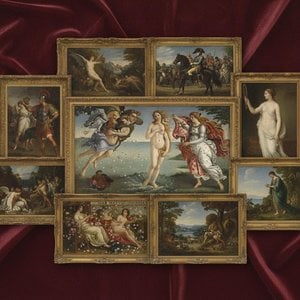
Vida Inicial, Família e Formação
La Rochelle, França, 30 de novembro de 1825. William-Adolphe Bouguereau entra em um mundo moldado pelo comércio de vinho e azeite de oliva. Ele nasce de Théodore Bouguereau e Marie Bonnin. O ambiente familiar é estruturado, composto por um irmão mais velho, Alfred, e uma irmã mais nova, Marie. A tragédia atinge o círculo familiar quando Marie, conhecida como Hanna, morre aos sete anos de idade. Esta perda precoce marca um capítulo silencioso e pesado na história da família.
O chamado de Paris acaba por afastá-lo da vida costeira de La Rochelle. Ele ingressa na École des Beaux-Arts, um ambiente rigoroso onde os alicerces de sua habilidade técnica são estabelecidos. Sob a orientação de François-Edouard Picquenot, o jovem estudante começa a dominar as complexidades da forma e da luz. Picquenot permanece como uma influência significativa em seu desenvolvimento inicial, moldando a precisão que viria a definir sua carreira. O treinamento é intenso, focado na precisão anatômica e na disciplina clássica exigida pela tradição acadêmica.
Estilo Artístico e Técnica
A tela transforma-se em um palco de precisão absoluta. Trabalhando primordialmente com o óleo, William-Adolphe Bouguereau constrói cenas através do realismo acadêmico, dedicando um foco profundo ao corpo humano feminino. Ele não se limita a registrar a anatomia; ele a refina. Suas figuras possuem uma forma idealizada, renderizada com um meticulosismo que beira o absoluto. Os tons de pele surgem luminosos, alcançados através de uma aplicação controlada de cor que sugere uma qualidade suave e translúcida. Este rigor técnico estende-se às suas composições, onde frequentemente emprega uma perspectiva de três níveis. Esta escolha estrutural, que remete aos mestres do Renascimento, confere uma sensação de profundidade e ordem aos seus temas mitológicos e às suas pinturas de gênero realistas.
Ele estabelece uma ponte entre o antigo e o contemporâneo ao criar interpretações modernas de temas clássicos. Em suas mãos, a mitologia não é uma memória distante, mas uma realidade viva e pulsante. Ele posiciona seus temas dentro de ambientes cuidadosamente construídos, utilizando frequentemente fundos mais escuros para fazer com que as figuras centrais pareçam emanar luz. Este contraste realça a precisão anatômica de seus sujeitos, desde a curva de um membro até a tensão sutil de uma pose. Sua obra transita, com maestria, entre a escala grandiosa da alegoria histórica e a intimidade silenciosa da vida cotidiana.
- The Nymphaeum
- The Wave
- Biblis
- Pietà
Patronos, Ateliê e Encomendas
O sucesso no sistema dos salões parisienses trouxe-lhe o reconhecimento oficial. Em 12 de julho de 1859, William-Adolphe Bouguereau recebeu a Legião de Honra, um prestígio que alimentou um fluxo constante de encomendas. Sua trajetória oscilava entre a grandiosidade das obras públicas e as necessidades íntimas de patronos locais. Em La Rochelle, ele assumiu encargos de decoração para cidadãos locais, retornando à sua terra natal para atender a esses pedidos. Seu alcance estendeu-se a grandes projetos cívicos, como o período de quatro anos dedicado à execução de trabalhos decorativos para o Grand Théâtre em Bordeaux.
O seu ateliê transformou-se em um epicentro de atividade internacional. Como um mestre altamente respeitado, seu workshop atraía estudantes de todo o mundo, todos em busca de dominar sua precisão técnica inigualável. Ele gerenciava uma produção prolífica, equilibrando os deveres docentes com as exigências de colecionadores de alto perfil e encomendas oficiais do Estado. Essa habilidade de navegar tanto pelo mercado religioso quanto pelo mitológico garantiu que sua posição permanecesse sólida e segura dentro do prestigiado establishment acadêmico.
Obras-Primas e Grandes Mestres
O ano de 1876 marca uma transição para um luto pessoal profundo. Em sua Pietà, William-Adolphe Bouguereau retrata a Virgem Maria amparando o corpo de Cristo. A tela captura uma tristeza densa e silenciosa, uma cena religiosa que reflete a própria experiência do artista com a perda, especificamente a morte de seu filho, Georges. A composição utiliza um manto escuro para emoldurar a pele pálida e luminosa das figuras, ancorando o evento sagrado em um sentimento palpável de luto humano.
A mitologia oferece outro cenário para sua precisão técnica. Em 1884, ele pintou Biblis, capturando a figura mitológica em um momento de contemplação serena. A obra baseia-se na precisão anatômica e em um profundo senso de vulnerabilidade. Por volta de 1886, o foco se desloca para o ciclo das estações em O Retorno da Primavera. Sua habilidade em renderizar a luz e a forma é igualmente evidente em O Ninfeu, exibido em 1878, e em Song of the Angels, uma obra originalmente intitulada Vierge aux Anges.
A natureza torna-se uma força de poder e introspecção em seus anos tardios. A Onda, pintada em 1896, coloca uma figura solitária contra um mar turbulento. A cena explora a tensão entre a vulnerabilidade humana e a força imensa do mundo natural. O ar salino e a espuma das ondas são renderizados com um foco magistral no jogo de luz e sombra.
Legado e Influência
No auge do século XIX, William-Adolphe Bouguereau consolidou-se como o pintor de salão por excelência, uma figura de imensa popularidade tanto na França quanto nos Estados Unidos. Sua precisão técnica e a adesão fervorosa aos ideais clássicos colocaram-no no epicentro da ordem estabelecida. No entanto, essa mesma busca pela perfeição acabou por atrair resistências. A vanguarda impressionista, com seu olhar disruptivo, passou a encarar suas superfícies polidas e temas tradicionais com desdém, empurrando sua obra para a periferia de um mundo artístico em constante mutação. À medida que o modernismo ganhava força, seu nome parecia recuar para as sombras, eclipsado pelos movimentos de vanguarda que passariam a dominar a era.
Contudo, esse silêncio não foi permanente. Já na década de 1980, um significativo renascimento do interesse por sua obra começou a ganhar terreno. Colecionadores e historiadores voltaram seus olhares para o seu brilhantismo técnico e para a profundidade emocional de suas composições. Esse ressurgimento elevou suas pinturas do reino do esquecimento ao do celebrado, sendo reconhecidas mais uma vez por sua maestria e beleza sublime. Sua influência persiste no cenário contemporâneo, tornando-se visível nas obras de pintores figurativos modernos que continuam a estudar seu domínio magistral da forma e da luz.
Onde Ver as Obras Hoje
A presença física de suas telas permanece espalhada por importantes instituições internacionais. Em Paris, o Musée d’Orsay abriga seu trabalho, preservando a precisão técnica que definiu sua carreira. O alcance de sua influência estende-se até os Estados Unidos, onde o Detroit Institute of Arts mantém diversas de suas pinturas. Visitantes que buscam sua abordagem específica da forma humana também podem encontrar sua arte no Carnegie Museum e no J. Paul Getty Museum.
Em Glendale, Califórnia, o Forest Lawn Museum abriga algumas de suas obras notáveis. Essas coleções oferecem uma oportunidade de testemunhar a precisão anatômica e os tons de pele luminosos que ele alcançou através de suas meticulosas técnicas de óleo. Sua presença nestes museus garante que sua marca específica de realismo acadêmico permaneça acessível ao público moderno.
- The Virgin with Angels (1881)
- The Nut Gatherers (c. 1882)
- The Wave (1896)
Perguntas e Respostas
A qual período histórico pertence a obra de William-Adolphe Bouguereau?
William-Adolphe Bouguereau atuou no período Século XIX. Este período situa a atividade do artista na história.
Como posso encontrar todas as obras de William-Adolphe Bouguereau por técnica?
As obras de William-Adolphe Bouguereau podem ser exploradas por técnica na página de Por Técnica do artista.
Quantas obras de William-Adolphe Bouguereau estão disponíveis para explorar?
Você pode explorar 518 obras de arte obras de William-Adolphe Bouguereau na página Todas as obras.