Consultoria de arte gratuita

x
Encomendar pintura Encomendar pinturaComprar imagem em alta resolução Comprar imagem em alta resolução EnviarEnviar
DetailsDetails Adicionar aos favoritos Adicionar aos favoritos BaixarBaixar SemelhantesSemelhantes X-RayX-Ray SlideshowSlideshow

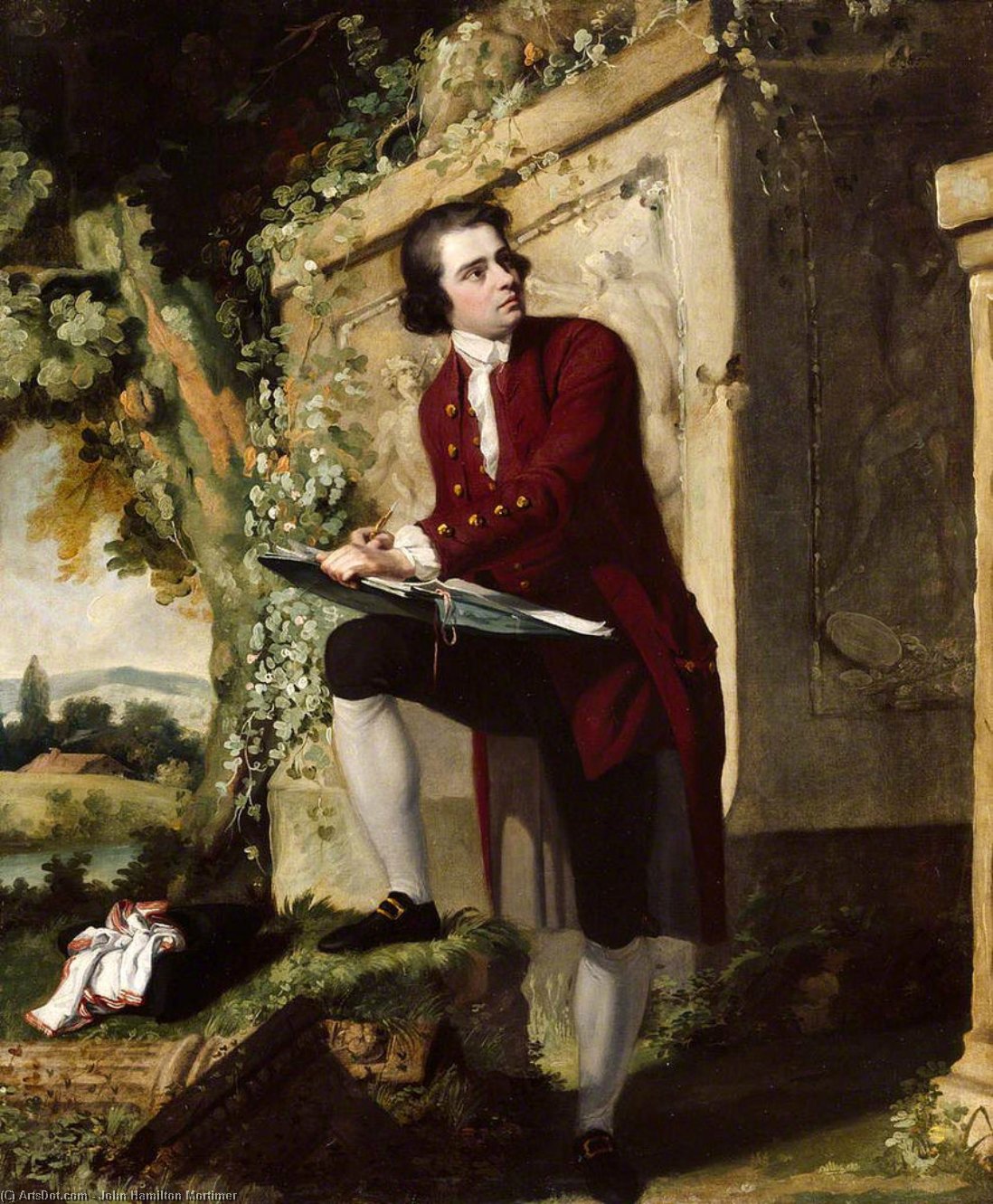
Self Portrait

John Hamilton Mortimer (1740-1779) foi um pintor britânico conhecido por paisagens italianas românticas, cenas de guerra dramáticas inspiradas em Salvator Rosa e pinturas históricas. Presidente da Sociedade de Artistas, sua obra reflete a transição entre o clássico e o romantismo.

Giclê / Impressão de Arte

Impressão giclée ou em tela de qualidade de museu, com produção rápida e opções flexíveis de acabamento.

Standard
custom
CM
INCH

Escolha entre os nossos tamanhos pré-definidos que respeitam as proporções originais da obra de arte.

largura
altura

Você pode inserir suas próprias dimensões para se ajustar a uma moldura ou espaço específico. Se o tamanho selecionado não corresponder às proporções da imagem original, iremos recortar a obra de arte ou estender a imagem com uma borda espelhada ou preenchimento sólido. Um mockup digital será enviado para sua aprovação antes do início da produção.
Por favor, observe que a visualização na tela não reflete o recorte ou a extensão real. Apenas o mockup mostrará com precisão a composição final.
Embora tamanhos personalizados estejam disponíveis, recomendamos selecionar uma dimensão da lista predefinida para preservar as proporções originais.

Entrega mundial () em 2 semanas, em vez das 4/5 semanas padrão. (2 Julho)

why_choose_icon
Envio Expresso Gratuito para todo o Mundo
why_choose_icon
Tela de Linho Premium
why_choose_icon
Seguro de envio completo
why_choose_icon
Garantia de Reembolso de Impostos Alfandegários
why_choose_icon
Garantia de Fidelidade de Cores
why_choose_icon
Política de Devolução de 60 Dias (Apenas para Defeitos)
why_choose_icon
Garantia de 100% de Reembolso
why_choose_icon
Desconto para múltiplas unidades

Preço Total

-

reproduction

Self Portrait

Giclê / Impressão de Arte

Dimensões da Reprodução

-

Preço Total Final

-


Biografia do Artista

John Hamilton Mortimer (1740–1779): A Life Painted in Romantic Hues

John Hamilton Mortimer, a name perhaps less instantly recognizable than his contemporaries like Reynolds or Wright of Derby, nevertheless occupies a significant and fascinating niche within the landscape of 18th-century British art. Born in Eastbourne, Sussex, on September 17th, 1740, Mortimer’s brief but intensely productive life—he died at just thirty-nine years old—was marked by artistic ambition, a restless spirit, and an evolving style that mirrored the shifting tastes of his era. His father, Thomas Mortimer, was a customs officer with mercantile interests, providing a stable if unremarkable background for a young man destined to pursue a path steeped in creativity. By 1757, Mortimer had already gravitated towards London, enrolling at the Duke of Richmond’s Academy, where he forged a lifelong friendship with Joseph Wright, a bond that would prove mutually supportive throughout their careers. This early immersion into the artistic milieu fostered not only technical skill but also an awareness of the burgeoning intellectual currents shaping British art—the fascination with classical ideals juxtaposed against the stirrings of Romanticism.

Early Training and Artistic Foundations

Mortimer’s formative years were spent honing his craft under the tutelage of masters such as Hudson and Cipriani at St Martin's Lane Academy. He demonstrated an exceptional aptitude for drawing, securing prize-winning studies after Michelangelo’s *Bacchus* and mastering life drawings with remarkable precision. These foundational skills would serve as bedrock for his subsequent explorations into historical painting and landscape artistry. His dedication to classical principles—particularly the meticulous observation of anatomy and perspective—was evident in every piece he produced, establishing him as a student of considerable promise within the burgeoning artistic community of London.

Historical Narratives and Dramatic Visions

Mortimer swiftly gained recognition for his ability to capture dramatic moments and convey complex narratives. His magnum opus, *St Paul Preaching to the Ancient Druids in Britain*, commissioned by the Guildhall at High Wycombe, remains a testament to this talent—a monumental canvas depicting Saint Paul delivering a sermon before druidic figures amidst evocative British scenery. This work exemplifies Mortimer’s commitment to storytelling and his mastery of composition, techniques that would define his artistic style for years to come. It stands as an iconic representation of the Romantic spirit, capturing both intellectual contemplation and visceral emotion within a single frame.

The Shift Towards Romantic Landscape and Banditry

However, Mortimer was not content with merely replicating established styles; he possessed a keen sensitivity to evolving aesthetic preferences. In the 1770s, his artistic focus underwent a dramatic transformation—a move away from the refined elegance favored by earlier generations towards depictions of rugged landscapes populated by bandits and soldiers. This fascination with the darker side of human experience was profoundly influenced by the work of Salvator Rosa, the Neapolitan painter celebrated for his wild, untamed scenes of outlaws and dramatic landscapes. Mortimer embraced Rosa’s aesthetic wholeheartedly, incorporating elements of chiaroscuro—the interplay of light and shadow—to heighten emotional impact and convey a sense of immediacy. His paintings became imbued with an energy and dynamism that foreshadowed the Romantic movement's embrace of emotion and imagination.

Collaboration and Artistic Influence

Mortimer actively engaged in collaborative projects with fellow artists, bolstering his reputation as a versatile craftsman and demonstrating his willingness to contribute to larger artistic endeavors. He frequently assisted Thomas Jones on ambitious canvases like *A Land Storm, with the Story of Dido and Aeneas*, *The Death of Orpheus*, and a pair of paintings inspired by Milton’s *Allegro* and *Penseroso*. These collaborations underscored his ability to synthesize diverse influences—classical technique combined with Romantic sensibility—resulting in artworks that transcended stylistic boundaries. Furthermore, he played a crucial role in the decoration of Brocket Hall, Hertfordshire, alongside Francis Wheatley and James Durno, showcasing his talent for creating immersive environments through visual art. His election as President of the Society of Artists in 1774 solidified his position within the artistic elite and cemented his legacy as a leader who championed innovation and artistic excellence.

A Legacy Tempered by Early Loss

Despite his considerable achievements, Mortimer’s career was tragically curtailed by illness—he succumbed to an undocumented ailment on February 4th, 1779. Though he exhibited at the Royal Academy in 1778 showcasing five works including *Sir Arthegal* and bandit scenes, and was elected an Associate shortly before his death, his potential remained largely unrealized. Despite criticism from Horace Walpole who dismissed him as a mere imitator of Rosa, Mortimer’s contribution to British art deserves renewed appreciation—his paintings offer a compelling glimpse into the artistic sensibilities of his time, bridging the gap between classical tradition and Romantic idealism. He remains an artist whose work continues to inspire contemplation and admiration for its dramatic power and emotional depth.
John Hamilton Mortimer

John Hamilton Mortimer

1740 - 1779 , Reino Unido

Informações Rápidas

  • Artistic Movement Or Style: Romantismo
  • Artists Or Movements Influenced By This Artist: ['Romantismo']
  • Artists Who Influenced This Artist: ['Salvator Rosa']
  • Date Of Birth: 1740
  • Date Of Death: 1779
  • Full Name: John Hamilton Mortimer
  • Nationality: Britânico
  • Notable Artworks: ['St Paul Preaching to the Ancient Druids in Britain']
  • Place Of Birth: Eastbourne, Reino Unido