
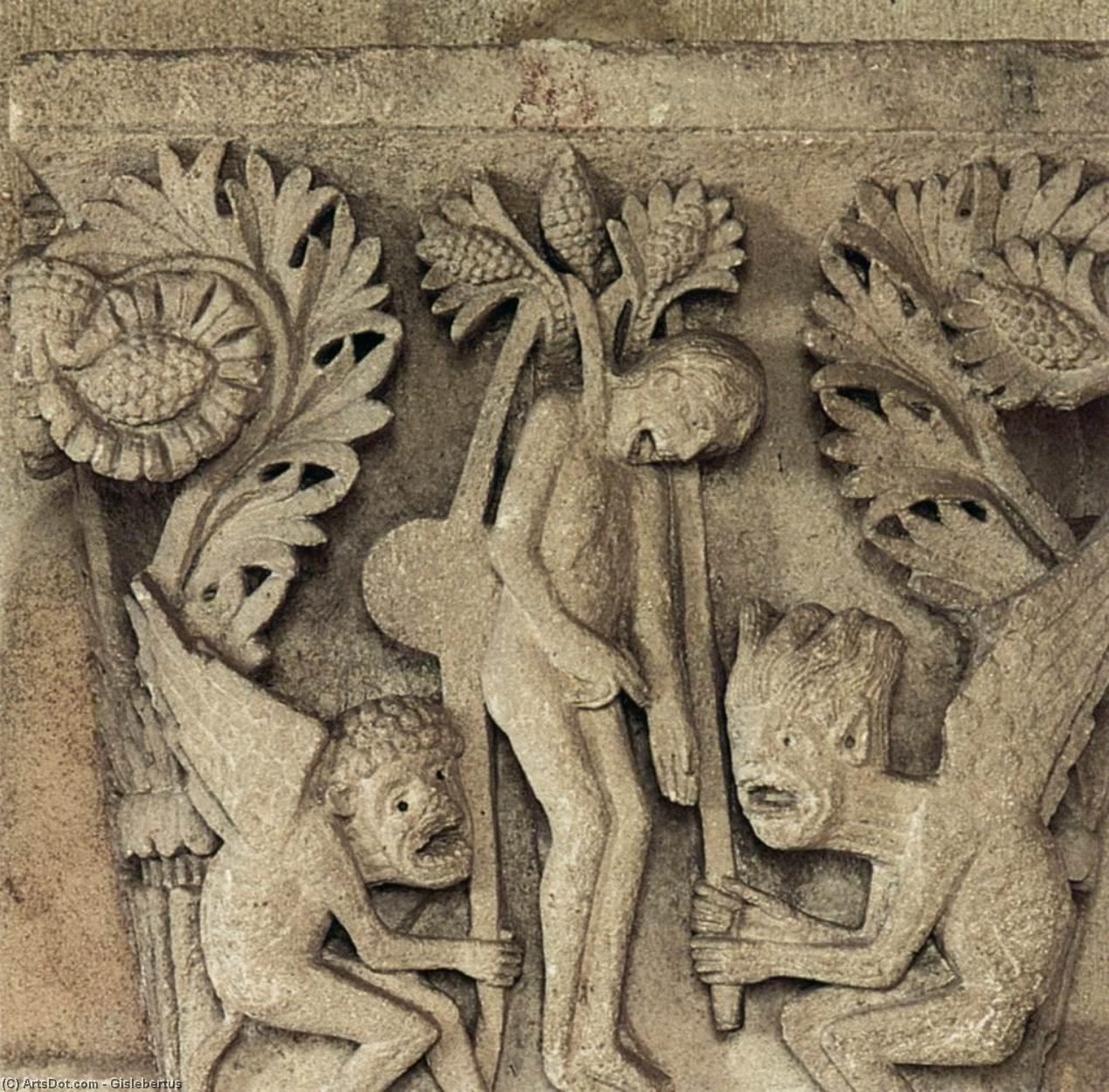
Suicídio de Judas (1120) por Gislebertus, reprodução em pintura a óleo feita à mão por um mestre artista
Visualizar na parede Visualizar em RA Alternar para Impressão Alternar para Imagem Digital Compartilhar
Detalhes Guia Adicionar aos favoritos Baixar imagem Semelhantes Raio X Ver diaporama Perguntas e Respostas Presentation Estatísticas

Suicídio de Judas Reprodução de pintura a óleo feita à mão

Uma poderosa escultura romana de Gislebertus representando o suicídio de Judas na Catedral de Autun, França. Uma obra emblemática da arte medieval que transmite emoções intensas e simbolismo religioso.

Discover Gislebertus: French Romanesque sculptor of Autun Cathedral's stunning tympanums & Eve sculpture. Explore his biblical themes & influence on Gothic art.

Reprodução em Óleo Feita à Mão

Óleo sobre tela pintado à mão no tamanho e moldura de sua escolha, feito sob encomenda pelos nossos artistas. ( Alternar para Impressão Alternar para Imagem Digital)

Corner sample of the P118B picture frame: poliestireno moldado, 5 cm wide and 3 cm thick
P118B €10
Corner sample of the P118H picture frame: poliestireno moldado, 5 cm wide and 3 cm thick
P118H €10
Corner sample of the P118W picture frame: poliestireno moldado, 5 cm wide and 3 cm thick
P118W €10
Corner sample of the P438Z picture frame: poliestireno moldado, 5.5 cm wide and 3.5 cm thick
P438Z €10
Corner sample of the P508JH picture frame: poliestireno moldado, 7 cm wide and 3.5 cm thick
P508JH €12
Corner sample of the P508YH picture frame: poliestireno moldado, 7 cm wide and 3.5 cm thick
P508YH €12
Corner sample of the P805H picture frame: poliestireno moldado, 5 cm wide and 3.5 cm thick
P805H €10
Corner sample of the P805Z picture frame: poliestireno moldado, 5 cm wide and 3.5 cm thick
P805Z €10
Corner sample of the P919BZ picture frame: poliestireno moldado, 7 cm wide and 3.5 cm thick
P919BZ €10
Corner sample of the P919G picture frame: poliestireno moldado, 7 cm wide and 3.5 cm thick
P919G €10
Corner sample of the P919XJ picture frame: poliestireno moldado, 7 cm wide and 3.5 cm thick
P919XJ €10
Corner sample of the P959ZH picture frame: poliestireno moldado, 5 cm wide and 3 cm thick
P959ZH €10
Corner sample of the P968JZ picture frame: poliestireno moldado, 6 cm wide and 4 cm thick
P968JZ €12
Corner sample of the W106C picture frame: madeira maciça, 5 cm wide and 3 cm thick
W106C €8
Corner sample of the W218G picture frame: madeira maciça, 5 cm wide and 3 cm thick
W218G €10
Corner sample of the W218JH picture frame: madeira maciça, 5 cm wide and 3 cm thick
W218JH €8
Corner sample of the W218Y picture frame: madeira maciça, 5 cm wide and 3 cm thick
W218Y €10
Corner sample of the W307PJ picture frame: madeira maciça, 6 cm wide and 3 cm thick
W307PJ €10
Corner sample of the W316G picture frame: madeira maciça, 6 cm wide and 3 cm thick
W316G €10
Corner sample of the W316PJ picture frame: madeira maciça, 6 cm wide and 3 cm thick
W316PJ €8
Corner sample of the W316Y picture frame: madeira maciça, 6 cm wide and 3 cm thick
W316Y €10
Corner sample of the W398PJ picture frame: madeira maciça, 5 cm wide and 3 cm thick
W398PJ €8
Corner sample of the W4111J picture frame: madeira maciça, 6.5 cm wide and 3.5 cm thick
W4111J €10
Corner sample of the W500HY picture frame: madeira maciça, 7 cm wide and 5 cm thick
W500HY €15
Corner sample of the W500JH picture frame: madeira maciça, 7 cm wide and 5 cm thick
W500JH €15
Corner sample of the W692G picture frame: madeira maciça, 8 cm wide and 4 cm thick
W692G €12
Corner sample of the W849H picture frame: madeira maciça, 5 cm wide and 3 cm thick
W849H €8
Corner sample of the W940BG picture frame: madeira maciça, 7.5 cm wide and 4.5 cm thick
W940BG €15
Corner sample of the W953PJ picture frame: madeira maciça, 6 cm wide and 3.5 cm thick
W953PJ €8

Tamanho padrão
personalizado
CM
INCH

Escolha entre os nossos tamanhos pré-definidos que respeitam as proporções originais da obra de arte.

largura
altura

Insira a largura e a altura desejadas para se ajustarem à sua moldura ou parede. Como esta obra é pintada à mão, para um tamanho com proporções diferentes, o artista poderá pintar um pouco mais ao redor da imagem ou reduzir ligeiramente a composição — você escolhe. Enviamos uma maquete digital para sua aprovação antes de iniciar a pintura. A imagem exibida nesta página não representa o resultado real — apenas a maquete mostra o resultado final.

Exemplos do que pode ser personalizado: Substituir o rosto pela foto do cliente; Adicionar um animal de estimação (ex: substituir gato por cão); Incluir uma mensagem oculta no fundo; Alterar a paisagem ou elementos do fundo.
Após o pedido, a equipa WahooArt.com enviará um e-mail ao cliente para solicitar instruções e fornecer uma prévia do esboço.

Entrega mundial () em 3 a 4 semanas, em vez das 5 semanas padrão. (6 Novembro). Sem comprometer a qualidade.

Envio expresso gratuito para todo o mundo
Tela de Linho de Alta Qualidade
Seguro de transporte completo
Garantia de Reembolso de Impostos Alfandegários
Garantia de Fidelidade Cromática
Política de Devolução em 100 Dias (Apenas para Defeitos)
Garantia de reembolso de 100%
Oferta de desconto por quantidade

Preço Total

€ 243

Suicídio de Judas

Técnica de Reprodução

Tamanho da Reprodução

-

Preço Total

€ 243

Informações Rápidas

  • Subject or theme: Betrayal divina
  • Movement: Romanesco
  • Year: 1120s
  • Artist: Gislebertus
  • Artistic style: Didático storytelling

Quiz de Arte

Cada pergunta possui apenas uma resposta correta.

Pergunta 1:
¿Quién fue Gislebertus?
Pergunta 2:
¿Dónde se encuentra principalmente el trabajo escultórico de Gislebertus?
Pergunta 3:
¿Cuál es el tema principal representado en la escultura "Suicide of Judas"?
Pergunta 4:
¿Qué estilo artístico caracteriza principalmente esta obra?
Pergunta 5:
¿Por qué Gislebertus utilizó una composición triangular en la escultura "Suicide of Judas"?

A Dramática Cena da Peregrinação de Judas

Gislebertus, um nome gravado em pedra e sussurrado através dos séculos, permanece como uma das figuras mais marcantes da escultura românica – especialmente celebrado por sua contribuição à Catedral de Saint Lazare em Autun, França. Nascido aproximadamente em 1120, Gislebertus emergiu do rico cenário artístico da Borgonha durante um período profundamente moldado pelo fervor religioso e pela ambição arquitetônica crescente. Embora detalhes biográficos permaneçam escassos, estudiosos acreditam que ele foi treinado no Abadía de Cluny, considerado o epicentro da vida intelectual europeia sob domínio monástico, onde uma profunda compreensão das narrativas bíblicas foi inculcada em seu trabalho, impregnando-o com uma devoção inabalável aos temas cristãos. O Trabalho Inicial e a Influência de Cluny Sua atuação inicial no Abadía envolveu auxiliar o escultor mestre, consolidando sua posição dentro de uma tradição que priorizava contar histórias didáticas – como evidenciado pela Catedral Saint Lazare, Autun. Esta experiência formativa não apenas refinou suas habilidades técnicas, mas também alimentou seu olhar artístico, direcionando-o para a expressão emocional profunda e significativa. Sua obra reflete o espírito da época, onde o desejo de transmitir mensagens religiosas importantes era fundamental para artistas como Gislebertus. A Cena Dramática: O Suicídio de Judas em Autun O ponto culminante da produção artística de Gislebertus é sem dúvida a escultura monumental que adornou o tímpano do portal principal da Catedral Saint Lazare, uma obra que captura um momento crucial da história bíblica: o suicídio de Judas Iscariotes. Esta cena poderosa não apenas demonstra o domínio técnico do escultor em relação à pedra esculpida, mas também revela sua capacidade de transmitir emoções intensas e simbolismo profundo. O artista utilizou uma abordagem inovadora para a época, buscando criar uma imagem que fosse ao mesmo tempo realista e carregada de significado espiritual. Detalhes Técnicos e Simbolismo Religioso A escultura apresenta figuras humanas em diversas poses, incluindo Judas pendurado em um tronco de árvore, acompanhado por outros personagens que testemunham o evento doloroso. Os escultores utilizaram técnicas avançadas para criar uma sensação de movimento e expressão facial convincente, buscando transmitir a angústia e o terror da alma humana diante do pecado e da traição. Além disso, a composição é marcada pela presença de duas figuras demoníacas auxiliares, que simbolizam o poder do mal e contribuem para criar uma atmosfera dramática e inquietante. O uso estratégico da luz e sombra reforça o impacto emocional da obra, enfatizando a fragilidade humana diante da força divina. Um Legado Duradouro na Arte Românica A Catedral Saint Lazare permanece como um testemunho magnífico do talento artístico de Gislebertus e da importância da escultura românica como meio de comunicação religiosa e artística. Sua obra continua inspirando artistas e estudiosos até hoje, demonstrando o poder da arte para transmitir valores morais e espirituais profundos. Uma reprodução meticulosa desta imagem icônica permite apreciar a beleza estética e o significado histórico deste monumento artístico único.
  • Artista: Gislebertus
  • Data: 1120
  • Material: Pedra
  • Localização: Catedral de Saint Lazare, Autun

Perguntas e Respostas

Qual é o formato de "Suicídio de Judas"?

O formato de "Suicídio de Judas" é Quadrado. Esta informação é útil ao planejar onde uma reprodução será colocada.

Como posso obter uma versão digital de "Suicídio de Judas", de Gislebertus?

Uma imagem digital de "Suicídio de Judas", de Gislebertus pode ser adquirida em sua página de Imagem Digital de Alta Resolução: download de imagem digital em alta resolução.

Qual é a cor predominante de "Suicídio de Judas", de Gislebertus?

A cor dominante de "Suicídio de Judas", de Gislebertus é Castanho Rosado (#b7a788).


Biografia do Artista

Gislebertus: The Sculptor of Autun Cathedral’s Divine Vision

Gislebertus, a name etched in stone and whispered through the centuries, stands as one of the most remarkable figures of Romanesque sculpture. Specifically celebrated for his profound contribution to Saint Lazare Cathedral in Autym, France, he emerged from the fertile artistic landscape of Burgundy during a period profoundly shaped by religious fervor and burgeoning architectural ambition. Born sometime around 1120, Gislebertus lived through an era where art served as the primary language of the faithful. While biographical details remain scarce, scholars believe he was trained at Cluny Abbey, arguably the epicenter of European monastic art and intellectual life at the time. This formative experience instilled in him a deep understanding of biblical narratives and imbued his work with an unwavering devotion to Christian themes.

His initial role at Cluny involved assisting the master sculptor, cementing his position within a tradition prioritizing didactic storytelling—conveying moral lessons through visual representation. The cathedral’s ambitious project demanded exceptional skill, and Gislebertus quickly established himself as a pivotal talent. Recognizing the importance of providing solace to pilgrims afflicted with leprosy—a prevalent ailment during the 12th century—the Abbey envisioned Saint Lazare as more than just a place of worship; it was intended as a sanctuary for the marginalized. This vision profoundly impacted Gislebertus’ artistic sensibilities, prompting him to create reliefs that resonated with compassion and hope, featuring imagery designed to uplift those facing immense suffering.

Mastery of Emotion and Narrative Relief

The true genius of Gislebertus lies in his ability to translate complex theological concepts into visceral, physical forms. His work at Autun is characterized by a dramatic use of line and shadow that breathes life into the cold stone. In masterpieces such as the Suicide of Judas, created around 1120-30, he captures the raw horror and despair associated with treason. Through the depiction of hanging figures and menacing demonic entities, Gisleberus showcases an exceptional skill in capturing human psychological torment, a hallmark of the Romanesque style that pushes the boundaries of medieval expression.

Beyond the scenes of tragedy, his work also celebrates the spiritual journey of the faithful. In his Pilgrims relief, one can observe a powerful depiction of devotion, where strong lines and dramatic shadows emphasize the physical and spiritual weight of the pilgrimage. This ability to oscillate between the terrifying aspects of divine judgment and the quiet strength of religious perseverance makes his oeuvre uniquely captivating. His sculptures do not merely decorate a building; they act as a window into the medieval soul, inviting the viewer to contemplate the eternal struggle between good and evil.

Legacy and Historical Significance

The artistic development of Gislebertus represents a crucial bridge in the evolution of European art. While his roots are firmly planted in the Romanesque tradition of Cluny, his expressive power and narrative complexity hint at the burgeoning naturalism that would later define Gothic art. His work on the Dream of the Magi further demonstrates this sophisticated approach to storytelling, blending historical reverence with a sense of wonder.

The enduring significance of Gislebertus can be summarized through several key contributions:

  • Narrative Innovation: He transformed architectural elements like tympanums into complex, readable storybooks for the illiterate masses.
  • Emotional Depth: He moved beyond static iconography to introduce psychological depth and human emotion into stone sculpture.
  • Cluniac Influence: He carried the high intellectual and spiritual standards of Cluny Abbey into the public sphere of cathedral architecture.
  • Architectural Integration: His ability to harmonize intricate sculptural detail with the massive, heavy forms of Romanesque architecture remains a pinnacle of medieval craftsmanship.

Today, the works of Gislebertus remain some of the most studied and revered examples of 12th-century art. He remains a master whose hands, though long since returned to dust, continue to speak through the enduring stone of Autun, reminding us of a time when art was the ultimate vessel for the divine.

Gislebertus

Gislebertus

1120 - 1135 , France

Dados Rápidos

  • Full Name: Gislebertus
  • Nationality: French
  • Date Of Birth: 1120
  • Date Of Death: 1135
  • Place Of Birth: France
  • Notable Artworks:
    • Pilgrims
    • Last Judgment (detail)
    • Dream of the Magi
  • Artistic Movement Or Style: Romanesque Sculpture
  • Artists Who Influenced This Artist: ['Cluny School']
  • Artists Or Movements Influenced By This Artist: ['Gothic Style']
Explore obras de arte organizadas por temas, estilos e características.


































