Primeiros Anos, Família e Formação
Barbara Hepworth nasceu em 10 de janeiro de 1903, em Wakefield, West Riding de Yorkshire, na Inglaterra. Sendo a filha mais velha de Gertrude e Herbert Hepworth, cresceu em um ambiente moldado pela engenharia, já que seu pai atuava como engenheiro civil para o West Riding County Council. Esse contexto familiar proporcionou-lhe uma base prática e estrutural desde cedo, um cenário em Yorkshire que começou a esculpir a consciência espacial que, anos mais tarde, definiria sua abordagem magistral da forma tridimensional.
Sua jornada educacional teve início na Wakefield Girls' High School, um despertar acadêmico que a conduziu à Leeds School of Art em 1920. Foi ali que ela começou a cultivar a disciplina técnica indispensável para uma investigação escultórica profunda. Com a chegada da década de 1920, Barbara Hepworth mudou-se para Londres para estudar no Royal College of Art. Este período de formação foi crucial para estabelecer o rigor intelectual que eleva sua obra para além da mera decoração; ela não estava apenas aprendendo um ofício, mas sim dominando a relação intrínseca entre a matéria e o vazio.
Os Anos Formativos e o Início da Carreira
A trajetória profissional inicial de Barbara Hepworth foi definida por uma série de mudanças pessoais e artísticas significativas que espelharam as transformações radicais que ocorriam no modernismo britânico. Em maio de 1925, ela se casou com o escultor John Skeaping em Florença. Este período foi marcado por uma transição em direção à talha direta, um método que exigia um envolvimento físico e imediato com a pedra e a madeira. Por volta de 1931, sua vida pessoal e criativa passou por outra transformação quando se apaixonou pelo pintor Ben Nicholson. Essa conexão fazia parte de um círculo intelectual maior e intenso de artistas modernos centrado em Hampstead, Londres. Essas intersecções sociais e românticas não eram meras distrações; eram os crisóis nos quais sua abordagem ao espaço e à forma era testada contra as tendências predominantes da época.
A dissolução de seu primeiro casamento, em março de 1933, sinalizou um afastamento de suas explorações anteriores, mais figurativas. Ela acabou se casando com Ben Nicholson em 1938, uma união que consolidou sua posição na vanguarda da abstração britânica. Durante esses anos, sua obra distanciou-se das tradições representativas, buscando, em vez disso, destilar a essência da forma através de uma linguagem mais redutiva e geométrica. Este período de transição a levou do estudo de monumentos antigos para uma compreensão sofisticada de como o espaço negativo funciona como um elemento estrutural. Seu desenvolvimento não foi uma progressão linear, mas sim uma série de rupturas deliberadas e, muitas vezes, difíceis com o passado.
O Movimento Artístico Unit One
Em 1933, Barbara Hepworth ajudou a estabelecer o movimento artístico Unit One, um coletivo que alterou fundamentalmente a trajetória do modernismo britânico. Ao lado de Ben Nicholson, Paul Nash e diversos outros artistas, ela trabalhou para construir uma ponte entre o Surrealismo e a Abstração. Esta não era uma mera preferência estilística, mas uma tentativa deliberada de unificar estas duas forças dominantes no cenário artístico britânico. O movimento desafiou as fronteiras tradicionais da representação, buscando uma nova linguagem visual capaz de acomodar as complexidades da era moderna.
O impacto deste período é sentido na forma como Barbara Hepworth transitou de seus primeiros experimentos figurativos em direção a um vocabulário abstrato mais rigoroso. Esta mudança não foi um desenvolvimento isolado; fez parte de um esforço mais amplo e coordenado do grupo Unit One para afastar a arte britânica do provincialismo, conduzindo-a em direção à vanguarda internacional. Seu envolvimento neste círculo consolidou sua posição como uma figura central em um movimento que priorizava as qualidades essenciais da forma e do espaço em detrimento da representação literal.
Com a aproximação da Segunda Guerra Mundial, o foco desta comunidade artística sofreu um deslocamento geográfico. Barbara Hepworth tornou-se uma figura de liderança na colônia de artistas que residiam em St Ives, na Cornualha. Esta mudança transformou a cidade costeira em um centro significativo para o pensamento modernista. A concentração de talento em St Ives permitiu uma exploração contínua da relação entre a forma abstrata e a paisagem natural, garantindo que as ideias radicais defendidas pelo Unit One permanecessem centrais para o desenvolvimento da escultura britânica.
Técnica e Estilo Artístico
A abordagem de Barbara Hepworth para a escultura moderna é definida por um compromisso rigoroso com a talha direta. Em vez de modelar argila para ser fundida posteriormente, ela trabalhava diretamente na matéria, permitindo que o material ditasse a forma final. Este método exige um envolvimento físico e imediato com a substância da obra. Através do cinzel e da entalhe, ela moldava o mármore e a madeira, frequentemente pintando as cavidades de suas formas para manipular a interação entre luz e sombra nas superfícies interiores. Em muitas peças, Barbara Hepworth ia além, unindo as laterais de suas esculturas com arame ou corda, criando uma tensão literal entre partes distintas de um único objeto.
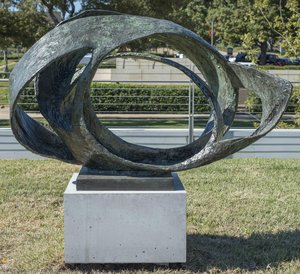
Sua contribuição mais significativa para a linguagem da abstração é o uso do espaço negativo. Ao introduzir vazios profundos em suas esculturas, ela transformou o buraco de uma mera ausência em um elemento estrutural. Estas aberturas fazem mais do que criar aberturas; elas estabelecem uma conexão entre o objeto e o espaço que o rodeia. Esta técnica força o espectador a reconhecer o ar dentro da forma como uma parte tangível da composição. O resultado é uma tensão entre presença e ausência que define a sua estética modernista.
- Pierced Form (1932)
- Single Form (Chûn Quoit) (1961)
- Two Forms (1937)
- Oval Form (Trezion) (1962)
Obras-Chave e Inovações Escultóricas
A contribuição mais significativa de Barbara Hepworth para a escultura moderna foi o seu uso radical do espaço negativo. Em 1931, ela introduziu a forma perfurada, uma técnica que transformou o vazio de uma mera ausência em um elemento estrutural. Essa mudança afastou a escultura da massa sólida, direcionando-a para uma exploração de como a luz e o espaço interagem com o material. O seu grande avanço ocorreu em 1937 com Oval Form (Trezion), uma obra que consolidou o seu domínio sobre estes volumes geométricos e ocos. Ao esculpir a própria substância da obra, ela forçou o espectador a reconhecer o espaço interior como algo tão vital quanto o próprio material.
A sua capacidade de equilibrar temas orgânicos com uma abstração rigorosa é evidente na sua obra da década de 1930, Mother and Child. Esta peça demonstra como ela destilou as relações humanas em formas simplificadas e arredondadas. Mais tarde, o seu alcance técnico expandiu-se para incluir a integração de materiais não escultóricos. Em 1956, ela produziu Stringed Figure (Curlew), que utilizava corda de algodão para unir as formas de madeira, criando uma tensão física que espelhava a geometria interna da escultura. Este método enfatizava a conexão entre diferentes partes de um único objeto através de uma união literal e tátil.
A escala da sua visão atingiu um nível monumental com Single Form. Este bronze de seis metros de altura e cinco toneladas foi encomendado como um memorial a Dag Hammarskjöld. A obra permanece como um exemplo definitivo de como a sua linguagem abstrata poderia traduzir-se em estruturas massivas voltadas para o público, sem perder o seu foco na forma essencial.
Anos Finais e Morte
O capítulo final da carreira de Barbara Hepworth esteve profundamente ancorado em St Ives, na Cornualha. Após adquirir o local do Trewyn Studio em setembro de 1949, ela permaneceu neste ambiente costeiro por 26 anos. Este período foi definido por uma expansão significativa na escala e na complexidade de sua produção artística. Para gerir as exigências de sua prática, ela contou com o apoio de 16 assistentes a partir de 1949, uma necessidade imposta pelo intenso trabalho físico exigido por suas esculturas de grande escala e suas fundições em bronze.
Sua vida chegou ao fim de forma abrupta em 1975. Um incêndio em seu estúdio tirou-lhe a vida aos 72 anos de idade. O incidente ocorreu nas mesmas instalações onde ela viveu e trabalhou por mais de duas décadas. Este desfecho repentino deixou para trás um legado de obras que haviam evoluído decisivamente do figurativismo em direção a uma abstração rigorosa e essencial.
Legado e Coleções de Museus
A influência de Barbara Hepworth persiste através das estruturas institucionais que preservam a sua produção física. The Hepworth Wakefield, em Wakefield, Reino Unido, carrega o seu nome e mantém uma presença significativa na região onde nasceu. Este museu abriga mais de 400 das suas esculturas e desenhos, garantindo que a sua abordagem específica à forma e ao espaço permaneça acessível ao público. A coleção oferece um elo direto com o seu desenvolvimento como escultora, partindo dos primeiros experimentos figurativos em direção às suas obras posteriores, mais abstratas.
Em St Ives, Cornualha, o Barbara Hepworth Museum and Sculpture Garden oferece um tipo diferente de preservação. Este local mantém o seu estúdio e o seu jardim no estado em que se encontravam durante a sua vida e obra. Funciona como um ponto de referência fixo para a sua prática, revelando como o seu ambiente informou a sua estética. Em 1980, a sua família transferiu o museu para a galeria Tate, assegurando a sua sobrevivência a longo prazo dentro de uma importante coleção nacional.
Onde Ver as Obras Hoje
A presença física de Barbara Hepworth no mundo da arte permanece ancorada pelo The Hepworth Wakefield, em Wakefield, no Reino Unido. Esta instituição detém uma parte significativa de sua produção, proporcionando um olhar concentrado sobre sua evolução escultórica. A coleção local permite um confronto direto com o seu manuseio do material e a maneira como ela manipulava o espaço através de suas características formas perfuradas.
Para além do Reino Unido, sua influência está distribuída por diversas importantes coleções internacionais. Nos Estados Unidos, o Kimbell Art Museum, em Fort Worth, abriga a obra 'Oval Form (Trezion)'. Esta peça demonstra sua habilidade em comandar o volume através do bronze. De forma semelhante, o New Orleans Museum of Art contém 'River Form', uma obra que destaca seu envolvimento com formas orgânicas e fluidas. Estes locais garantem que seu trabalho permaneça parte de um diálogo global, em vez de um fenômeno apenas localizado.
O alcance de sua prática estende-se até a Auckland Art Gallery Toi o Tāmaki, que abriga 'Torso II (Torcello)'. Ver estas obras em seus respectivos contextos institucionais revela a escala e a realidade material de sua abstração. Suas esculturas exigem um tipo específico de observação, que requer o movimento ao redor do objeto para compreender a relação entre a massa sólida e o vazio.
Perguntas e Respostas
Qual é o nível de popularidade das obras de Barbara Hepworth?
Existe uma página de Estatísticas para Barbara Hepworth, apresentando estatísticas sobre as obras do artista no este site.
Existe uma linha do tempo das obras de Barbara Hepworth?
A página de Linha do tempo das obras do artista apresenta as obras de Barbara Hepworth ordenadas por data, ano a ano.
De onde é Barbara Hepworth?
Barbara Hepworth nasceu em Reino Unido.