A Celestial Vision in Gold: The Divine Grace of Georg Pencz
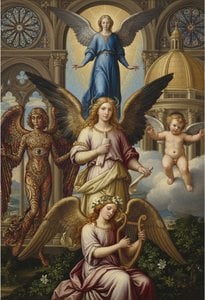
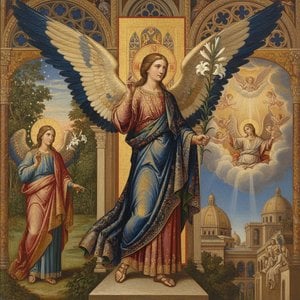
In the quiet corridors of the Wallraf-Richartz-Museum in Cologne, there exists a window into the spiritual fervor of the sixteenth century. Georg Pencz’s Angel, painted in 1525, is not merely a depiction of a celestial being; it is an intimate encounter with the divine. This slender, vertical masterpiece, measuring a delicate 50 x 17 cm, captures a moment of profound stillness and devotion. The composition centers on a kneeling angel, whose hands are clasped in eternal prayer, embodying a sense of humility that transcends the centuries. As the viewer’s eye travels across the wood panel, they are met with a breathtaking display of Northern Renaissance mastery, where every brushstroke serves to bridge the gap between the earthly and the heavenly.
The technical brilliance of Pencz is most evident in his sophisticated use of light and texture. Influenced by the vibrant energy of the Italian Renaissance and the meticulous precision of Nuremberg’s artistic circles, Pencz employs a technique that breathes life into the inanimate. The angel’s drapery falls in heavy, rhythmic folds, rendered with such care that one can almost feel the weight of the fabric. Most striking is the artist's use of gold leaf, which illuminates the halo and the expansive, feathered wings. This luminous element does more than provide opulence; it creates a celestial glow that seems to radiate from within the painting itself, casting soft highlights and deep shadows that lend a remarkable three-dimensional quality to the figure.
Symbolism and the Language of the Renaissance
Beyond its aesthetic splendor, the Angel is a profound tapestry of symbolic meaning. In the iconographic language of the 1500s, the angel serves as a messenger of purity and innocence, a sentinel of the divine realm. The inclusion of a delicate bouquet of flowers held by the figure introduces themes of hope, renewal, and the fleeting beauty of life. This interplay between the eternal (the angel) and the ephemeral (the flowers) invites a contemplative state in the observer, encouraging a reflection on one's own values and spiritual journey. The background, a swirling sky of blues and golds, provides an atmospheric perspective that suggests an infinite, heavenly expanse, further isolating the angel in a moment of sacred solitude.
For the discerning collector or interior designer, this artwork offers much more than visual decoration; it offers an atmosphere of serenity and historical depth. A high-quality oil reproduction of this piece brings with it the prestige of the Northern Renaissance, acting as a sophisticated focal point in any curated space. Whether placed in a quiet study to inspire meditation or within a grand gallery setting to showcase classical elegance, the Angel commands attention through its subtle complexity and emotional resonance. It remains a testament to Georg Pencz’s ability to capture the sublime, making it an enduring treasure for those who seek to surround themselves with art that speaks to the soul.



 Visualizar em escala
 Alternar para Impressão
 Enviar
 Compartilhar
 Ver detalhes
 Guia
Guia

 Baixar imagem
 Semelhantes
 Raio X
 Apresentação de slides
 Estatísticas


 Ver mais






































 A opção de vidro está disponível apenas para tamanhos inferiores a 110 cm