Consultoria de arte gratuita

x
Comprar impressão Comprar impressãoComprar imagem em alta resolução Comprar imagem em alta resolução EnviarEnviar
DetailsDetails Adicionar aos favoritos Adicionar aos favoritos BaixarBaixar SemelhantesSemelhantes X-RayX-Ray SlideshowSlideshow

Angel

Discover Georg Pencz’s ‘Angel’ (1525) – a stunning Northern Renaissance masterpiece! Explore intricate details, gold leaf & symbolism in this 50x17cm wood panel painting from Cologne.

Explore the intricate engravings & portraits of Georg Pencz, a German artist influenced by Venetian art. Known as a 'Little Master,' his works depict biblical scenes & humanist subjects.

Reprodução em Óleo Feita à Mão

Óleo sobre tela pintado à mão no seu tamanho e moldura, feito sob encomenda pelos nossos artistas.

Standard
custom
CM
INCH

Escolha entre os nossos tamanhos pré-definidos que respeitam as proporções originais da obra de arte.

largura
altura

Pode inserir as suas próprias dimensões para se adequar a uma moldura ou espaço específico. Se o tamanho selecionado não corresponder às proporções da imagem original, iremos cortar a obra de arte ou estender a pintura com elementos adicionais pintados à mão. Um esboço digital será enviado para sua aprovação antes do início da produção.
Tenha em atenção que a pré-visualização no ecrã não reflete o corte ou extensão real. Apenas o esboço mostrará com precisão a composição final.
Embora tamanhos personalizados estejam disponíveis, recomendamos selecionar uma dimensão da lista predefinida para preservar as proporções originais.

Exemplos do que pode ser alterado: Substituir o rosto pela foto do cliente; Adicionar um animal de estimação (ex: substituir gato por cão); Incluir uma mensagem oculta no fundo; Alterar a paisagem ou elementos do fundo.
Após o pedido, a equipa WahooArt.com enviará um e-mail ao cliente para solicitar instruções e fornecer uma prévia do esboço.

Entrega Mundial () em 3 a 4 semanas, em vez das 5 semanas padrão. (1 Julho). Sem comprometer a qualidade.

why_choose_icon
Envio Expresso Gratuito para todo o Mundo
why_choose_icon
Tela de Linho Premium
why_choose_icon
Seguro de envio completo
why_choose_icon
Garantia de Reembolso de Impostos Alfandegários
why_choose_icon
Garantia de Fidelidade de Cores
why_choose_icon
Política de Devolução de 60 Dias (Apenas para Defeitos)
why_choose_icon
Garantia de 100% de Reembolso
why_choose_icon
Desconto para múltiplas unidades

Preço Total

-

reproduction

Angel

Técnica de Reprodução

Dimensões da Reprodução

-

Preço Total Final

-

Descrição da Obra

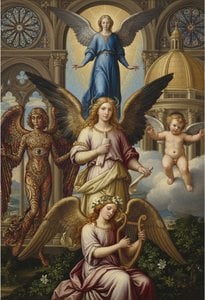
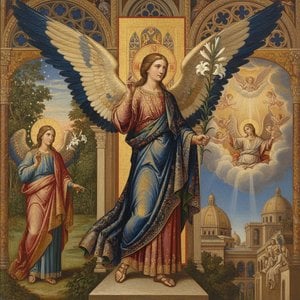
The Angel painting by Georg Pencz is a masterpiece of the Northern Renaissance period, created in 1525. This beautiful artwork is a testament to the artist's skill and attention to detail. The painting measures 50 x 17 cm and is made of wood, currently housed in the Wallraf-Richartz-Museum in Cologne, Germany.

Artistic Style and Influences

Georg Pencz was a German painter, engraver, and draftsman who was heavily influenced by the Italian Renaissance. His work is characterized by intricate details and vibrant colors. The Angel painting showcases his ability to capture the subtleties of light and shadow, creating a sense of depth and dimensionality.

Symbolism and Meaning

The Angel painting is rich in symbolism, with the angel representing purity and innocence. The flower or plant held by the angel may symbolize hope and renewal. The painting's meaning can be interpreted in various ways, making it a thought-provoking piece that invites viewers to reflect on their own beliefs and values.
  • The Angel painting is a prime example of Georg Pencz's skill as a painter and his ability to create intricate, detailed works of art.
  • The painting's symbolism and meaning make it a fascinating piece that continues to inspire and captivate audiences today.
  • For those interested in learning more about Georg Pencz and his work, visit https://en.WahooArt.com/@/Georg-Pencz to explore his artworks and read about his life and career.
  • Additionally, the Wallraf-Richartz-Museum website provides more information about the painting and its history, as well as other notable works by Georg Pencz.
Handmade oil painting reproductions of the Angel painting are available for purchase on /art/list/?Filter=8XZSZQ-Georg-Pencz-Angel, allowing art lovers to own a piece of history and appreciate the beauty of Georg Pencz's work in their own homes.
For more information about Georg Pencz and his artworks, visit https://en.wikipedia.org/wiki/Georg_Pencz.

Obras Relacionadas


Biografia do Artista

A Life Etched in Renaissance Germany: The World of Georg Pencz

Georg Pencz, born around 1500 in the Franconian town of Bad Windheim, stands as a compelling figure within the German Renaissance—a master engraver, painter, and printmaker whose career unfolded against a backdrop of religious upheaval and artistic innovation. While precise details of his early life remain elusive, we know he embarked on a journey to Nuremberg around 1523, a city then pulsating with creative energy under the influence of Albrecht Dürer. Joining Dürer’s workshop proved pivotal; it was here that Pencz honed his skills and absorbed the technical brilliance that would define his own artistic path. However, Pencz wasn't merely an imitator. He possessed a unique sensibility, one deeply attuned to the changing currents of thought and expression sweeping across Europe. His travels extended beyond Nuremberg, notably including visits to Italy where he encountered the vibrant art of Venice—an experience that profoundly shaped his aesthetic vision.

The ‘Little Master’ and the Power of Printmaking

Pencz quickly established himself as a formidable talent in the burgeoning field of printmaking. In 1525, a dramatic turn of events saw him imprisoned alongside Barthel Beham and Hans Sebald Beham for their association with the radical religious reformer Thomas Müntzer. This shared experience forged a bond between the three artists, leading to their collective designation as the “Little Masters.” Despite their relatively small scale—their prints were often diminutive in size—these works exerted an enormous influence on subsequent generations of printmakers. Pencz’s engravings are characterized by their intricate detail, refined draftsmanship, and a keen observation of human character. He moved beyond traditional religious iconography, exploring secular themes and humanist subjects with a fresh perspective. His series *Six Triumphs of Petrarch* exemplifies this shift, showcasing scenes inspired by the Italian poet's sonnets—a testament to his engagement with classical literature and Renaissance ideals. The *Life of Christ*, comprising 26 plates, demonstrates his ability to narrate complex biblical stories with clarity and emotional depth.

Beyond the Engraving: Painting and Trompe-l’œil Illusion

While celebrated primarily as an engraver, Pencz was also a skilled painter. He became particularly renowned for his *trompe-l'œil* ceiling paintings in Nuremberg—optical illusions designed to deceive the eye into perceiving three-dimensional space where none existed. One surviving drawing depicts a scene of workmen raising building materials on a hoist against an open sky, creating the impression that the room was still under construction. These works reveal Pencz’s mastery of perspective and his playful engagement with illusionism—a technique favored by Renaissance artists seeking to blur the boundaries between art and reality. His portraits, executed with meticulous detail and psychological insight, further demonstrate his versatility as a painter. Works like *Portrait of a Young Man*, *Portrait of Marshal Schirmer*, and *Portrait of Erhard Schwetzer and his wife* capture the individuality and social standing of their sitters with remarkable sensitivity.

A Courtly Appointment and Lasting Legacy

In 1539, Pencz briefly returned to Italy, visiting Rome for the first time before returning to Nuremberg in 1540. This period marked a turning point in his career; he was appointed city painter and achieved significant success as a portraitist. His reputation continued to grow, culminating in his appointment as court painter by Albert, Duke of Prussia, in 1550. Sadly, Pencz died in Leipzig the same year, before he could take up his new position. Despite his relatively short life, Georg Pencz left an indelible mark on German art. He bridged the gap between the late Gothic tradition and the emerging styles of the High Renaissance, blending technical precision with humanist ideals and a keen understanding of human psychology. His prints continue to captivate viewers with their intricate detail and expressive power, while his paintings offer a glimpse into the lives and sensibilities of 16th-century Germany.

Historical Significance and Rediscovery

The story of Georg Pencz is not without its shadows. In March 1939, during the Nazi regime, his painting *Young Couple in a Landscape* was seized from the Jewish collector Arthur Feldmann, who tragically perished in the Holocaust. The artwork resurfaced at Sotheby’s in 1946 and eventually found its way into the collection of Rosi Schilling, who generously donated it to the British Museum. In 2013, after years of research and advocacy, the museum settled a claim for Nazi spoliation from Feldmann's grandson, returning the painting to his rightful heirs—a poignant reminder of the enduring importance of restitution and the preservation of cultural heritage. Today, Georg Pencz is recognized as one of the most important German artists of the Renaissance, his works held in major museums and collections worldwide. His legacy continues to inspire artists and scholars alike, ensuring that his name will be etched forever in the annals of art history.
Georg Pencz

Georg Pencz

1500 - 1550 , Germany

Informações Rápidas

  • Artistic Movement Or Style: High Renaissance
  • Artists Or Movements Influenced By This Artist: ['Da Vinci family']
  • Artists Who Influenced This Artist: ['Andrea del Verrocchio']
  • Date Of Birth: April 15, 1452
  • Date Of Death: May 2, 1519
  • Full Name: Leonardo di ser Piero da Vinci
  • Nationality: Italian
  • Notable Artworks:
    • Mona Lisa
    • The Last Supper
    • Vitruvian Man
  • Place Of Birth: Vinci, Italy