Obtenha um arquivo pronto para impressão que vai muito além da visualização na web. Cada imagem digital que vendemos provém de um arquivo mestre de alta resolução em nosso banco de dados — geralmente entre 5.000 e 15.000 pixels de largura — para que você possa imprimir em grandes formatos, realizar cortes precisos ou reproduzir detalhes minuciosos com total confiança.
Nenhum arquivo sai do nosso estúdio sem passar por um cuidadoso processo de revisão. Um especialista digital verifica as cores em relação à pintura original e as corrige se necessário, aumentando então a clareza e o detalhe com ferramentas profissionais de retoque — sempre mantendo a fidelidade às pinceladas e ao estilo do artista. O resultado é uma imagem que se assemelha à pintura, e não a um scan com filtros.
Aprovação antes da finalização: nosso especialista enviará a imagem por e-mail em até 72 horas para sua revisão. Não ficou satisfeito? Solicite melhorias ou correções, ou peça o reembolso caso a qualidade não atenda às suas expectativas.
Esta é a qualidade em que confiam editoras, estúdios de design, galerias e gráficas.
Baixe um arquivo de alta resolução para exibição pessoal, impressão e projetos criativos. ( Alternar para Impressão Comprar pintura feita à mão)
Ao escolher o WahooArt.com, você não está apenas adquirindo uma imagem — você está recebendo uma obra de arte digital profissionalmente aprimorada, elaborada com precisão e com garantia de satisfação. Aqui está tudo o que acompanha seu pedido, automaticamente:
O seu arquivo de imagem digital em alta resolução será enviado por e-mail em até 72 horas após o pedido — pronto para uso imediato.
Sua obra de arte é otimizada profissionalmente por meio de ferramentas avançadas de IA e edição manual, garantindo o máximo de detalhes, clareza e precisão de cores.
Apagou ou perdeu o seu ficheiro acidentalmente? Não se preocupe – nós reenviamos para si a qualquer momento, gratuitamente.
Desfrute da sua obra de arte instantaneamente, sem taxas alfandegárias, impostos ou custos de entrega — downloads digitais são sempre isentos de taxas.
Garantimos que sua imagem digital reflita as cores originais com a maior fidelidade possível, utilizando ferramentas profissionais e gerenciamento de cores.
Se não estiver satisfeito com a sua imagem digital, nós a revisaremos ou reembolsaremos 100% dentro de 100 dias — sem perguntas.
Não está satisfeito? Receba o reembolso total em até 100 dias após o recebimento do seu arquivo digital — sem perguntas.
Compre 3 imagens, economize 10% - Compre 5, economize 15% - Compre 10+, economize 20%. Ideal para projetos criativos, galerias e agências.
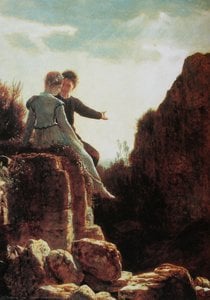
In the quietude of Arnold Böcklin’s 1878 masterpiece, “Centaur Watching Fish,” the viewer is invited into a realm where the boundaries between the mythological and the terrestrial dissolve. This evocative oil on canvas, currently held in the prestigious Kunsthaus Zürich, serves as a profound gateway into the Symbolist movement—a period of art history dedicated to exploring the hidden psychological depths of the human soul. Rather than presenting a mere scene from ancient legend, Böcklin crafts an immersive experience that speaks to the universal themes of solitude and the silent, rhythmic pulse of the natural world. The centaur, a creature of dual nature, reclines upon a serene shoreline, his gaze fixed upon the movement beneath the water's surface, creating a moment of suspended animation that feels both eternal and fleeting.
The composition is masterfully orchestrated to evoke a sense of Romantic reverie. Utilizing a horizontal format, Böcklin emphasizes the reclining posture of the centaur, grounding the mythological figure within a landscape of soft sands and swaying grasses. The artist deliberately eschews the rigid precision of strict realism in favor of an emotional truth. Through the use of diffused lighting and gentle shadows, he establishes an atmosphere of melancholic stillness. This technique allows the viewer to feel the weight of the silence, as if the very air around the creature is heavy with contemplation. It is a painting that does not demand attention through spectacle, but rather earns it through a subtle, haunting intimacy.
Technically, “Centaur Watching Fish” is a triumph of texture and perspective. Böcklin employs the impasto technique with remarkable skill, applying thick, deliberate layers of paint to render the coarse fur of the centaur’s equine half. This tactile richness provides a palpable sense of physicality, making the creature feel present and breathing within the frame. To balance this heavy texture, the artist utilizes atmospheric perspective to create an illusion of infinite depth. By reducing color saturation and softening the details of the distant horizon, he simulates a hazy, dreamlike distance that reinforces the theme of isolation. This method draws a direct lineage from the Romantic masters like Caspar David Friedrich, using the landscape as a mirror for spiritual introspection.
The color palette is a sophisticated arrangement of earthy tones—ochres, deep browns, and muted beiges—which lends the work an organic, timeless quality. These warm, grounded hues are contrasted by the subtle, shimmering light reflecting off the water, drawing the eye toward the focal point of the centaur’s quiet observation. For the collector or interior designer, this piece offers a unique aesthetic versatility; its somber yet tranquil mood provides a sophisticated anchor for a room, offering a sense of historical depth and intellectual gravity that more contemporary works may lack.
Beyond its visual splendor, the painting functions as a complex symbolic tapestry. The centaur itself—a hybrid of human intellect and animal instinct—serves as a powerful metaphor for the duality of existence. As he watches the fish, there is a profound sense of the relationship between humanity and the untamed elements of nature. The act of watching becomes a meditation on mortality; the stillness of the figure suggests a resignation to the cycles of life and death that govern both man and beast. There is a touch of sadness in his solitude, yet it is a beautiful, dignified melancholy that celebrates the quiet dignity of existence.
For those seeking to bring a piece of this profound emotional landscape into their personal spaces, a high-quality reproduction of this work offers more than just decoration. It provides a window into a bygone era of artistic exploration, a constant reminder of the beauty found in silence and the enduring power of myth. Whether placed in a library, a study, or a curated gallery space, “Centaur Watching Fish” continues to provoke thought, inviting all who encounter it to pause, breathe, and reflect upon the silent wonders of the world.
O status de direitos autorais de "Centaur Watching Fish", de Arnold Böcklin é claro: a obra está em em domínio público — seus direitos autorais expiraram. Sua presença no Kunsthaus Zürich não altera esse status.
"Centaur Watching Fish" pertence ao movimento Symbolism, e seu criador atuou na era Século XIX.
A paleta de "Centaur Watching Fish", de Arnold Böcklin é descrita como Earthy. Trata-se de uma descrição concisa das cores da obra.

Basileia, na Suíça, oferece o ponto de partida para uma vida definida pela tensão entre o tangível e o espectral. Nascido em 16 de outubro de 1827, filho de Christian Frederick Böcklin e Ursula Lippe, o jovem acabaria por transcender o comércio de seda de seu pai para ingressar nos rigorosos salões da Academia de Düsseldorf. Sob a orientação de Schirmer, ele começou a absorver a linguagem da paisagem, uma habilidade que seria usada posteriormente para mapear a geografia da alma humana. Ele não apenas pintava cenários; ele construía reinos onde o clássico e o macabro colidem.
A transição da disciplina acadêmica de Düsseldorf para a luz de Paris e o peso ancestral de Roma marca uma mudança fundamental em sua visão. No Louvre, ele absorveu a história dos mestres, mas foi a atmosfera da Itália que verdadeiramente moldou sua mão. Ele retornou a Roma entre 1862 e 1866, um período em que sua paleta começou a favorecer cores mais violentas e expressivas. Esta não era a Itália ensolarada e brilhante do Renascimento, mas um lugar de sombras profundas e peso mitológico. Sua obra começou a inclinar-se para o alegórico, utilizando figuras da antiguidade para explorar a presença pesada e inescapável da mortalidade.
No final do século XIX, sua reputação estava ancorada por uma preocupação específica e inquietante. Entre 1880 e 1886, ele produziu cinco versões de A Ilha dos Mortos. Esta obra, inspirada pelo cemitério inglês em Florença, onde sua filha foi enterrada, tornou-se um ponto focal para o movimento simbolista. É uma cena de profunda quietude: um ilhéu rochoso, ciprestes escuros e um barco aproximando-se de uma margem silenciosa. A pintura não apenas retrata um lugar; ela retrata um estado de ser. Essa capacidade de renderizar o intangível — os sussurros dos sonhos e o peso do além-vida — colocou-o no centro de uma nova sensibilidade europeia.
Sua abordagem técnica frequentemente utilizava um impasto espesso e expressivo, particularmente em obras como La Guerre (1896). Nesta peça, a tela treme com o caos do conflito. Ele evita as linhas limpas do tradicionalismo, optando, em vez disso, por uma composição densa e estratificada onde figuras colidem em meio a uma arquitetura em ruínas. É uma manifestação visceral da destruição, onde o véu entre o mito e a realidade se dissolve em uma tempestade de sombras. Seu estilo sobrepôs-se ao dos Pré-Rafaelitas, mas ele permaneceu distinto, focado em um misticismo que parecia ao mesmo tempo antigo e inquietantemente moderno.
O impacto de sua imaginação estendeu-se muito além da tela, alcançando o reino auditivo da música do final do Romantismo. Suas pinturas forneceram um estímulo visual para compositores, influenciando notavelmente a atmosfera da obra de Gustav Mahler. Sua habilidade de cruzar a lacuna entre o visual e o psicológico significou que sua influência foi sentida por aqueles que buscavam representar o subconsciente. Seu alcance tocou várias gerações de artistas:
Ele morreu em Fiesole, na Itália, deixando para trás um corpo de obras que se recusava a ser facilmente categorizado. Ele foi um pintor da paisagem suíça, da taverna romana e do bosque mitológico, mas seu verdadeiro tema permaneceu a presença silenciosa e duradoura do desconhecido. Suas obras permanecem em coleções importantes, incluindo o Kunstmuseum de Basileia e o Kunsthaus Zürich, servindo como âncoras para aqueles que exploram a intersecção entre o mito e a mortalidade.

1827 - 1901 , Suíça
 Visualizar na parede
 Compartilhar
 Compartilhar
 Detalhes
 Guia
Guia

 Baixar imagem
 Semelhantes
 Raio X
 Ver diaporama
 Perguntas e Respostas
 Estatísticas


 Ler mais