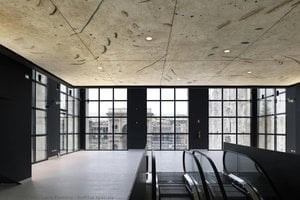
Adquira uma imagem digital de alta resolução e aprimorada, muito superior à prévia online.
Cada arquivo é meticulosamente preparado por nossos especialistas internos, utilizando ferramentas avançadas e retoques manuais de alta precisão. Garantimos que cada imagem apresente clareza excepcional, fidelidade de cores e detalhes minuciosos.
O arquivo final é entregue por e-mail em até 72 horas, otimizado para uso imediato em ambientes profissionais, editoriais e de impressão. Esta é a mesma qualidade utilizada por estúdios de design de alto nível, editoras e galerias.
Baixe um arquivo de alta resolução para exibição pessoal, impressão e projetos criativos. ( Comprar impressão Comprar pintura feita à mão)
Ao escolher o WahooArt.com, você não está apenas adquirindo uma imagem — você está recebendo uma obra de arte digital profissionalmente aprimorada, elaborada com precisão e com garantia de satisfação. Aqui está tudo o que acompanha seu pedido, automaticamente:

O seu arquivo de imagem digital em alta resolução será enviado por e-mail em até 72 horas após o pedido — pronto para uso imediato.

Sua obra de arte é otimizada profissionalmente por meio de ferramentas avançadas de IA e edição manual, garantindo o máximo de detalhes, clareza e precisão de cores.

Apagou ou perdeu o seu ficheiro acidentalmente? Não se preocupe – nós reenviamos para si a qualquer momento, gratuitamente.

Desfrute da sua obra de arte instantaneamente, sem taxas alfandegárias, impostos ou custos de entrega — downloads digitais são sempre isentos de taxas.

Garantimos que sua imagem digital reflita as cores originais com a maior fidelidade possível, utilizando ferramentas profissionais e gerenciamento de cores.

Se você não estiver satisfeito com sua imagem digital, nós a revisaremos ou reembolsaremos 100% dentro de 100 dias — sem perguntas.

Não está satisfeito? Receba o reembolso total em até 100 dias após o recebimento do seu arquivo digital — sem perguntas.

Compre 3 imagens, economize 10% - Compre 5, economize 15% - Compre 10+, economize 20%. Ideal para projetos criativos, galerias e agências.

In the storied annals of the Italian Mannerist period, few names evoke as much quiet reverence as Annibale Fontana. A master whose presence in the historical record is as delicate as the materials he manipulated, Fontana emerged from Milan around 1540 to leave an indelible mark on the realms of sculpture, medal-making, and crystal-work. His life, though relatively brief, was a testament to the profound impact that meticulous craftsmanship and an obsession with light can have on the visual language of the Renaissance. Unlike the grandiloquent masters who sought fame through sprawling theatrical displays, Fontana cultivated a specialized excellence, focusing on the intimate interplay between substance and illumination.
Fontana’s artistic journey began in the vibrant workshops of Milan, where he studied under the sculptor Giovanni Battista Brustellini. This early training was foundational, instilling in him a rigorous commitment to anatomical precision and the classical ideals that defined the era. Under Brustellini’s tutelage, Fontana learned to perceive the potential for narrative within solid forms, a skill that would later allow him to breathe life into bronze and stone alike. His formative years were characterized by this pursuit of technical perfection, preparing him for a career that would bridge the gap between the tactile reality of sculpture and the ethereal beauty of light-refracting gems.
The true breakthrough of Fontana’s career arrived with his extraordinary ability to manipulate crystalline structures. His most celebrated achievement, a breathtaking crystal case commissioned by Albert V, Duke of Bavaria, remains a pinnacle of sixteenth-century craftsmanship. Completed between approximately 1560 and 1570, this work serves as a masterclass in illusionism. By working with translucent materials, Fontana was able to capture and bend light, creating a sense of depth and movement that seemed to defy the physical limitations of the medium. This piece did more than merely showcase his skill; it transformed a precious object into an instrument of artistic expression, proving that even the most rigid materials could be made to dance with luminosity.
This fascination with light extended beyond crystal into his work with bronze and medals. His ability to render complex mythological scenes—such as The Abduction of Dejanira or the struggle of Hercules and Cerberus—within the small, controlled space of a medal or a bronze plaque demonstrates a remarkable command over composition. In these works, Fontana utilized the subtle textures of metal to convey psychological nuance and muscular tension, ensuring that even in miniature, his subjects possessed a monumental presence.
As his career progressed, Fontana’s influence traveled far beyond the borders of Lombardy. His time in Palermo, serving as a sculptor for Francesco Farnese II, the Viceroy of Naples, allowed him to expand his repertoire into portraiture. Here, he captured the likenesses of the era's most prominent figures with a sensitivity that balanced formal dignity with human emotion. Upon returning to Lombardy, his work continued to shape the sacred spaces of his homeland, notably through his contributions to the church of Santa Maria presso San Celso. His execution of statues for the church’s façade, including the prophetic figures of Isaiah and Jeremiah, showcased a sculptor capable of integrating fine detail into the grand architectural landscape.
Though he passed away in 1587, leaving behind a body of work that is remarkably sparse yet intensely potent, Annibale Fontana remains a vital figure for understanding the breadth of the late Renaissance. He was an artist who understood that true greatness often resides in the details—in the way a shadow falls across a bronze muscle or how a beam of light pierces through a faceted gem. His legacy is one of quiet brilliance, reminding us that the most enduring art is often that which masters the ephemeral elements of our world.

1540 - 1587 , Italy

 Visualizar na parede
 Compartilhar
 Compartilhar
 Detalhes

 Baixar imagem
 Semelhantes
 Raio X
 Slideshow

 Ler mais