


Druk giclée lub płótno o jakości muzealnej, szybka realizacja i szeroki wybór opcji wykończenia. ( Zamów ręcznie malowaną reprodukcję Kup obraz wysokiej rozdzielczości)
Wybierz spośród naszych standardowych rozmiarów, które zachowują oryginalne proporcje dzieła sztuki.

Możesz wprowadzić własne wymiary, aby dopasować dzieło do konkretnej ramy lub przestrzeni. Jeśli wybrany rozmiar nie będzie odpowiadał proporcjom oryginalnego obrazu, przytniecie dzieło lub rozszerzymy obraz za pomocą odbicia lustrzanego lub jednolitego wypełnienia krawędzi. Przed rozpoczęciem produkcji prześlemy cyfrową wizualizację do Twojej akceptacji.
Prosimy pamiętać, że podgląd na ekranie nie odzwierciedla faktycznego przycinania ani rozszerzania. Tylko wizualizacja dokładnie pokaże końcową kompozycję.
Mimo dostępności niestandardowych rozmiarów, zalecamy wybór wymiaru z listy zdefiniowanej, aby zachować oryginalne proporcje.
Dostawa na cały świat () w ciągu 2 tygodni zamiast standardowych 4/5 tygodni. (7 Wrzesień)


A Harlot's Progress, plate 1
Wymiary reprodukcji
William Hogarth's “A Harlot’s Progress,” specifically Plate 1, stands as a cornerstone of English art history and social commentary. Executed in etching and engraving on copper around 1730-31, this print transcends mere visual representation; it’s a meticulously crafted narrative designed to provoke reflection on societal hypocrisy and the perilous path toward moral decline.
The composition itself is deliberately unsettling. A crowded street dominates the background, populated by figures engaged in various activities – a gentleman observing the unfolding drama from horseback, an older woman attempting to offer guidance (perhaps subtly manipulative), and Hackabout herself, vulnerable and exposed. The arched doorway above serves as a visual barrier, emphasizing the isolation of Hackabout’s predicament.
Beyond its narrative content, “A Harlot’s Progress” is laden with symbolic significance. The older woman embodies temptation and exploitation—a critique of societal institutions that fail to protect vulnerable individuals. The horseman represents authority and power, highlighting the disparity between those who uphold moral standards and those who succumb to vice. Hogarth's intention wasn’t merely to depict a scandalous affair; he aimed to expose the corrosive effects of social pressures on individual conscience.
The print’s emotional impact is palpable—a blend of observation, pity, and judgment. It compels viewers to confront uncomfortable truths about human behavior and societal failings. Hogarth's stylistic choices – his meticulous attention to detail, his dramatic use of light and shadow, and his unflinching portrayal of moral decay – cemented “A Harlot’s Progress,” Plate 1 as a seminal work of English art and continues to resonate with audiences today.


1697 - 1764 , Wielka Brytania

Explore the profound artistry of black and white photography. From historical mastery to the interplay of light and shadow, discover how monochrome captures timeless emotion and form through a sophisticated lens of art history.

Master the nuances of Giclée printing with our expert guide. Discover how pigment-based inks and museum-grade substrates create fade-resistant, high-fidelity art reproductions designed for discerning collectors seeking unparalleled quality and longevity.
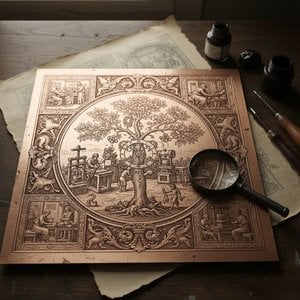
Explore the intricate world of etching and intaglio printmaking. Discover how masters use acid and metal to create profound textures and lines, from Romanticism to modern era, through an expert lens of art history and technical mastery.

 Podgląd w skali
 Wyślij jako kartkę
 Udostępnij
 Szczegóły dzieła

 Pobierz
 Podobne obiekty
 RTG
RTG Pokaz slajdów

 Rozwiń treść




































 Opcja ze szkłem jest dostępna wyłącznie w rozmiarach poniżej 110 cm


