

Dzieło sztuki prezentowane na tej stronie podlega ochronie prawem autorskim, co oznacza, że nie mamy prawa do tworzenia ani sprzedaży jego identycznej reprodukcji. Ochrona ta jest egzekwowana na mocy umów międzynarodowych, takich jak Konwencja berneńska oraz przez przepisy prawa krajowego, w tym te określone w Prawo autorskie USA – Tytuł 17.
Metoda ta jest w pełni zgodna z przepisami prawa autorskiego, ponieważ nie polega na kopiowaniu ani powielaniu chronionego dzieła. Stanowi ona kreatywną reinterpretację – nowy obraz, który czerpie inspirację z oryginału, ale nie jest z nim tożsamy.
Wydruki giclée lub płótna o jakości muzealnej, szybka realizacja i szeroki wybór opcji wykończenia. ( Zamów ręcznie malowaną reprodukcję Przejdź do wersji cyfrowej)
Wybierz spośród naszych standardowych rozmiarów, które zachowują oryginalne proporcje dzieła sztuki.

Wpisz wymaganą szerokość i wysokość, aby dopasować grafikę do ramy lub ściany. Wydruk można jedynie przyciąć, nigdy nie powiększając go poza oryginalny obraz, dlatego format o innych proporcjach spowoduje utratę części kompozycji. Przed rozpoczęciem druku prześlemy Ci cyfrowy podgląd do zatwierdzenia. Obraz wyświetlany na tej stronie nie pokazuje rzeczywistego przycięcia — jedynie podgląd oddaje ten efekt.
Dostawa na cały świat () w ciągu 2 tygodni zamiast standardowych 4/5 tygodni. (9 Listopad)
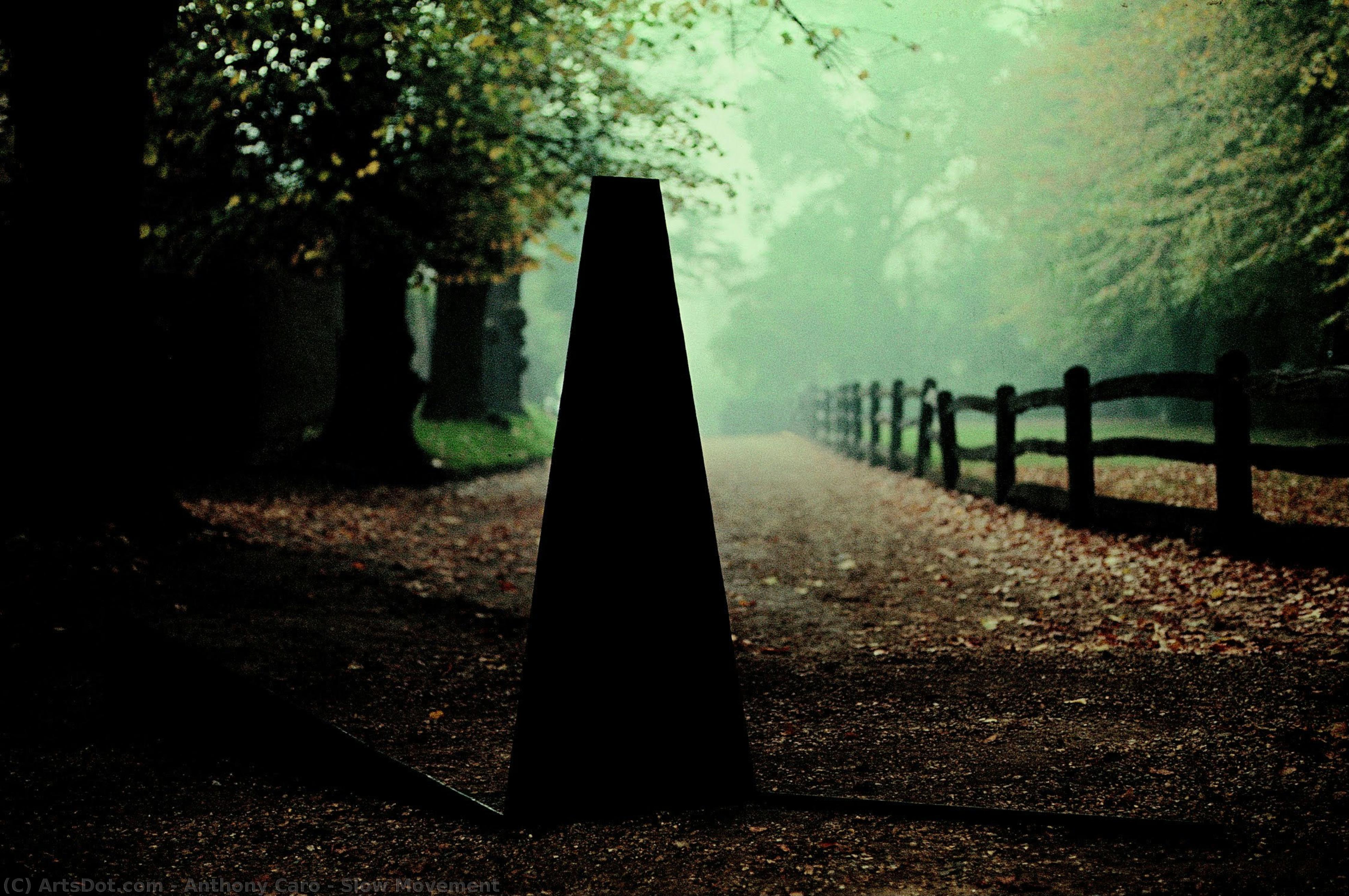
Slow Movement
Wymiary reprodukcji
In the realm of modern abstraction, few works command the space with such quiet authority as Sir Anthony Caro’s Slow Movement. Created in 1965, this masterpiece serves as a profound testament to the evolution of British sculpture. At first glance, the work presents a striking geometric configuration—a deliberate arrangement of triangular planes and a singular bar, all unified by a deep, resonant blue that seems to vibrate against the eye. As noted by the critic Norbert Lynton, the sculpture possesses a rhythmic complexity; while it appears as a singular, cohesive entity, its structural components hint at a much more intricate architectural history. The interplay of these planes creates a deceptive sense of perspective, inviting the viewer to navigate a perceived depth that shifts and breathes as one moves around the piece.
The emotional resonance of Slow Movement lies in its ability to evoke motion through stillness. Despite being composed of rigid, industrial elements, the sculpture suggests a kinetic energy—a slow, deliberate unfolding of space. The deep blue coating does more than merely color the metal; it provides a soulful weight, transforming cold, industrial materials into something evocative and atmospheric. For the collector or the enthusiast of modernism, this work offers a meditative experience, pulling the observer into a dialogue between the physical presence of the steel and the ephemeral concept of movement through an unseen void.
To understand the significance of Slow Movement, one must look to the radical shift in Caro’s artistic journey during the late 1950s. Moving away from the heavy, figurative traditions of his mentor Henry Moore, Caro underwent a metamorphosis following his transformative encounter with American Abstract Expressionism. Influenced by the bold, expansive works of David Smith and Kenneth Noland, he abandoned traditional modeling and the use of the pedestal. By placing his sculptures directly onto the floor, Caro dismantled the barrier between the artwork and the viewer’s reality. This technique brought the sculpture into a direct, unmediated relationship with the surrounding environment, making the ground itself an extension of the art.
In Slow Movement, this revolutionary approach is fully realized. The work does not sit atop a plinth, isolated from the world; instead, it occupies the floor as a participant in the room's architecture. This method allows the sculpture to interact with light, shadow, and the very air of the gallery or home. For interior designers and curators, this makes the piece an incredibly versatile element of spatial composition. It does not merely decorate a room; it redefines its boundaries, creating new focal points and directing the flow of visual energy throughout a sophisticated interior.
The technique behind Slow Movement reflects Caro’s mastery over industrial materials. By manipulating steel and metal with the precision of an engineer—a nod to his early studies in engineering at Cambridge—he achieved a delicate balance between strength and lightness. The use of "found" or industrial components allowed him to strip away the ego of the sculptor's hand, focusing instead on the pure, sculptural truth of the material itself. This approach paved the way for a new era of assemblage art that would influence generations of artists worldwide.
For those seeking to bring the prestige of mid-century modernism into their private collections or professional spaces, a high-quality reproduction of Slow Movement offers an unparalleled opportunity. It serves as a sophisticated anchor for contemporary decor, embodying a timeless elegance that transcends fleeting trends. Whether placed in a sunlit studio or a minimalist corporate lobby, the sculpture’s deep blues and sharp geometries provide a sense of intellectual depth and aesthetic permanence, making it a truly captivating centerpiece for any discerning art lover.
"Slow Movement" emanuje Reflective nastrojem, a zarekomendowanym pomysłem na prezent jest Corporate Gift.
Dostępna jest prezentacja zdjęć: strona Prezentacja slajdów dzieła „Slow Movement” – Sir Anthony Alfred Caro.
Podgląd dzieła „Slow Movement” – Sir Anthony Alfred Caro można znaleźć na stronie Podgląd w pomieszczeniu.


1924 - 2013 , United Kingdom

Explore the profound spiritual depth of geometric abstraction. From Malevich's Suprematism to modern masters, our expert guide reveals how pure form and color command presence in fine art collections.

Discover the enduring allure of metal art. Explore how masterfully forged sculptures blend industrial strength with organic elegance to create timeless investment pieces for sophisticated collectors and luxury interiors.
 Wyślij jako kartkę
 Udostępnij
 Szczegóły dzieła
 Przewodnik

 Pobierz obraz
 Podobne obiekty
 Pokaz slajdów
 Pytania i odpowiedzi
 Statystyki


 Rozwiń treść






































 Opcja ze szkłem jest dostępna wyłącznie w rozmiarach poniżej 110 cm


