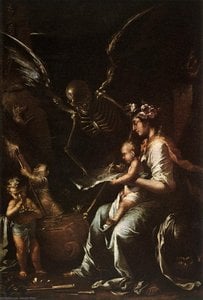
Heroic Battle (1652) by Salvator Rosa, hand-painted oil painting reproduction by a master artist
Podgląd w skali 1:1 Podgląd AR Przełącz na wydania drukowane Przejdź do wersji cyfrowej Wyślij jako kartkę
Szczegóły dzieła Przewodnik Dodaj do ulubionych Pobierz obraz Podobne obiekty RTG Pokaz slajdów Q&A Statystyki

Heroic Battle Hand-painted oil painting reproduction

Wymiary
214.0 x 351.0 cm

Witness the dramatic "Heroic Battle" by Salvator Rosa! This Baroque masterpiece captures intense combat with vibrant detail and historical power. Explore this iconic painting's story & legacy.

Salvator Rosa – włoski malarz barokowy znany z dramatycznych krajobrazów i scen batalistycznych. Jego twórczość inspirowana naturalizmem Ribery i klasycizmem Poussina, wywarła wpływ na rozwój sztuki i literaturę.

Ręcznie malowana reprodukcja olejowa

Ręcznie malowany obraz olejny na płótnie, wykonany na zamówienie przez naszych artystów w wybranym przez Ciebie wymiarze i oprawie. ( Przełącz na wydania drukowane Przejdź do wersji cyfrowej)

Corner sample of the P118B picture frame: polistyren formowany, 5 cm wide and 3 cm thick
P118B zł10
Corner sample of the P118H picture frame: polistyren formowany, 5 cm wide and 3 cm thick
P118H zł10
Corner sample of the P118W picture frame: polistyren formowany, 5 cm wide and 3 cm thick
P118W zł10
Corner sample of the P438Z picture frame: polistyren formowany, 5.5 cm wide and 3.5 cm thick
P438Z zł10
Corner sample of the P508JH picture frame: polistyren formowany, 7 cm wide and 3.5 cm thick
P508JH zł12
Corner sample of the P508YH picture frame: polistyren formowany, 7 cm wide and 3.5 cm thick
P508YH zł12
Corner sample of the P805H picture frame: polistyren formowany, 5 cm wide and 3.5 cm thick
P805H zł10
Corner sample of the P805Z picture frame: polistyren formowany, 5 cm wide and 3.5 cm thick
P805Z zł10
Corner sample of the P919BZ picture frame: polistyren formowany, 7 cm wide and 3.5 cm thick
P919BZ zł10
Corner sample of the P919G picture frame: polistyren formowany, 7 cm wide and 3.5 cm thick
P919G zł10
Corner sample of the P919XJ picture frame: polistyren formowany, 7 cm wide and 3.5 cm thick
P919XJ zł10
Corner sample of the P959ZH picture frame: polistyren formowany, 5 cm wide and 3 cm thick
P959ZH zł10
Corner sample of the P968JZ picture frame: polistyren formowany, 6 cm wide and 4 cm thick
P968JZ zł12
Corner sample of the W106C picture frame: lite drewno, 5 cm wide and 3 cm thick
W106C zł8
Corner sample of the W218G picture frame: lite drewno, 5 cm wide and 3 cm thick
W218G zł10
Corner sample of the W218JH picture frame: lite drewno, 5 cm wide and 3 cm thick
W218JH zł8
Corner sample of the W218Y picture frame: lite drewno, 5 cm wide and 3 cm thick
W218Y zł10
Corner sample of the W307PJ picture frame: lite drewno, 6 cm wide and 3 cm thick
W307PJ zł10
Corner sample of the W316G picture frame: lite drewno, 6 cm wide and 3 cm thick
W316G zł10
Corner sample of the W316PJ picture frame: lite drewno, 6 cm wide and 3 cm thick
W316PJ zł8
Corner sample of the W316Y picture frame: lite drewno, 6 cm wide and 3 cm thick
W316Y zł10
Corner sample of the W398PJ picture frame: lite drewno, 5 cm wide and 3 cm thick
W398PJ zł8
Corner sample of the W4111J picture frame: lite drewno, 6.5 cm wide and 3.5 cm thick
W4111J zł10
Corner sample of the W500HY picture frame: lite drewno, 7 cm wide and 5 cm thick
W500HY zł15
Corner sample of the W500JH picture frame: lite drewno, 7 cm wide and 5 cm thick
W500JH zł15
Corner sample of the W692G picture frame: lite drewno, 8 cm wide and 4 cm thick
W692G zł12
Corner sample of the W849H picture frame: lite drewno, 5 cm wide and 3 cm thick
W849H zł8
Corner sample of the W940BG picture frame: lite drewno, 7.5 cm wide and 4.5 cm thick
W940BG zł15
Corner sample of the W953PJ picture frame: lite drewno, 6 cm wide and 3.5 cm thick
W953PJ zł8

Standardowy format
personalizowane
CM
INCH

Wybierz spośród naszych standardowych rozmiarów, które zachowują oryginalne proporcje dzieła sztuki.

szerokość
wysokość

Wpisz wymaganą szerokość i wysokość, aby obraz pasował do Twojej ramy lub ściany. Ponieważ jest to dzieło malowane ręcznie, w przypadku rozmiaru o innych proporcjach artysta może domalować nieco więcej wokół obrazu lub przyciąć jego fragmenty — wybór należy do Ciebie. Przed rozpoczęciem pracy prześlemy Ci cyfrową wizualizację do zatwierdzenia. Obraz widoczny na tej stronie nie przedstawia rzeczywistego efektu — jedynie wizualizacja oddaje realny rezultat.

Przykłady możliwych zmian: Zamień twarz na zdjęcie klienta; Dodaj zwierzę domowe (np. zamień kota na psa); Ukryj wiadomość w tle; Zmień krajobraz lub elementy tła.
Po złożeniu zamówienia zespół WahooArt.com skontaktuje się z klientem drogą mailową w celu uzyskania instrukcji i prześle wizualizację projektu

Dostawa na całym świecie () w ciągu 3–4 tygodni zamiast standardowych 5 tygodni. (1 Listopad). Bez kompromisów w kwestii jakości.

Bezpłatna ekspresowa wysyłka na cały świat
Wysokiej jakości płótno lniane
Pełne ubezpieczenie przesyłki
Gwarancja zwrotu należności celnych i podatków importowych
Gwarancja wiernego odwzorowania kolorów
100-dniowa polityka zwrotów (tylko w przypadku wad)
Gwarancja 100% zwrotu pieniędzy
Zniżka przy zakupie wielu sztuk

Suma całkowita

zł 1058

Heroic Battle

Technika reprodukcji

Wymiary reprodukcji

-

Cena całkowita

zł 1058

Najważniejsze informacje

  • Dimensions: 214 x 351 cm
  • Notable elements: Dramatic action, chaos
  • Location: Musée du Louvre, Paris
  • Medium: Oil on canvas
  • Artistic style: Baroque

Quiz o sztuce

Do każdego pytania dotyczy tylko jedna poprawna odpowiedź.

Pytanie 1:
What historical period is most closely associated with Salvator Rosa’s ‘Heroic Battle’?
Pytanie 2:
According to the description, what is a prominent feature of ‘Heroic Battle’ that contributes to its dramatic effect?
Pytanie 3:
In ‘Heroic Battle’, what architectural element is depicted in the background, adding a sense of antiquity?
Pytanie 4:
What is the approximate size of ‘Heroic Battle’?
Pytanie 5:
Salvator Rosa is known for his paintings that often depicted what?

A Symphony of Chaos and Courage: Exploring Salvator Rosa’s “Heroic Battle”

Salvator Rosa's "Heroic Battle," painted in 1652, isn't merely a depiction of warfare; it’s a visceral plunge into the heart of conflict—a brutal ballet of desperation and fleeting glory. Born amidst the tumultuous backdrop of Naples during the Baroque era, Rosa was a painter who deliberately defied convention, forging his own path through a world increasingly defined by rigid rules. This painting, housed within the hallowed halls of the Louvre in Paris, embodies that rebellious spirit, offering a raw and unflinching portrayal of a clash far removed from idealized heroic narratives.

The scene explodes with dynamic energy. Rosa masterfully employs the techniques characteristic of the Baroque – dramatic chiaroscuro, intense color contrasts, and a swirling composition—to capture the frenzied chaos of battle. The eye is immediately drawn to the central figures locked in hand-to-hand combat, their faces contorted in expressions of savage determination. Notice how Rosa doesn’t shy away from depicting the gruesome reality of war: exposed wounds, shattered armor, and the sheer physicality of the struggle are all rendered with startling realism. The artist's use of loose brushstrokes and a vibrant palette—deep reds, ochres, and blues—creates a sense of immediacy, as if we’re witnessing the battle unfold before our very eyes.

A Historical Echo: Contextualizing the Baroque Battlefield

To understand “Heroic Battle,” it's crucial to recognize the historical context in which it was created. The mid-17th century witnessed a surge of interest in portraying historical and mythological events, often imbued with moral or political messages. Rosa’s work reflects this trend, drawing inspiration from classical antiquity while simultaneously engaging with contemporary conflicts—specifically, the Italian Wars and the Thirty Years' War. The painting isn’t simply a record of a specific battle; it’s an allegorical exploration of human conflict itself – a meditation on courage, brutality, and the inevitable cost of war.

Rosa’s choice to depict a nameless, generalized “battle” rather than a specific historical event is significant. He deliberately avoids glorifying any particular side or outcome, instead focusing on the universal experience of violence. The imposing mountain range in the background, and the ancient ruins that stand as silent witnesses to centuries of conflict, further emphasize this theme—a reminder of humanity’s enduring struggle against both external enemies and its own internal demons.

Symbolism Woven into the Canvas: Interpreting the Details

Beyond the immediate depiction of combat, “Heroic Battle” is rich in symbolic detail. The presence of the ancient temple or ruins suggests a timelessness to the conflict—a sense that war has always been a recurring feature of human history. The figures themselves are not presented as idealized heroes; they’re ordinary men caught in extraordinary circumstances, driven by instinct and desperation. Even the lighting plays a symbolic role, with dramatic highlights drawing attention to key moments of action while casting other areas into shadow—a visual representation of the uncertainty and danger inherent in war.

The painting's scale – 214 x 351 cm – allows Rosa to meticulously detail every aspect of the scene, from the individual soldiers’ expressions to the vastness of the landscape. The artist’s masterful use of light and shadow creates a powerful sense of depth and drama, drawing the viewer into the heart of the battle. It's a testament to Rosa’s skill that he manages to convey such intense emotion and visceral experience within a single canvas.

A Legacy Endures: The Power of “Heroic Battle”

Salvator Rosa’s "Heroic Battle" remains a compelling work of art, captivating viewers with its raw energy, dramatic composition, and profound exploration of human conflict. It's a painting that demands attention—a reminder of the brutality of war while simultaneously celebrating the courage and resilience of those who fight within it. Reproductions of this masterpiece offer an opportunity to bring this powerful image into your home or office, serving as a poignant reflection on history, humanity, and the enduring nature of struggle.

Pytania i odpowiedzi

Jaki jest dominujący kolor w „Heroic Battle” – Salvator Rosa?

Kolorem, który najbardziej wyróżnia się w "Heroic Battle", jest Espresso (#554838). Dominujący kolor ułatwia dopasowanie dzieła sztuki do wnętrza.

Jak zbudowana jest kompozycja kolorystyczna „Heroic Battle” – Salvator Rosa?

W "Heroic Battle" Balanced kontrast łączy się z Balanced Harmony harmonią.

Jaki format i orientacja druku są sugerowane dla „Heroic Battle” – Salvator Rosa?

W przypadku "Heroic Battle" zalecanym formatem wydruku jest rozmiar Large w orientacji Panoramic.


Biografia artysty

Salvator Rosa (1615 – 1673)

Salvator Rosa, an italian baroque painter, poet, and printmaker, was born in arenella, naples, on either june 20 or july 21, 1615. his mother, giulia greca rosa, was a member of one of the greek families of sicily. despite his father's wishes for him to become a lawyer or priest, salvator showed a preference for the arts from an early age.

early life and training

Salvator Rosa’s artistic career began in naples, where he received his formative training under the tutelage of Francesco Fracanzano and Aniello Falcone. This exposure to established artistic traditions instilled in him a deep understanding of classical techniques and paved the way for his distinctive style—a style that would soon differentiate him from his contemporaries. Rosa’s inclination towards art wasn't merely academic; it was fueled by an innate passion for observation and expression, qualities that would characterize his entire oeuvre.

artistic career

Rosa’s artistic output spanned across naples, rome, and florence, reflecting the dynamism of baroque culture and showcasing his versatility as a painter, poet, and printmaker. He rejected stylistic conventions prevalent at the time, prioritizing originality and emotional intensity above adherence to established norms. His landscapes—particularly those depicting “sublime” nature—became synonymous with the baroque aesthetic, anticipating the romantic movement’s fascination with untamed wilderness. Unlike the idealized vistas championed by Claude Lorrain, Rosa's canvases captured the raw power of storms, mountains, and desolate terrains, conveying a profound sense of awe and terror. Notable among his masterpieces are Pythagoras Emerging From The Underworld (kimbell art museum, fort worth, united states), which brilliantly blends philosophical contemplation with dramatic visual storytelling, and The Baptism Of The Eunuch (chrysler museum of art, norfolk, united states)—a poignant depiction of biblical narrative imbued with theatrical grandeur. Rosa’s prints further solidified his reputation as a master of engraving and demonstrated his ability to convey complex ideas through meticulously crafted images.

influences and legacy

Rosa's artistic vision was profoundly shaped by the naturalism of José de Ribera and the classicism of poussin, yet he resolutely resisted categorization within any single movement. He championed an uncompromising stance against stylistic constraints, prioritizing emotional truthfulness and intellectual depth. His work exerted considerable influence on subsequent generations of artists—particularly those embracing the romantic aesthetic—establishing him as a pivotal figure in baroque art history. Artists like Luca Giordano continued to explore innovative visual languages inspired by Rosa’s pioneering approach. Furthermore, Rosa's poetic output—characterized by satirical wit and rebellious fervor—reflected his broader engagement with intellectual currents of his time.

important links

kimbell art museum, chrysler museum of art (museum names)
Salvator Rosa

Salvator Rosa

1615 - 1673 , Włochy

Krótka nota

  • Artistic Movement Or Style: Barok
  • Artists Or Movements Influenced By This Artist: ['Romanticizm']
  • Artists Who Influenced This Artist: ['José de Ribera']
  • Date Of Birth: June 20 lub lipca 21, 1615
  • Full Name: Salvator Rosa
  • Nationality: Włoski
  • Notable Artworks:
    • Widok Zatoki Salerno
    • Studium dla "Il Genio di Rosa"
    • Grota z wodospadem
  • Place Of Birth: Arenella, Sycylia
Odkryj dzieła sztuki uporządkowane według tematów, stylów i cech charakterystycznych.