DARMOWA KONSULTACJA ARTYSTYCZNA

x
Zamów reprodukcję Zamów reprodukcjęKup cyfrowy obraz Kup cyfrowy obraz UdostępnijUdostępnij
SzczegółySzczegóły Dodaj do ulubionych Dodaj do ulubionych PobierzPobierz Podobne obiektyPodobne obiekty RTGRTG Pokaz slajdówPokaz slajdów

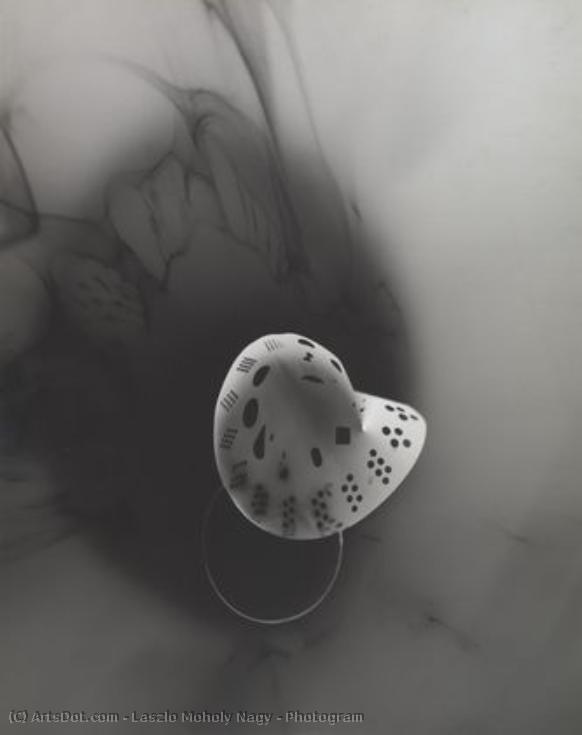
Photogram

László Moholy Nagy’s 1939 Photogram: A striking X-ray of a ceramic sculpture blending art & science. Explore geometric forms, dramatic shadows & photographic realism.

László Moholy-Nagy (1895-1946) – wizjoner malarz, fotograf i projektant Bauhaus. Pionier konstruktywizmu, 'Nowego Widzenia' i integracji technologii z sztuką.

Giclée / Wydruk artystyczny

Druk giclée lub płótno o jakości muzealnej z szybką realizacją i szerokim wyborem opcji wykończenia.

Standard
custom
CM
INCH

Wybierz spośród naszych predefiniowanych rozmiarów, które zachowują oryginalne proporcje dzieła sztuki.

szerokość
wysokość

Możesz wprowadzić własne wymiary, aby dopasować dzieło do konkretnej ramy lub przestrzeni. Jeśli wybrany rozmiar nie będzie odpowiadał proporcjom oryginalnego obrazu, przytniecie dzieło lub rozszerzymy obraz za pomocą odbicia lustrzanego lub jednolitego wypełnienia krawędzi. Przed rozpoczęciem produkcji prześlemy cyfrową wizualizację do Twojej akceptacji.
Prosimy pamiętać, że podgląd na ekranie nie odzwierciedla faktycznego przycinania ani rozszerzania. Tylko wizualizacja dokładnie pokaże końcową kompozycję.
Mimo dostępności niestandardowych rozmiarów, zalecamy wybór wymiaru z listy zdefiniowanej, aby zachować oryginalne proporcje.

Dostawa na cały świat () w ciągu 2 tygodni zamiast standardowych 4/5 tygodni. (3 Lipiec)

why_choose_icon
Bezpłatna ekspresowa wysyłka na cały świat
why_choose_icon
Wysokiej jakości płótno lniane
why_choose_icon
Pełne ubezpieczenie przesyłki
why_choose_icon
Gwarancja zwrotu należności celnych
why_choose_icon
Gwarancja pełnego zgodności kolorystycznej
why_choose_icon
Polityka 60-dniowego zwrotu (tylko w przypadku wad)
why_choose_icon
Gwarancja 100% zwrotu pieniędzy
why_choose_icon
Zniżka przy większych zamówieniach

Suma całkowita

-

reproduction

Photogram

Giclée / Wydruk artystyczny

Wymiary reprodukcji

-

Cena całkowita

-

Podobne dzieła sztuki


Biografia artysty

László Moholy-Nagy: A Revolutionary of Vision and Form

László Moholy-Nagy, a name synonymous with innovation and the blurring of artistic boundaries, was a Hungarian painter, photographer, sculptor, designer, and theorist whose work profoundly shaped the course of 20th-century art. Born László Weisz in Bacs-Kajala in 1895, his life was marked by both personal tragedy and extraordinary creative energy – a duality that fueled his relentless pursuit of new artistic languages. His journey took him from the tumultuous aftermath of World War I to the heart of the Bauhaus movement in Germany and ultimately to Chicago, where he established the New Bauhaus, leaving an indelible mark on design education and contemporary art.

Early Years and Influences: Seeds of a Radical Vision

László’s early life was steeped in Hungarian cultural traditions yet shadowed by personal upheaval. Born into a Jewish family, his childhood was disrupted by the war, leading to a serious injury that profoundly impacted his perspective. This period exposed him to avant-garde circles through journals like “Jelenkor” and the “activist” group around Lajos Kassák’s “Ma,” fostering an early engagement with radical ideas and artistic movements. His cousin, Sir Georg Solti, a renowned conductor, provided a contrasting figure of established cultural prestige, perhaps highlighting the tension between tradition and innovation that would characterize Moholy-Nagy's career. He initially pursued law but quickly abandoned it for the burgeoning world of art, studying with Robert Berény, an early Fauvist painter, who introduced him to modern artistic trends. Crucially, his exposure to Constructivism and Suprematism – movements prioritizing geometric abstraction and industrial materials – became foundational to his aesthetic philosophy. These Russian and European currents emphasized a deliberate, rational approach to form, rejecting the subjective expression of earlier styles in favor of a more objective representation of reality.

The Bauhaus Years: Shaping a New Aesthetic

In 1923, Moholy-Nagy joined the revolutionary Bauhaus school in Weimar, a crucible for artistic experimentation and design innovation. Initially working as a preliminary course instructor alongside Josef Albers, he quickly ascended to head the metal workshop and eventually replaced Johannes Itten as director. His arrival marked a decisive shift within the Bauhaus, moving it away from Expressionism towards a more Constructivist and design-oriented approach – aligning with Walter Gropius’s original vision of uniting art and industry. Moholy-Nagy's influence extended beyond mere technical instruction; he championed the idea of “New Vision,” a concept articulated in his influential 1930 book, *The New Vision*. This philosophy posited that the camera could reveal aspects of reality previously unseen by human perception, challenging traditional notions of representation and opening up new possibilities for artistic expression. He actively experimented with photography, developing techniques like photomontage and exploring the interplay between light and shadow to create abstract images – a departure from representational painting. His work during this period was characterized by bold colors, dynamic compositions, and an exploration of industrial materials, reflecting his belief in the potential of technology to enhance artistic creation.

“New Vision” and Kinetic Sculpture: Expanding Artistic Boundaries

The core of Moholy-Nagy’s artistic philosophy revolved around “New Vision,” a concept that extended beyond photography into all forms of art. He believed that by manipulating light, color, and form, artists could create works that transcended mere imitation of reality and instead offered new ways of perceiving the world. This belief manifested in his pioneering work with kinetic sculpture, most notably the "Lichtrequisit einer elektrischen bühne" (Light-Space Modulator) of 1930. This remarkable device utilized moving parts, electric lights, and mirrors to project dynamic patterns onto surrounding surfaces – a groundbreaking achievement that foreshadowed developments in light art and interactive installations. He also experimented with stage design, incorporating lighting and movement into theatrical productions, demonstrating his versatility and commitment to integrating technology into artistic expression. His exploration of materials extended beyond metal; he embraced plexiglass and other industrial components, pushing the boundaries of what could be considered “art.”

Legacy and Historical Significance: A Lasting Impact

László Moholy-Nagy’s legacy extends far beyond his individual artworks. His influence on Bauhaus design education was profound, shaping the curriculum and aesthetic principles of the school for years to come. His concept of "New Vision" continues to resonate with artists today, inspiring them to explore new ways of seeing and representing reality through innovative techniques. He played a crucial role in bridging the gap between art and technology, anticipating many developments in contemporary art practices. His work served as a catalyst for experimentation and innovation, leaving an enduring mark on the history of modern art and design. His untimely death from leukemia in 1946 cut short a brilliant career, but his vision continues to illuminate the path for artists seeking to push the boundaries of creative expression.
László Moholy-Nagy

László Moholy-Nagy

1895 - 1946 , Węgry

Kluczowe informacje

  • Artistic Movement Or Style: Konstrukcjonizm, Bauhaus
  • Artists Or Movements Influenced By This Artist: ['Suprematyzm']
  • Artists Who Influenced This Artist: ['Robert Berény']
  • Date Of Birth: 1895
  • Full Name: László Moholy-Nagy
  • Nationality: Węgier
  • Notable Artworks:
    • Małe Kompozycja
    • Kwiat
    • Masowa Psychosis
  • Place Of Birth: Bacs-Kajala, Węgry