Podgląd w skaliPodgląd w skali Podgląd ARPodgląd AR Przełącz na wydruki Przełącz na wydrukiZamów ręcznie malowaną reprodukcję Zamów ręcznie malowaną reprodukcję Wyślij jako kartkęWyślij jako kartkę
Szczegóły dziełaSzczegóły dzieła Dodaj do ulubionych Dodaj do ulubionych PobierzPobierz Podobne obiektyPodobne obiekty RTGRTG Pokaz slajdówPokaz slajdów StatystykiStatystyki

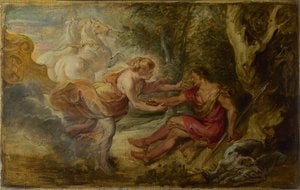
Pastoral Scene

François Boucher’s ‘Pastoral Scene’ (1745) – a delicate drypoint drawing of idyllic childhood. Explore Rococo beauty, classical detail & symbolic themes.

François Boucher (1703-1770) – mistrz rokokowej sztuki! Odkryj jego pociągające obrazy: mitologie, portrety i idylliczne krajobrazy. Arcydzieło francuskiego baroku.

Kup wysokiej rozdzielczości, ulepszony obraz cyfrowy o znacznie wyższej jakości niż podgląd online.

Każdy plik jest starannie przygotowywany przez naszych specjalistów przy użyciu zaawansowanych narzędzi oraz profesjonalnej, ręcznej retuszy. Dbamy o to, aby każdy obraz cechował się wyjątkową ostrością, precyzyjnym odwzorowaniem kolorów i subtelnymi detalami.

Ostateczny plik dostarczany jest drogą mailową w ciągu 72 godzin, zoptymalizowany do natychmiastowego wykorzystania w profesjonalnych zastosowaniach redakcyjnych i poligraficznych. To ta sama jakość, której ufają czołowe studia projektowe, wydawnictwa oraz galerie sztuki.

Obraz cyfrowy

Pobierz plik o wysokiej rozdzielczości do osobistego wyświetlania, druku oraz projektów kreatywnych. (Przełącz na wydruki Przełącz na wydrukiZamów ręcznie malowaną reprodukcję Zamów ręcznie malowaną reprodukcję)

Suma do zapłaty

$ 24,90

W każdym zamówieniu na obraz cyfrowy znajduje się

Profesjonalna dostawa cyfrowa z gwarancją

Wybierając WahooArt.com, nie otrzymujesz jedynie obrazu – otrzymujesz profesjonalnie udoskonalone cyfrowe dzieło sztuki, stworzone z najwyższą precyzją i objęte gwarancją satysfakcji. Oto wszystko, co automatycznie dołączane jest do Twojego zamówienia:

shipping_icon
Błyskawiczna wysyłka e-mailowa

Plik z obrazem cyfrowym w wysokiej rozdzielczości zostanie przesłany na Twój adres e-mail w ciągu 72 godzin od złożenia zamówienia – gotowy do natychmiastowego użycia.

canvas_icon
Plik cyfrowy wzbogacony przez AI

Twoja grafika została profesjonalnie zoptymalizowana przy użyciu zaawansowanych narzędzi AI oraz ręcznej edycji, co zapewnia maksymalną szczegółowość, klarowność i wierność kolorów.

insurance_icon
Dożywotnia darmowa ponowna dostawa

Przypadkowo usunąłeś lub zgubiłeś swój plik? Bez obaw – prześlemy go Tobie ponownie w dowolnym momencie, bez żadnych opłat.

tax_icon
Bez opłat importowych – zawsze

Ciesz się swoją sztuką natychmiast, bez żadnych opłat celnych, należności ani kosztów dostawy – pliki cyfrowe są zawsze wolne od podatku.

color_icon
Gwarancja wierności kolorów

Dzięki zastosowaniu profesjonalnych narzędzi i procesów zarządzania barwą zapewniamy, że Twoje cyfrowe zdjęcie odzwierciedla oryginalne kolory tak wiernie, jak to tylko możliwe.

return_icon
100-dniowa gwarancja satysfakcji

Jeśli nie będziesz zadowolony ze swojego cyfrowego obrazu, poprawimy go lub zwrócimy 100% kosztów w ciągu 100 dni – bez zbędnych pytań.

guarantee_icon
100% Gwarancja zwrotu pieniędzy

Nie jesteś zadowolony? Otrzymaj pełny zwrot kosztów w ciągu 100 dni od otrzymania pliku cyfrowego – bez zbędnych pytań.

discount_icon
Rabaty przy zamówieniach hurtowych

Kup 3 obrazy, oszczędź 10% - Kup 5, oszczędź 15% - Kup 10+, oszczędź 20%. Idealne do projektów kreatywnych, galerii i agencji.

Szybki podgląd

  • Medium: Pen & ink on paper
  • Subject or theme: Rural life, childhood
  • Location: Private Collection
  • Artistic style: Classical/Rococo
  • Movement: Rococo
  • Artist: François Boucher
  • Dimensions: 32 x 33 cm

Quiz o sztuce

Do każdego pytania dotyczy tylko jedna poprawna odpowiedź.

Pytanie 1:
What is the primary subject matter depicted in ‘Pastoral Scene’?
Pytanie 2:
The artwork ‘Pastoral Scene’ is primarily executed using which technique?
Pytanie 3:
According to the description, what is a key characteristic of François Boucher’s style?
Pytanie 4:
In what century was ‘Pastoral Scene’ created?
Pytanie 5:
The artwork draws inspiration from which artistic movement?

The Tranquil Embrace: A Study in Rococo Idyllicism

François Boucher’s “Pastoral Scene,” painted in 1745, isn't merely a depiction of a rural landscape; it’s a carefully constructed invitation into an idealized world—a sanctuary of innocence and leisure nestled within the heart of France. The painting immediately draws the viewer in with its soft palette of browns, beiges, and muted greens, evoking a sense of gentle warmth and timeless serenity. Two young figures – a boy and girl – are seated amidst a rocky outcrop, seemingly lost in quiet contemplation as they engage with paper, suggesting an early lesson or perhaps simply a shared moment of innocent amusement. The scene is populated by sheep grazing peacefully nearby, reinforcing the theme of harmonious coexistence between humanity and nature.

Boucher’s masterful command of Rococo style is evident throughout. The composition adheres to classical principles of balance and symmetry, yet it's infused with a distinctly playful spirit. The figures are rendered with exquisite detail – their youthful faces alight with curiosity, their clothing flowing gracefully—while the surrounding landscape is treated with a delicate touch, emphasizing texture through subtle variations in tone and hatching. Notice how Boucher expertly uses light to sculpt form, creating a sense of depth and volume that invites the viewer to step into the scene.

A Masterpiece of Dry Point Technique

The painting’s remarkable detail is achieved using a technique known as dry point etching, a method favored by Boucher during this period. This process involved scratching a copper plate with a needle, creating a textured surface that would then be inked and pressed onto paper. The resulting image possesses a unique tactile quality—a subtle roughness that adds to the painting’s overall sense of intimacy and immediacy. The meticulous hatching and cross-hatching create a rich tapestry of tones, suggesting both the solidity of the rocks and the softness of the sheep's wool. This technique is particularly effective in conveying the texture of drapery and the delicate details of the children’s clothing.

Furthermore, Boucher’s use of color is restrained yet evocative. He avoids bright, saturated hues, opting instead for a muted palette that contributes to the painting's overall sense of tranquility. The browns and beiges create a warm, earthy atmosphere, while the greens suggest the lushness of the surrounding landscape. The subtle variations in tone—from the darkest shadows to the lightest highlights—are expertly rendered, creating a dynamic interplay of light and shadow that brings the scene to life.

Symbolism and the Essence of Pastoral

“Pastoral Scene” is rich in symbolic meaning. The setting itself – a secluded rocky outcrop with grazing sheep – represents the idealized concept of the “locus amoenus,” or beautiful place, a recurring motif in pastoral literature and art. This idyllic landscape embodies notions of harmony, innocence, and escape from the complexities of urban life. The children’s engagement with paper hints at the importance of education and learning, suggesting that this peaceful setting is also a space for intellectual growth. The sheep, traditionally associated with simplicity and humility, further reinforce this theme.

Beyond its immediate visual appeal, “Pastoral Scene” speaks to broader cultural values—the appreciation of nature, the celebration of childhood, and the pursuit of a simpler, more fulfilling way of life. It’s a testament to Boucher's ability to capture not just a scene but also an entire mood—a feeling of quiet contemplation, gentle joy, and profound connection with the natural world. Reproductions of this work offer a window into a bygone era, inviting us to pause, reflect, and rediscover the beauty that can be found in the simplest of moments.


Biografia artysty

François Boucher: A Master of Rococo’s Delicate Embrace

François Boucher (1703-1770) stands as a cornerstone of 18th-century French art, an artist inextricably linked to the opulent and sensual world of the Rococo. More than simply a painter, he was a decorator, a designer, and a master of capturing the fleeting beauty and playful spirit that defined this era’s artistic sensibilities. His legacy isn't one of grand historical narratives but rather of exquisitely rendered scenes brimming with charm, eroticism, and an undeniable sense of delight – a testament to his profound understanding of aristocratic taste and the pursuit of pleasure.

Early Years and Artistic Foundations

Born on September 29th, 1703, in the heart of Paris, François Boucher’s artistic journey began within a family steeped in craftsmanship. His father, Jean Boucher, was himself a painter, primarily engaged in creating decorative elements for embroidery – a lineage that instilled in young François an appreciation for detail and refined aesthetics. Initially, he received instruction from his father, but at the age of seventeen, he caught the discerning eye of François Lemoyne, a prominent sculptor and painter. This brief apprenticeship proved invaluable, introducing him to the fundamentals of technique and artistic principles. A subsequent period spent assisting the engraver, Jean-François Cars, honed his skills in composition and draughtsmanship. However, it was his victory at the prestigious Grand Prix de Rome in 1720 that truly launched his career, providing him with a coveted scholarship to study in Italy – a pivotal experience that exposed him to the masterpieces of the Renaissance and Baroque periods.

The Rise to Prominence: Courtly Patronage and Artistic Flourishing

Returning to France in 1731, Boucher was immediately admitted to the Académie Royale de Peinture et de Sculpture. His debut work, “Rinaldo and Armida” (1734), instantly established him as a rising star within the Parisian art scene. This painting showcased his burgeoning talent for capturing dramatic emotion and dynamic movement – hallmarks of the Rococo style. Boucher’s artistic voice quickly solidified, characterized by delicate brushwork, pastel palettes, and an emphasis on mythological and pastoral themes. He became increasingly sought after by wealthy patrons, including Madame de Pompadour, the influential mistress of King Louis XV, who recognized his exceptional talent and commissioned numerous works from him. Her patronage, in particular, cemented his position at the pinnacle of French artistic society.

A World of Myth, Leisure, and Eroticism

Boucher’s oeuvre is remarkably diverse, encompassing a wide range of subjects – mythology, portraiture, genre scenes, and landscape. However, he is perhaps most celebrated for his depictions of mythological figures, particularly Venus and Cupid, rendered with an exquisite blend of sensuality and grace. Paintings like “The Triumph of Venus” (1740-1751) are prime examples of this style, showcasing Boucher’s mastery of composition and color. He frequently depicted scenes of domestic tranquility – such as “The Breakfast” (1739), a charming portrayal of his wife and children – offering a glimpse into the refined pleasures enjoyed by the French aristocracy. Yet, beneath the surface of these idyllic settings often lay an undercurrent of playful eroticism, reflecting the era’s fascination with beauty and desire.

Legacy and Influence

François Boucher's influence extended far beyond his own paintings. He served as a sought-after designer for the theater, creating elaborate costumes and sets that contributed to the spectacle of Parisian productions. He also played a significant role in the decoration of the Beauvais and Gobelins workshops, designing tapestries that adorned royal palaces and aristocratic residences. His appointment as *Premier Peintre du Roi* in 1765 – the highest artistic honor bestowed by the French monarchy – solidified his status as the leading artist of the Rococo era. While later critics questioned the perceived superficiality of Rococo art, Boucher’s technical skill, innovative compositions, and enduring appeal have ensured his place as a pivotal figure in the history of Western art. His work continues to captivate viewers with its delicate beauty, playful charm, and timeless elegance.

François Boucher

François Boucher

1703 - 1770 , Francja

Krótka nota

  • Artistic Movement Or Style: Rokoko
  • Artists Or Movements Influenced By This Artist: ['Jean-Honoré Fragonard']
  • Artists Who Influenced This Artist:
    • François Lemoyne
    • Jean-François Cars
  • Date Of Birth: 29 września 1703
  • Date Of Death: 30 maja 1770
  • Full Name: François Boucher
  • Nationality: Francuz
  • Notable Artworks:
    • Rinaldo i Armida
    • Śniadanie
    • Madame Boucher
    • Zachód Słońca
  • Place Of Birth: Paryż, Francja