Podgląd w skali 1:1 Podgląd AR Przełącz na wydania drukowane Przejdź do wersji cyfrowej Wyślij jako kartkę
Szczegóły dzieła Przewodnik Dodaj do ulubionych Pobierz obraz Podobne obiekty RTG Pokaz slajdów Statystyki

Juliana

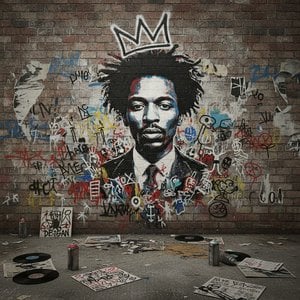
Intense portrait of Juliana by Bruno Baptistelli captures resilience; own this evocative piece reflecting Brazilian history today.

Explore the work of Brazilian artist bruno baptistelli (b.1985), known for assemblage, installations & conceptual art. Discover his social themes & global exhibitions.

Dzieło sztuki prezentowane na tej stronie podlega ochronie prawem autorskim, co oznacza, że nie mamy prawa do tworzenia ani sprzedaży jego identycznej reprodukcji. Ochrona ta jest egzekwowana na mocy umów międzynarodowych, takich jak Konwencja berneńska oraz przez przepisy prawa krajowego, w tym te określone w Prawo autorskie USA – Tytuł 17.

Jako pełną szacunku i legalną alternatywę oferujemy personalizowane, malowane ręcznie dzieła sztuki inspirowane oryginałem. Nasi wykwalifikowani i profesjonalni artyści starannie analizują styl, nastrój oraz artystyczną esencję pierwowzoru, aby stworzyć nowe, unikalne dzieło, które przywołuje te same emocje – pozostając jednocześnie w pełni oryginalną kreacją.

Metoda ta jest w pełni zgodna z przepisami prawa autorskiego, ponieważ nie polega na kopiowaniu ani powielaniu chronionego dzieła. Stanowi ona kreatywną reinterpretację – nowy obraz, który czerpie inspirację z oryginału, ale nie jest z nim tożsamy.

Ręcznie malowana reprodukcja olejowa

Ręcznie malowany obraz olejny na płótnie, wykonany na zamówienie przez naszych artystów w wybranym przez Ciebie wymiarze i oprawie. ( Przełącz na wydania drukowane Przejdź do wersji cyfrowej)

Corner sample of the P118B picture frame: polistyren formowany, 5 cm wide and 3 cm thick
P118B zł10
Corner sample of the P118H picture frame: polistyren formowany, 5 cm wide and 3 cm thick
P118H zł10
Corner sample of the P118W picture frame: polistyren formowany, 5 cm wide and 3 cm thick
P118W zł10
Corner sample of the P438Z picture frame: polistyren formowany, 5.5 cm wide and 3.5 cm thick
P438Z zł10
Corner sample of the P508JH picture frame: polistyren formowany, 7 cm wide and 3.5 cm thick
P508JH zł12
Corner sample of the P508YH picture frame: polistyren formowany, 7 cm wide and 3.5 cm thick
P508YH zł12
Corner sample of the P805H picture frame: polistyren formowany, 5 cm wide and 3.5 cm thick
P805H zł10
Corner sample of the P805Z picture frame: polistyren formowany, 5 cm wide and 3.5 cm thick
P805Z zł10
Corner sample of the P919BZ picture frame: polistyren formowany, 7 cm wide and 3.5 cm thick
P919BZ zł10
Corner sample of the P919G picture frame: polistyren formowany, 7 cm wide and 3.5 cm thick
P919G zł10
Corner sample of the P919XJ picture frame: polistyren formowany, 7 cm wide and 3.5 cm thick
P919XJ zł10
Corner sample of the P959ZH picture frame: polistyren formowany, 5 cm wide and 3 cm thick
P959ZH zł10
Corner sample of the P968JZ picture frame: polistyren formowany, 6 cm wide and 4 cm thick
P968JZ zł12
Corner sample of the W106C picture frame: lite drewno, 5 cm wide and 3 cm thick
W106C zł8
Corner sample of the W218G picture frame: lite drewno, 5 cm wide and 3 cm thick
W218G zł10
Corner sample of the W218JH picture frame: lite drewno, 5 cm wide and 3 cm thick
W218JH zł8
Corner sample of the W218Y picture frame: lite drewno, 5 cm wide and 3 cm thick
W218Y zł10
Corner sample of the W307PJ picture frame: lite drewno, 6 cm wide and 3 cm thick
W307PJ zł10
Corner sample of the W316G picture frame: lite drewno, 6 cm wide and 3 cm thick
W316G zł10
Corner sample of the W316PJ picture frame: lite drewno, 6 cm wide and 3 cm thick
W316PJ zł8
Corner sample of the W316Y picture frame: lite drewno, 6 cm wide and 3 cm thick
W316Y zł10
Corner sample of the W398PJ picture frame: lite drewno, 5 cm wide and 3 cm thick
W398PJ zł8
Corner sample of the W4111J picture frame: lite drewno, 6.5 cm wide and 3.5 cm thick
W4111J zł10
Corner sample of the W500HY picture frame: lite drewno, 7 cm wide and 5 cm thick
W500HY zł15
Corner sample of the W500JH picture frame: lite drewno, 7 cm wide and 5 cm thick
W500JH zł15
Corner sample of the W692G picture frame: lite drewno, 8 cm wide and 4 cm thick
W692G zł12
Corner sample of the W849H picture frame: lite drewno, 5 cm wide and 3 cm thick
W849H zł8
Corner sample of the W940BG picture frame: lite drewno, 7.5 cm wide and 4.5 cm thick
W940BG zł15
Corner sample of the W953PJ picture frame: lite drewno, 6 cm wide and 3.5 cm thick
W953PJ zł8

Standardowy format
personalizowane
CM
INCH

Wybierz spośród naszych standardowych rozmiarów, które zachowują oryginalne proporcje dzieła sztuki.

szerokość
wysokość

Wpisz wymaganą szerokość i wysokość, aby obraz pasował do Twojej ramy lub ściany. Ponieważ jest to dzieło malowane ręcznie, w przypadku rozmiaru o innych proporcjach artysta może domalować nieco więcej wokół obrazu lub przyciąć jego fragmenty — wybór należy do Ciebie. Przed rozpoczęciem pracy prześlemy Ci cyfrową wizualizację do zatwierdzenia. Obraz widoczny na tej stronie nie przedstawia rzeczywistego efektu — jedynie wizualizacja oddaje realny rezultat.

Przykłady możliwych zmian: Zamień twarz na zdjęcie klienta; Dodaj zwierzę domowe (np. zamień kota na psa); Ukryj wiadomość w tle; Zmień krajobraz lub elementy tła.
Po złożeniu zamówienia zespół WahooArt.com skontaktuje się z klientem drogą mailową w celu uzyskania instrukcji i prześle wizualizację projektu

Dostawa na całym świecie () w ciągu 3–4 tygodni zamiast standardowych 5 tygodni. (26 Październik). Bez kompromisów w kwestii jakości.

Bezpłatna ekspresowa wysyłka na cały świat
Wysokiej jakości płótno lniane
Pełne ubezpieczenie przesyłki
Gwarancja zwrotu należności celnych i podatków importowych
Gwarancja wiernego odwzorowania kolorów
100-dniowa polityka zwrotów (tylko w przypadku wad)
Gwarancja 100% zwrotu pieniędzy
Zniżka przy zakupie wielu sztuk

Suma całkowita

zł 1045

Juliana

Technika reprodukcji

Wymiary reprodukcji

-

Cena całkowita

zł 1045

Najważniejsze informacje

  • Location: Pinacoteca do Estado de São Paulo
  • Medium: Acrylic on paper
  • Artist: Bruno Baptistelli
  • Title: Juliana

Quiz o sztuce

Do każdego pytania dotyczy tylko jedna poprawna odpowiedź.

Pytanie 1:
What is the title of the artwork described?
Pytanie 2:
In what year was this painting created?
Pytanie 3:
What medium was used to create the artwork 'Juliana'?
Pytanie 4:
The historical context of Juliana's life centers around what major theme?
Pytanie 5:
Who is the artist of the painting 'Juliana'?

The Enduring Spirit of Juliana

To gaze upon Bruno Baptistelli’s "Juliana" is to encounter not merely a portrait, but a profound testament to resilience etched onto canvas. This piece draws its power from the lived history of its subject, an enslaved woman whose life story became a monumental narrative of self-determination. The painting captures Juliana in a moment charged with quiet defiance; her direct gaze meets the viewer’s eye, imbued with an expression that suggests both weariness and unyielding spirit. It is a visual echo of struggle transformed into enduring dignity.

A Tapestry Woven from History and Will

The context surrounding Juliana's life in nineteenth-century Paraíba is crucial to understanding the weight carried within this artwork. Her journey—the meticulous, collective strategy undertaken with her mother Luísa and sisters to purchase freedom for their entire family—elevates her beyond a simple portrait subject. She represents an entire community’s fight for personhood. Baptistelli honors this monumental achievement, allowing the viewer to feel the weight of accumulated resources, the passage of time, and the sheer force of familial will required to secure manumission piece by painstaking piece. The painting thus becomes a meditation on freedom as a shared, arduous endeavor.

Technique and Emotional Resonance

Executed in acrylic on paper, the physical dimensions—a compact 6 x 21 cm—do not diminish the emotional scope of the work. Baptistelli employs a style that feels both immediate and deeply considered, channeling a neo-expressionist energy while maintaining a palpable sense of melancholic depth. The vivid splash of red in her shirt serves as an arresting focal point, perhaps symbolizing passion, lifeblood, or the revolutionary fire necessary to challenge systemic oppression. Her dreadlocks are rendered with textural detail, anchoring her presence and connecting her physical self to her powerful narrative.

A Modern Echo of Timeless Struggle

For the collector or designer seeking art that speaks volumes without shouting, "Juliana" offers profound depth. It transcends mere decorative appeal; it is a conversation starter rooted in vital human rights history. The painting invites contemplation on what constitutes true ownership—of self, of family, and of destiny. Owning this reproduction allows one to bring into a contemporary space the powerful resonance of historical struggle, transforming a wall hanging into a quiet monument to perseverance.

Pytania i odpowiedzi

Kto jest autorem i z jakiego roku pochodzi "Juliana"?

Autorem dzieła "Juliana" jest Bruno Baptistelli, a datowanie pracy pochodzi z 2020 roku.

Jaki jest zalecany rozmiar wydruku dla „Juliana” – Bruno Baptistelli?

Zalecany rozmiar wydruku dla „Juliana” – Bruno Baptistelli to Small.

Czy dostępny jest plik do pobrania w wysokiej rozdzielczości dla "Juliana"?

„Juliana” jest dostępny jako wysokiej rozdzielczości cyfrowe zdjęcie do pobrania; można go nabyć bezpośrednio na stronie Cyfrowy obraz.


Biografia artysty

The Echoes of '85: A Portrait of a Rising Star

Born in 1985, an artist whose name remains largely unheralded outside specific circles, this individual’s journey is one defined by a quiet intensity and a remarkable ability to capture the zeitgeist of a particular era. While not formally trained through traditional academic routes, their artistic development has been shaped by a deep immersion in music – specifically, the sonic landscape of 1985, as evidenced by the influential “1985 (SR-71 song)” and the broader cultural currents of that year. This fascination with the past isn’t merely nostalgic; it's a deliberate choice to explore themes of memory, identity, and the enduring power of formative experiences.

The artist’s work is immediately recognizable for its distinctive blend of neo-expressionist techniques and a subtle, almost melancholic sensibility. Influenced by the vibrant yet emotionally raw paintings emerging from Europe in the mid-1980s – particularly the figures championed by Germano Celant and Charles Saatchi – their canvases are often dominated by bold colors and gestural brushstrokes. However, unlike the overtly dramatic style of some contemporaries, there’s a restraint here, a careful consideration of composition and light that lends a contemplative quality to each piece. The influence of artists like Andrew Crispo at the Guggenheim Museum is palpable, particularly in their engagement with Constantin Brâncuși's sculptures, reflecting a fascination with form, space, and the human connection to art.

A Year Defined: 1985 and its Artistic Resonance

1985 was a pivotal year for the art world, marked by significant shifts in taste and a growing interest in emotionally charged works. The opening of Charles Saatchi’s collection ignited a fervent debate about the direction of contemporary art, paving the way for the rise of neo-expressionism. Simultaneously, events like the fire at the Huntington Library, which tragically destroyed a Reynolds portrait, underscored the fragility of artistic heritage and the importance of preservation. The year also witnessed key awards – the Archibald Prize recognizing Guy Warren’s *Flugelman with Wingman*, Bruce McLean's provocative “Oriental Garden,” and Howard Hodgkin’s exploration of abstract emotion – demonstrating a diverse range of approaches within the art scene.

Furthermore, 1985 saw groundbreaking works emerging from artists like Robby Denny, whose vibrant color field paintings captured the energy of urban landscapes, and Christo and Jeanne Claude's ambitious “The Pont Neuf Wrapped” in Paris. These projects, which involved wrapping an iconic landmark in fabric, were not just aesthetic interventions but also powerful statements about public space and the relationship between art and architecture. The influence of these events is deeply embedded within the artist’s own creative process, informing their exploration of scale, materiality, and the viewer's experience.

Musical Roots & Artistic Echoes

The artist’s deep connection to music – particularly the sonic landscape of 1985 – is a defining characteristic of their work. The “1985 (SR-71 song)” serves as a potent symbol, representing not just a specific moment in time but also a broader cultural phenomenon. Bands like Public Enemy, Guns N' Roses, and J. Cole were dominating the charts, reflecting a diverse range of musical styles and social concerns. This musical environment undoubtedly shaped the artist’s aesthetic sensibilities, influencing their use of color, rhythm, and texture.

The influence of artists born in 1985 is also evident – from Jane's Addiction to Lana Del Rey - each contributing a unique voice to the cultural conversation. The exploration of themes like identity, alienation, and social commentary, prevalent in these musicians’ work, resonates within the artist’s own explorations of personal experience and collective memory.

A Contemporary Voice: Legacy & Future Directions

Despite not achieving widespread recognition during their lifetime, this artist's work possesses a quiet power that continues to resonate with contemporary audiences. Their exploration of memory, identity, and the enduring influence of the past speaks to universal human experiences. The echoes of 1985 – its music, its art, its social anxieties – are subtly woven into every canvas, creating a body of work that is both deeply personal and profoundly evocative.

Looking ahead, it’s likely that this artist will continue to refine their unique artistic voice, pushing the boundaries of neo-expressionism while remaining firmly rooted in the lessons learned from the formative experiences of their youth. Their legacy lies not just in the individual works they create but also in their ability to capture a specific moment in time and transform it into something enduringly beautiful.

Bruno Baptistelli

Bruno Baptistelli

1985 - , Brazil

Krótka nota

  • Date Of Birth: 1985
  • Place Of Birth: São Paulo, Brazil
  • Artistic Movement Or Style: Neo-expressionism