Kup wysokiej rozdzielczości, ulepszony obraz cyfrowy o znacznie wyższej jakości niż podgląd online.
Każdy plik jest starannie przygotowywany przez naszych specjalistów przy użyciu zaawansowanych narzędzi oraz profesjonalnej, ręcznej retuszy. Dbamy o to, aby każdy obraz cechował się wyjątkową ostrością, precyzyjnym odwzorowaniem kolorów i subtelnymi detalami.
Ostateczny plik dostarczany jest drogą mailową w ciągu 72 godzin, zoptymalizowany do natychmiastowego wykorzystania w profesjonalnych zastosowaniach redakcyjnych i poligraficznych. To ta sama jakość, której ufają czołowe studia projektowe, wydawnictwa oraz galerie sztuki.
Pobierz plik o wysokiej rozdzielczości do osobistego wyświetlania, druku oraz projektów kreatywnych. ( Przełącz na wydruki
Zamów ręcznie malowaną reprodukcję)
Wybierając WahooArt.com, nie otrzymujesz jedynie obrazu – otrzymujesz profesjonalnie udoskonalone cyfrowe dzieło sztuki, stworzone z najwyższą precyzją i objęte gwarancją satysfakcji. Oto wszystko, co automatycznie dołączane jest do Twojego zamówienia:
Plik z obrazem cyfrowym w wysokiej rozdzielczości zostanie przesłany na Twój adres e-mail w ciągu 72 godzin od złożenia zamówienia – gotowy do natychmiastowego użycia.
Twoja grafika została profesjonalnie zoptymalizowana przy użyciu zaawansowanych narzędzi AI oraz ręcznej edycji, co zapewnia maksymalną szczegółowość, klarowność i wierność kolorów.
Przypadkowo usunąłeś lub zgubiłeś swój plik? Bez obaw – prześlemy go Tobie ponownie w dowolnym momencie, bez żadnych opłat.
Ciesz się swoją sztuką natychmiast, bez żadnych opłat celnych, należności ani kosztów dostawy – pliki cyfrowe są zawsze wolne od podatku.
Dzięki zastosowaniu profesjonalnych narzędzi i procesów zarządzania barwą zapewniamy, że Twoje cyfrowe zdjęcie odzwierciedla oryginalne kolory tak wiernie, jak to tylko możliwe.
Jeśli nie będziesz zadowolony ze swojego cyfrowego obrazu, poprawimy go lub zwrócimy 100% kosztów w ciągu 100 dni – bez zbędnych pytań.
Nie jesteś zadowolony? Otrzymaj pełny zwrot kosztów w ciągu 100 dni od otrzymania pliku cyfrowego – bez zbędnych pytań.
Kup 3 obrazy, oszczędź 10% - Kup 5, oszczędź 15% - Kup 10+, oszczędź 20%. Idealne do projektów kreatywnych, galerii i agencji.
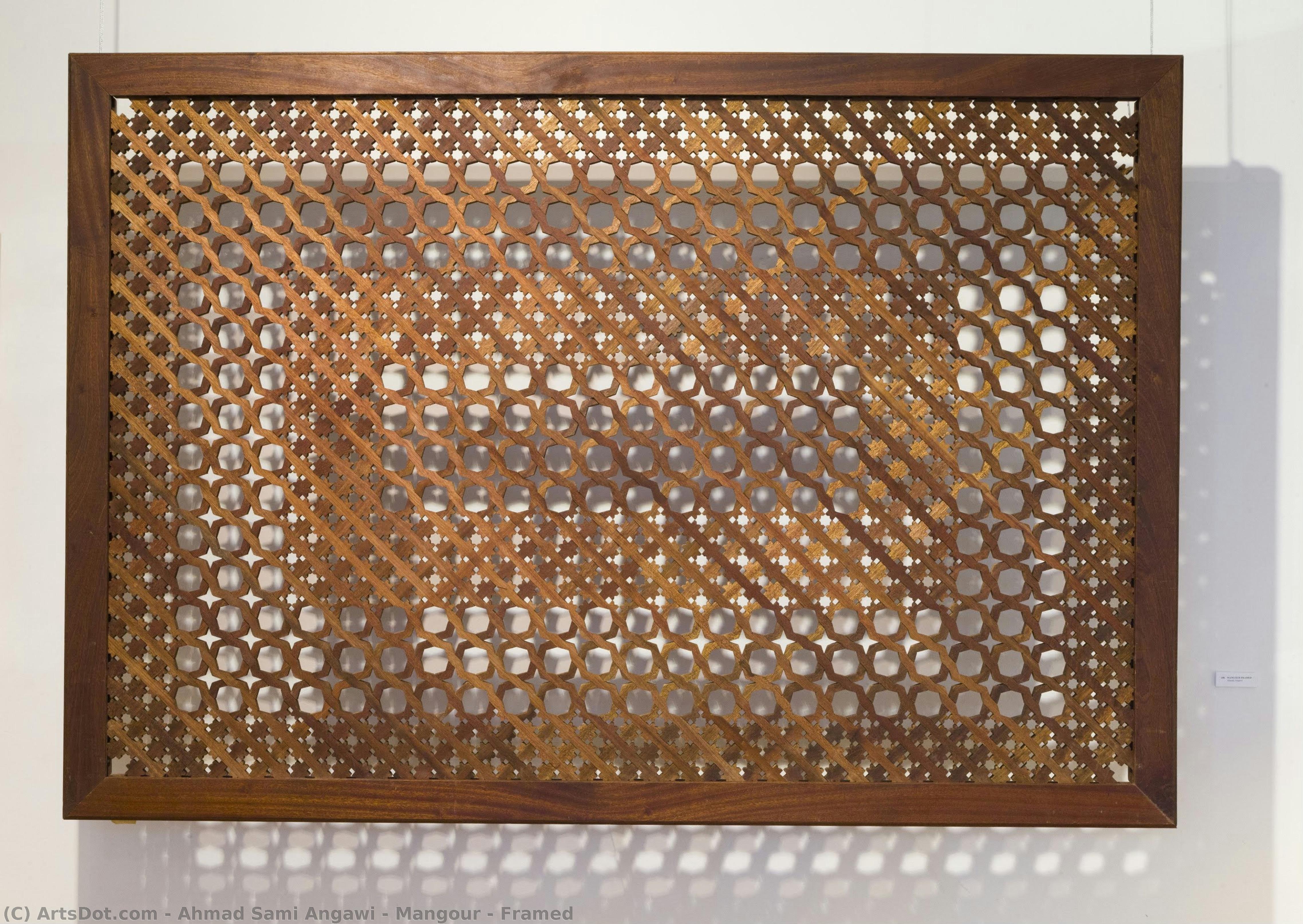
In the heart of Jeddah, where the ancient whispers of the Hejaz region meet the contemporary pulse of Saudi Arabia, lies an architectural soul captured in wood and geometry. Mangour - Framed is not merely a visual composition; it is a profound meditation on the concept of duality. Inspired by the traditional mangour screens that have long graced the historic windows of Jeddah, this work by Ahmad Sami Angawi serves as a bridge between the structural legacies of the past and the minimalist elegance of modern design. The piece invites the viewer into a rhythmic dialogue between what is hidden and what is revealed, creating an atmosphere where light and shadow perform a silent, eternal dance.
The artwork draws its strength from the intricate lattice patterns that define Hejazi architecture. These screens were historically engineered with a brilliant functional intelligence: to temper the harsh desert sun, to allow for cooling breezes, and to provide privacy without isolation. In this framed reproduction, Angawi translates these architectural principles into a captivating visual texture. The composition is a sophisticated arrangement of circular motifs and geometric intersections that create a sense of depth and movement. As light hits the surface, the interplay of the dark wooden lattice against the patterned background evokes the sensation of sunlight filtering through a window at midday, casting complex, mesmerizing shadows that change with the viewer's perspective.
The technique employed in this piece reflects Angawi’s unique multidisciplinary background, blending his training in industrial design from the Pratt Institute with a deep reverence for traditional arts. The precision of the geometric shapes suggests a mathematical harmony, yet there is an organic warmth to the execution that prevents the work from feeling cold or purely clinical. Each circle and void within the lattice acts as a vessel for light, embodying the philosophical notion of duality—the balance between heat and cool, concealment and exposure, presence and absence. This tension makes the artwork an emotionally resonant piece, offering a sense of tranquility and structural stability.
For the discerning collector or interior designer, Mangour - Framed offers unparalleled versatility. Its neutral yet textured palette allows it to serve as a sophisticated focal point in a variety of high-end settings. In a contemporary minimalist room, it provides much-needed organic texture and cultural depth; in a more classical, opulent space, it acts as a subtle nod to historical craftsmanship. This reproduction is more than a decorative element; it is an invitation to experience the architectural poetry of Saudi Arabia, bringing the timeless elegance of Jeddah’s heritage into the modern home through a lens of sophisticated, contemporary art.
In the heart of Jeddah, where the ancient rhythms of the Hejaz region meet the pulse of modern Saudi Arabia, the work of Ahmad Sami Angawi emerges as a profound meditation on equilibrium. Born in 1981, Angawi has cultivated a creative practice that does not merely observe tradition but breathes new life into it through a sophisticated dialogue between the past and the present. His artistic journey is defined by a rare duality; he possesses the technical precision of an industrial designer and the soulful reverence of a master of traditional arts. This unique intellectual foundation, forged at the Pratt Institute in New York and refined at The Prince's School of Traditional Arts in London, allows him to navigate the complexities of contemporary aesthetics while remaining deeply anchored in his cultural roots.
Angawi’s work is profoundly shaped by the concept of Al-Mizan, or balance. This Islamic principle serves as both a spiritual compass and a structural blueprint for his compositions. To Angawi, balance is not a static state but a dynamic pursuit of harmony between light and shadow, geometry and organic form, and heritage and innovation. His explorations are heavily influenced by the colorful diversity of the Hejaz region and his Moroccan lineage, drawing inspiration from the intricate architectural details that define Western Saudi Arabia. Through his eyes, the historical patterns of his ancestors are transformed into a living language capable of speaking to a global, modern audience.
The breadth of Angawi’s multidisciplinary practice is nothing short of extraordinary, spanning sculptural installations, textiles, and graphic design. He approaches each medium as an opportunity to investigate the human condition and our relationship with the environment. One of his most celebrated achievements lies in his reimagining of Mangour—the traditional wooden lattice screens used in Hejazi architecture to regulate light and airflow. In his hands, these screens transcend their functional origins to become mesmerizing works of art. By manipulating intricate geometric patterns and vibrant color palettes, Angativ creates immersive environments where the interplay of sunlight and shadow evokes a sense of timelessness.
His commitment to the preservation of artisanal skills is further evidenced by his entrepreneurial spirit. Through platforms such as Design Studio Shai and Zawiya 97, Angawi has created vital spaces for collaborative creativity. These initiatives are dedicated to the concept of a "living tradition," ensuring that ancient techniques are not relegated to museums but are instead integrated into contemporary design projects. His work with the Albukhary Foundation Gallery of Islamic World stands as a testament to this mission, showcasing how traditional motifs can be scaled into monumental installations that transform architectural spaces into profound cultural experiences.
Ultimately, the significance of Ahmad Sami Angawi lies in his ability to bridge disparate worlds. His art serves as a vital link between:
As he continues to push the boundaries of his practice, Angawi remains a pivotal figure in the Saudi art landscape, reminding us that true innovation is most powerful when it honors the foundations upon which it is built.

1981 - , Saudi Arabia