Zobacz w skali 1:1 Zobacz w AR Kup ręcznie malowany obraz Przełącz na wersję cyfrową Wyślij
Szczegóły Przewodnik Dodaj do ulubionych Pobierz plik obrazu Podobne obiekty RTG Pokaz slajdów Statystyki

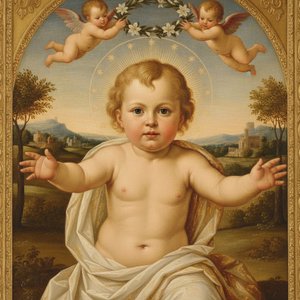
Mother and Child

Experience the tender bond between mother and child in Abbott Handerson Thayer's 'Mother and Child.' A beautiful Tonalist painting, now available as a stunning reproduction.

Abbott Handerson Thayer (1849-1921) – amerykański malarz znany z idealistycznych portretów, krajobrazów i fascynacji kamuflażem. Jego dzieła inspirują do obserwacji natury i piękna.

Giclée / Wydruk artystyczny

Wydruki giclée lub płótna o jakości muzealnej, szybka realizacja i szeroki wybór opcji wykończenia. ( Kup ręcznie malowany obraz Przełącz na wersję cyfrową)

P118B $10
P118H $10
P118W $10
P438Z $10
P508JH $12
P508YH $12
P805H $10
P805Z $10
P919BZ $10
P919G $10
P919XJ $10
P959ZH $10
P968JZ $12
W106C $8
W218G $10
W218JH $8
W218Y $10
W307PJ $10
W316G $10
W316PJ $8
W316Y $10
W398PJ $8
W4111J $10
W500HY $15
W500JH $15
W692G $12
W849H $8
W940BG $15
W953PJ $8

Standardowy
na zamówienie
CM
INCH

Wybierz spośród naszych standardowych rozmiarów, które zachowują oryginalne proporcje dzieła sztuki.

szerokość
wysokość

Możesz wprowadzić własne wymiary, aby dopasować dzieło do konkretnej ramy lub przestrzeni. Jeśli wybrany rozmiar nie będzie odpowiadał proporcjom oryginalnego obrazu, przytniecie dzieło lub rozszerzymy obraz za pomocą odbicia lustrzanego lub jednolitego wypełnienia krawędzi. Przed rozpoczęciem produkcji prześlemy cyfrową wizualizację do Twojej akceptacji.
Prosimy pamiętać, że podgląd na ekranie nie odzwierciedla faktycznego przycinania ani rozszerzania. Tylko wizualizacja dokładnie pokaże końcową kompozycję.
Mimo dostępności niestandardowych rozmiarów, zalecamy wybór wymiaru z listy zdefiniowanej, aby zachować oryginalne proporcje.

Dostawa na cały świat () w ciągu 2 tygodni zamiast standardowych 4/5 tygodni. (23 Wrzesień)

why_choose_icon
Bezpłatna ekspresowa wysyłka na cały świat
why_choose_icon
Wysokiej jakości płótno lniane
why_choose_icon
Pełne ubezpieczenie transportowe
why_choose_icon
Gwarancja zwrotu należności celnych i podatków importowych
why_choose_icon
Gwarancja idealnego odwzorowania barw
why_choose_icon
100-dniowy okres na zwrot dzieła w przypadku wykrycia wad produkcyjnych
why_choose_icon
Gwarancja 100% zwrotu pieniędzy
why_choose_icon
Oferta przy zakupie wielu sztuk

Cena całkowita

$ 68

reproduction

Mother and Child

Giclée / Wydruk artystyczny

Rozmiar reprodukcji

-

Suma do zapłaty

$ 68

Kluczowe informacje

  • Location: Museum of Fine Arts, Boston
  • Artist: Abbott Thayer
  • Influences: Thayer
  • Notable elements: Tonalism style
  • Medium: Oil paint
  • Subject or theme: Mother-child bond
  • Artistic style: Tonalism

Quiz wiedzy o sztuce

Do każdego pytania dotyczy tylko jedna poprawna odpowiedź.

Pytanie 1:
What artistic movement is Abbott Handerson Thayer primarily associated with?
Pytanie 2:
The painting 'Mother and Child' depicts a scene of:
Pytanie 3:
Which artist is known for the style of painting 'Mother and Child'?
Pytanie 4:
What is a key characteristic of Abbott Handerson Thayer's style, as reflected in 'Mother and Child'?
Pytanie 5:
Where is the original 'Mother and Child' painting currently located?

The Serene Embrace: Abbott Handerson Thayer’s “Mother and Child”

Abbott Handerson Thayer's "Mother and Child," painted in 1886, isn't merely a depiction of familial love; it’s a profound meditation on intimacy, vulnerability, and the enduring power of maternal connection. Currently residing within the hallowed halls of the Museum of Fine Arts in Boston, this oil painting transcends its simple subject matter to become a cornerstone of Tonalism, a movement Thayer championed that prioritized atmosphere and emotional resonance over meticulous detail. The piece immediately draws the viewer into a world of quiet warmth, achieved through a masterful manipulation of color and light – soft, muted tones of brown, ochre, and lavender create an enveloping sense of peace and security, mirroring the comfort found within a mother’s embrace.

Thayer's artistic approach is deeply rooted in his fascination with the natural world and his belief in its spiritual significance. He was heavily influenced by the Transcendentalist movement, which emphasized intuition and connection to nature as pathways to understanding the divine. This philosophy profoundly shaped his work, imbuing it with a sense of quiet contemplation and symbolic depth. The composition itself is carefully orchestrated; the mother and child are positioned close together, almost merging into one another – a deliberate choice that underscores their profound bond and mutual dependence. The subtle play of light across their faces and clothing suggests not just physical presence but also an ethereal quality, hinting at a timeless connection beyond the purely earthly.

A Window into Tonalism: Technique and Style

To fully appreciate “Mother and Child,” one must understand Thayer’s innovative approach to painting. He was a pioneer of Tonalism, rejecting the hyper-realism prevalent in much of 19th-century art and instead focusing on creating evocative moods through subtle shifts in tone and color. His technique involved layering thin washes of paint, allowing the colors to blend seamlessly and create a hazy, atmospheric effect. This deliberate lack of sharp detail contributes significantly to the painting’s dreamlike quality, inviting viewers to lose themselves within its serene embrace.

Thayer's use of color is particularly noteworthy. He eschews bright, vibrant hues in favor of muted earth tones and delicate pastels. These soft colors evoke a sense of nostalgia and timelessness, suggesting that the scene depicted transcends specific time or place. The brushstrokes themselves are loose and expressive, contributing to the painting’s overall feeling of spontaneity and intimacy. The artist's skill lies not in replicating reality with photographic precision but in capturing the *feeling* of a mother and child together – a sentiment rendered with remarkable sensitivity and grace.

Symbolism and Emotional Resonance

Beyond its technical brilliance, “Mother and Child” is rich in symbolic meaning. The close proximity of the figures represents not only their physical connection but also the deep emotional bond that unites them. The mother’s gentle gaze and relaxed posture convey a sense of unconditional love and protection, while the child's trusting expression reflects complete security within her embrace. The painting speaks to universal themes of family, nurturing, and the enduring power of maternal instinct – emotions that resonate deeply with viewers across cultures and generations.

Furthermore, Thayer’s choice of subject matter—a simple scene of domestic tranquility—allowed him to explore profound philosophical ideas about human connection and spirituality. The painting can be interpreted as a metaphor for the relationship between humanity and nature, suggesting that both are rooted in a shared source of love and compassion. The overall effect is one of quiet contemplation and spiritual upliftment, inviting viewers to pause and reflect on the beauty and significance of familial bonds.

Bringing “Mother and Child” Home: Reproductions Available

For art lovers seeking to experience the serene beauty of Thayer’s masterpiece in their own homes, high-quality reproductions are now available through WahooArt.com. These meticulously crafted prints capture the essence of the original painting while offering an accessible and affordable way to bring this timeless work of art into your space. Each reproduction is created using archival materials, ensuring that it will retain its beauty and vibrancy for generations to come. Explore a range of sizes and framing options to find the perfect addition to your collection – a tangible reminder of the enduring power of love and connection.


Biografia artysty

Early Life and Training

Abbott Handerson Thayer, a name synonymous with ethereal beauty and the evocative spirit of New England, was born in Boston in 1849. His early years were steeped in a love for art, nurtured by his family’s appreciation for culture and aesthetics – a legacy that would profoundly shape his artistic journey. Following his birth, the Thayer family relocated to Woodstock, Vermont, where Abbott spent his formative years immersed in the natural world, an experience that would later become a cornerstone of his artistic vision. This early exposure to both art and nature laid the foundation for his distinctive style, characterized by its delicate balance between realism and romanticism. Formal training commenced at the Brooklyn Art School, followed by further studies at the National Academy of Design in New York City. Crucially, he also spent a formative period in Paris, immersing himself in the artistic currents of the École des Beaux-Arts under the tutelage of renowned masters like Henri Lehmann and Jean-Léon Gerome – experiences that broadened his technical skills and exposed him to diverse artistic approaches.

Artistic Career and Style

Thayer’s artistic career unfolded across several distinct phases, each marked by a unique evolution in his subject matter and technique. Initially, he focused on commissioned portraits, establishing himself as a respected portraitist within the New York art scene. However, a significant turning point occurred after personal tragedies – the loss of his wife, Kate, and later his young children – profoundly impacted his artistic direction. This period witnessed a shift towards allegorical paintings, often depicting women and children as angelic figures or embodiments of idealized virtues. These works were not merely decorative; they reflected Thayer’s deeply felt spirituality and his desire to find solace in the beauty of the divine. His style was characterized by a masterful command of light and color, combined with an almost Pre-Raphaelite sensibility – a deliberate harkening back to the artistic conventions of the late 15th century. He skillfully blended realism with impressionistic techniques, creating images that were both meticulously detailed and imbued with a sense of ethereal beauty. Notable works from this period include “The Virgin” (1890), a breathtaking depiction of maternal grace and serenity, and “Portrait of a Young Woman” (1888), which captures the essence of youthful innocence and vulnerability.

Influence and Legacy

Thayer’s artistic journey was deeply influenced by several key figures and movements. The transcendentalist philosophy of Ralph Waldo Emerson and Henry David Thoreau, with their emphasis on the interconnectedness of humanity and nature, profoundly shaped his worldview and informed his artistic vision. He sought to capture the spiritual essence of the natural world, believing that art could serve as a conduit for experiencing the divine. Furthermore, he was deeply impacted by the burgeoning field of scientific understanding, particularly the germ theory of disease, which led him to adopt an unusually hygienic lifestyle – a reflection of his concern for health and well-being. His meticulous attention to detail, combined with his deep appreciation for nature, also drew inspiration from the work of Audubon, whose detailed illustrations of birds captivated audiences across America. Thayer’s legacy extends far beyond his individual works; he played a crucial role in popularizing the concept of camouflage in military applications, collaborating with George de Forest Brush to develop techniques that would prove invaluable during World War I. His contributions to this field cemented his place as a pioneer in the intersection of art and science.

The Monadnock Years and Artistic Isolation

Following the loss of his family, Abbott Handerson Thayer sought refuge in Dublin, New Hampshire, establishing a secluded compound at the foot of Mount Monadnock. This period marked a significant shift in his artistic focus, as he turned increasingly to landscape painting and depictions of his immediate surroundings. The stark beauty of the mountain, with its rugged terrain and dramatic light, provided endless inspiration for his work. He deliberately created an environment of isolation, eschewing social gatherings and embracing a life of quiet contemplation. This deliberate withdrawal from the outside world allowed him to cultivate a deep connection with nature and to explore the spiritual dimensions of his art. His studio became a sanctuary—a place where he could immerse himself in the act of painting, capturing the essence of the landscape and reflecting on the mysteries of existence. During this time, Thayer developed a unique approach to color and composition, utilizing muted tones and atmospheric effects to convey a sense of serenity and timelessness.

Museum Collections and Continuing Recognition

Abbott Handerson Thayer’s artistic legacy is reflected in the collections of numerous museums across North America. His works are prominently featured at the Museum Art Association of Richmond, where several portraits stand as testaments to his skill and artistry. The Cameron Art Museum in Wilmington, Delaware, also houses a significant collection of his landscape and still life paintings. Beyond these established institutions, Thayer’s art continues to be appreciated by collectors and enthusiasts worldwide. His distinctive style—characterized by its ethereal beauty, spiritual depth, and meticulous attention to detail—remains remarkably relevant today. The Smithsonian American Art Museum recognizes him as a key figure in the development of American art, celebrating his contributions to portraiture, landscape painting, and the broader cultural landscape of the late 19th and early 20th centuries.
Abbott Handerson Thayer

Abbott Handerson Thayer

1849 - 1921 , Stany Zjednoczone

Najważniejsze informacje

  • Artistic Movement Or Style: Impressionizm i Realizm
  • Artists Or Movements Influenced By This Artist: ['George de Forest Brush']
  • Artists Who Influenced This Artist: ['Henry D. Morse']
  • Date Of Birth: 12 sierpnia 1849
  • Date Of Death: 29 maja 1921
  • Full Name: Abbott Handerson Thayer
  • Nationality: Amerykanin
  • Notable Artworks:
    • The Virgin
    • Anioł
    • Matka i dziecko
  • Place Of Birth: Boston, USA