Podgląd w skali 1:1 Podgląd AR Przełącz na wydania drukowane Zamów ręcznie malowaną reprodukcję Wyślij jako kartkę
Szczegóły dzieła Przewodnik Dodaj do ulubionych Pobierz obraz Podobne obiekty RTG Pokaz slajdów Statystyki

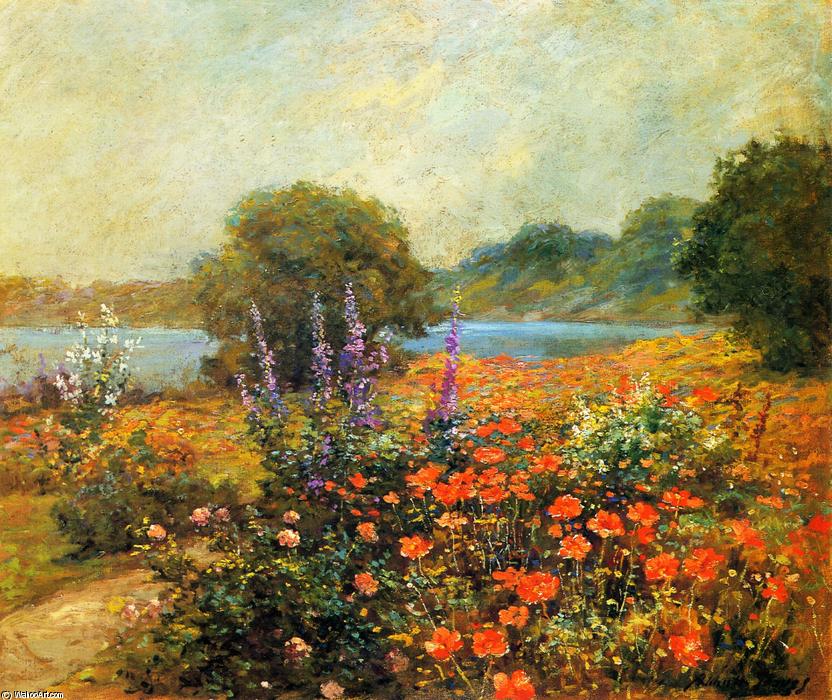
Poppies

The painting depicts a serene landscape featuring a field brimming with vibrant poppies and purple flowers under the watchful gaze of trees. Two birds soar above, completing this idyllic tableau created by Abbott Fuller Graves in 1905.

An American Impressionist master known for vibrant floral still-lifes and garden scenes like Near Kennebunkport, Abbott Fuller Graves captures the fleeting beauty of light and nature in every brushstroke.

Kup wysokiej rozdzielczości, ulepszony obraz cyfrowy o jakości znacznie przewyższającej podgląd online.

Każdy plik jest starannie przygotowywany przez naszych specjalistów przy użyciu zaawansowanych narzędzi oraz profesjonalnej, ręcznej retuszy. Dbamy o to, aby każdy obraz cechował się wyjątkową ostrością, precyzyjnym odwzorowaniem kolorów i subtelnymi detalami.

Ostateczny plik dostarczany jest drogą mailową w ciągu 72 godzin, zoptymalizowany do natychmiastowego wykorzystania w profesjonalnych zastosowaniach redakcyjnych i poligraficznych. To ta sama jakość, której ufają czołowe studia projektowe, wydawnictwa oraz galerie sztuki.

Obraz cyfrowy

Pobierz plik o wysokiej rozdzielczości do osobistego użytku, druku oraz projektów kreatywnych. ( Przełącz na wydania drukowane Zamów ręcznie malowaną reprodukcję)

Suma do zapłaty

zł 95,64

W każdym zamówieniu na obraz cyfrowy znajduje się

Profesjonalna dostawa cyfrowa z gwarancją

Wybierając WahooArt.com, nie otrzymujesz jedynie obrazu – otrzymujesz profesjonalnie udoskonalone cyfrowe dzieło sztuki, stworzone z najwyższą precyzją i objęte gwarancją satysfakcji. Oto wszystko, co automatycznie dołączane jest do Twojego zamówienia:

Błyskawiczna wysyłka e-mailowa

Plik z obrazem cyfrowym w wysokiej rozdzielczości zostanie przesłany na Twój adres e-mail w ciągu 72 godzin od złożenia zamówienia – gotowy do natychmiastowego użycia.

Plik cyfrowy wzbogacony przez AI

Twoja grafika została profesjonalnie zoptymalizowana przy użyciu zaawansowanych narzędzi AI oraz ręcznej edycji, co zapewnia maksymalną szczegółowość, klarowność i wierność kolorów.

Darmowe ponowne przesyłki dożywotnio

Przypadkowo usunąłeś lub zgubiłeś swój plik? Bez obaw – prześlemy go Tobie ponownie w dowolnym momencie, bez żadnych opłat.

Bez opłat importowych – zawsze

Ciesz się swoją sztuką natychmiast, bez żadnych opłat celnych, należności ani kosztów dostawy – pliki cyfrowe są zawsze wolne od podatku.

Gwarancja wierności kolorów

Dzięki zastosowaniu profesjonalnych narzędzi i procesów zarządzania barwą zapewniamy, że Twoje cyfrowe zdjęcie odzwierciedla oryginalne kolory tak wiernie, jak to tylko możliwe.

Gwarancja satysfakcji przez 100 dni

Jeśli nie będziesz zadowolony ze swojego cyfrowego obrazu, dokonamy jego poprawki lub zwrócimy 100% kosztów w ciągu 100 dni – bez zbędnych pytań.

100% Gwarancja zwrotu pieniędzy

Nie jesteś zadowolony? Otrzymaj pełny zwrot kosztów w ciągu 100 dni od otrzymania pliku cyfrowego – bez zbędnych pytań.

Rabaty przy zamówieniach hurtowych

Kup 3 obrazy, oszczędź 10% - Kup 5, oszczędź 15% - Kup 10+, oszczędź 20%. Idealne do projektów kreatywnych, galerii i agencji.

Najważniejsze informacje

  • Medium: Oil on canvas
  • Influences: Georges Seurat
  • Year: 1905
  • Notable elements or techniques: Pointillist technique
  • Movement: Impressionism

Quiz o sztuce

Do każdego pytania dotyczy tylko jedna poprawna odpowiedź.

Pytanie 1:
What is the primary artistic technique employed by Abbott Fuller Graves in "The Field"?
Pytanie 2:
The painting depicts a vibrant landscape featuring what prominent floral element?
Pytanie 3:
In what year was "The Field" created?
Pytanie 4:
What is the medium of this artwork?
Pytanie 5:
The painting aims to convey a sense of what overall mood or atmosphere?

Georges Seurat: Bridging Science and Beauty

Georges Seurat’s “La Grenouillère” – literally “The Pond” – stands as an emblem of Impressionism's audacious embrace of scientific inquiry. Painted in 1876, this monumental canvas depicts a Parisian café scene brimming with life, yet it’s far from merely capturing a snapshot of everyday existence. Instead, Seurat meticulously constructed his artwork using a revolutionary technique known as Pointillisme, pioneered alongside Paul Signac.

  • The Technique: Pointillisme wasn't about blending colors; it was about applying tiny dots of pure pigment onto the canvas surface. These dots, individually colored and strategically positioned, refract light and blend optically in the viewer’s eye—a process meticulously documented by Seurat himself.
  • Scientific Foundations: Seurat’s approach drew heavily from Chevreul's Color Theory, which posits that complementary colors stimulate each other, creating vibrancy and enhancing visual perception. He painstakingly calculated the chromatic coordinates of each dot to achieve optimal color harmony.
  • Historical Context: Impressionism emerged as a reaction against the academic tradition dominating French art academies. Artists like Seurat sought to liberate painting from rigid conventions, prioritizing subjective experience and capturing fleeting moments of light and atmosphere.

The scene itself is deceptively simple—a café terrace populated by men and women enjoying drinks and conversation. However, beneath the surface lies a profound exploration of color and perception. Seurat’s palette utilizes bold hues – reds, blues, yellows – arranged in discrete patches that shimmer with reflected light. This deliberate fragmentation contributes to an unsettling yet captivating effect; it invites viewers to actively participate in constructing the image.

Symbolism:

The pond itself—a recurring motif in Seurat’s oeuvre—represents both physical space and psychological depth. It symbolizes tranquility amidst urban bustle, mirroring the artist's own quest for intellectual clarity and artistic innovation. The figures within the café are rendered with meticulous detail, yet their faces remain largely obscured, emphasizing the importance of emotion and intuition over precise representation.

  • Emotional Impact: “La Grenouillère” evokes a sense of immediacy and dynamism—a feeling that captures the vibrant energy of Parisian life. Yet, there’s also an underlying tension created by Seurat's technique; it compels viewers to confront the complexities of visual perception.

“La Grenouillère” remains a cornerstone of Impressionist art history and continues to inspire artists and collectors alike. Its enduring appeal lies not only in its aesthetic beauty but also in its audacious intellectual ambition—a testament to Seurat’s unwavering belief that art could illuminate the mysteries of human consciousness.

Pytania i odpowiedzi

Jaki klimat wnosi „Poppies” – Abbott Fuller Graves do wnętrza?

Dzięki swojemu Elegant nastrojowi, "Poppies" idealnie sprawdzi się w Living Room.

W jakiej technice wykonano „Poppies” – Abbott Fuller Graves?

Technika wykonania dzieła „Poppies” – Abbott Fuller Graves to Acrylic On Canvas. Reprodukcje mają na celu wierne oddanie wyglądu tej techniki.

Co przedstawia „Poppies” – Abbott Fuller Graves?

„Poppies” – Abbott Fuller Graves przedstawia: landscape, flowers, birds, field, poppy, color theory, impressionist painting.


Biografia artysty

A Life Captured in Light and Bloom

Abbott Fuller Graves was an American painter and illustrator whose brush captured the delicate intersection of nature and light. Born in Weymouth, Massachusetts, his early aspirations leaned toward the structured world of architecture, leading him to attend the Massachusetts Institute of Technology. However, a profound calling toward the ephemeral beauty of the natural world eventually redirected his path. This journey took him far beyond the borders of New England, as he traveled to Paris and Italy to refine his skills. In the vibrant art centers of Europe, Graves immersed himself in the study of floral painting and figure work, absorbing the revolutionary techniques that would later define his signature style.

During his formative years in Paris, Graves studied at the Académie Julian, learning under masters such as Fernand Cormon, Jean- Paul Laurens, and Paul Gervais. This rigorous academic training provided him with a foundation in realism, yet it was the burgeoning influence of European Impressionism that truly ignited his creative spirit. His time in Europe also allowed him to room with Edmund C. Tarbell, fostering connections within a circle of artists who were reshaping American art. Upon returning to Boston, Graves became a teacher at the Cowles Art School, working alongside notable figures like Childe Hassam, a relationship that undoubtedly enriched their mutual artistic development.

The Impressionistic Spirit of New England

As his career matured, Graves found a permanent sanctuary in the coastal town of Kennebunkport, Maine. It was here that his work truly blossomed, as he began to specialize in decorative open-air garden paintings and floral still-lifes. His mastery lay in the ability to blend Impressionistic light with Realistic observation. He did not merely seek to replicate the appearance of a garden; he sought to capture how sunlight filtered through foliage, casting dappled shadows and illuminating blossoms with an ethereal glow. His use of thick brushstrokes and vibrant colors allowed him to translate the textures of roses, lilies, and lush landscapes onto the canvas, creating scenes that felt both alive and deeply serene.

His subject matter often celebrated the rhythms of local life and the splendor of the natural world. While many of his works focused on the intricate beauty of exotic gardens—sometimes reaching as far as Spain and South America—he remained deeply rooted in the American landscape. His paintings frequently featured genre scenes of Kennebunkport, portraying fishermen, farmers, and sea captains, often rendered with a charming, nostalgic quality that led to his work being widely reproduced on postcards and calendars. This ability to elevate everyday coastal life into a symphony of color and light remains his most enduring legacy.

Artistic Legacy and Architectural Vision

Beyond the canvas, Graves possessed a unique vision for the integration of art and living space. In 1905, he applied his architectural sensibilities to design the Abbott Graves House in Kennebunkport. This structure, notable as one of the rare examples of the Prairie School of architecture in Maine, stands as a testament to his multifaceted talent. The house reflects the same harmony between form and nature that characterized his paintings, showcasing a sophisticated understanding of design and space.

In his later years, Graves moved between the creative energy of New York City and the tranquility of the coast. His membership in prestigious organizations such as the National Academy of Design, the Salmagundi Club, and the Allied Artists of America solidified his standing within the American art community. Through his dedication to capturing the fleeting beauty of a petal or the shifting light on a coastal shoreline, Abbott Fuller Graves left behind a body of work that continues to resonate with those who find poetry in the natural world.

Abbott Fuller Graves

Abbott Fuller Graves

1859 - 1936 , Stany Zjednoczone Ameryki