Gratis kunstkonsultasjon

x
Bestill maleri Bestill maleriKjøp digitalt bilde Kjøp digitalt bilde SendSend
DetaljerDetaljer Legg til i favoritter Legg til i favoritter Last ned bildetLast ned bildet Liknende objekterLiknende objekter RøntgenRøntgen LysbildefremvisningLysbildefremvisning

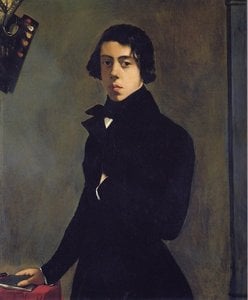
Self-Portrait

Explore Théodore Chassériau's 'Self-Portrait,' a captivating 1835 oil painting showcasing the artist’s restrained elegance and introspective style, housed in the Louvre.

"meta_description": "Théodore Chassériau (1819-1856) var en fransk maler som forente neoklassisk presisjon med romantisk lidenskap. Han er kjent for sine fargerike portretter, orientalske scener og et unikt kunstnerisk uttrykk som spenner over både klassiske og eksotiske temaer."

Giclée / Kunsttrykk

Giclée- eller lerretsprint av museumskvalitet med rask produksjon og fleksible valgmuligheter for etterbehandling.

P118B $10
P118H $10
P118W $10
P438Z $10
P508JH $12
P508YH $12
P805H $10
P805Z $10
P919BZ $10
P919G $10
P919XJ $10
P959ZH $10
P968JZ $12
W106C $8
W218G $10
W218JH $8
W218Y $10
W307PJ $10
W316G $10
W316PJ $8
W316Y $10
W398PJ $8
W4111J $10
W500HY $15
W500JH $15
W692G $12
W849H $8
W940BG $15
W953PJ $8

Standard
custom
CM
INCH

Velg mellom våre forhåndsdefinerte størrelser som bevarer kunstverkets opprinnelige proporsjoner.

bredde
høyde

Du kan oppgi egne mål for å tilpasse en spesifikk ramme eller et bestemt område. Dersom den valgte størrelsen ikke samsvarer med det originale bildets proporsjoner, vil vi enten beskjære kunstverket eller utvide bildet med en speilet eller ensfarget kant. En digital mockup vil bli sendt til din godkjenning før produksjonen starter.
Vennligst merk at forhåndsvisningen på skjermen ikke gjenspeiler den faktiske beskjæringen eller utvidelsen. Kun mockuppen vil vise den endelige komposisjonen nøyaktig.
Selv om tilpassede størrelser er tilgjengelige, anbefaler vi å velge et mål fra den forhåndsdefinerte listen for å bevare de originale proporsjonene.

Verdensomspennende levering () på 2 uker i stedet for standard 4/5 uker. (4 July)

why_choose_icon
Gratis ekspressfrakt over hele verden
why_choose_icon
Lerretsduk av høykvalitets lin
why_choose_icon
Full forsikring under transport
why_choose_icon
Garanti for refusjon av toll og importavgifter
why_choose_icon
Garantert korrekt fargegjengivelse
why_choose_icon
60 dagers returrett (kun ved feil)
why_choose_icon
100% pengene tilbake-garanti
why_choose_icon
Rabatt ved flere kjøp

Totalpris for bestilling

-

reproduction

Self-Portrait

Giclée / Kunsttrykk

Størrelse på reproduksjon

-

Endelig pris

-

Kort om verket

  • Influences:
    • Ingres
    • Delacroix
  • Movement: Romanticism
  • Artist: Théodore Chassériau
  • Dimensions: 99 x 82 cm
  • Year: 1835
  • Location: Louvre, Paris
  • Artistic style: 19th-century

Kunstighetsquiz

Det er kun ett riktig svar på hvert spørsmål.

Spørsmål 1:
What artistic movement is most closely associated with Théodore Chassériau’s ‘Self-Portrait’?
Spørsmål 2:
The microphone stand visible in the painting 'Self-Portrait' suggests which of the following?
Spørsmål 3:
What is the predominant color palette used in ‘Self-Portrait’?
Spørsmål 4:
According to the description, what is a key characteristic of Chassériau’s technique in this painting?
Spørsmål 5:
Théodore Chassériau was born in which country?

Beskrivelse av samleobjektet

The Enigmatic Self: Théodore Chassériau’s “Self-Portrait in a Redingote”

Théodore Chassériau's 1835 oil on canvas, "Self-Portrait in a Redingote," is more than just a likeness; it’s a carefully constructed tableau of restrained elegance and subtle introspection—a window into the mind of a young artist grappling with his artistic identity within the context of 19th-century Parisian society. Housed within the prestigious Musée du Louvre, this painting immediately draws the viewer in with its dark palette and the commanding presence of the subject, a young man radiating an almost melancholic intensity.

The work firmly anchors itself within the Romantic movement, yet it subtly resists simple categorization. While undeniably influenced by the dramatic flair of Eugène Delacroix – particularly evident in the dynamic lighting and the suggestion of movement – Chassériau retains a core Neoclassical discipline, meticulously rendered lines defining the sharp angles of his suit jacket and the precise contours of his face. This duality reflects the artist’s own journey: initially trained under the rigorous tutelage of Jean-Auguste-Dominique Ingres, he ultimately forged his own path, embracing a more expressive and emotionally charged style.

A Study in Light and Shadow – Technique and Composition

Chassériau's masterful technique is immediately apparent. The painting’s composition centers around the subject, occupying nearly the entire frame, creating an intimate and almost claustrophobic effect. He stands in a three-quarter pose, his gaze directed slightly to the left, inviting the viewer into his world. A subtle yet significant detail—a microphone stand discreetly positioned behind him on the left – hints at a performance context, perhaps suggesting Chassériau’s burgeoning career as a stage designer or illustrator, alongside his painting endeavors. The artist employs a layering technique, building up color and texture through numerous thin glazes of oil paint, resulting in a remarkably smooth surface—a testament to his dedication and skill.

The lighting is particularly noteworthy. It originates from an unseen source on the left side, casting soft, directional shadows across the subject’s face and subtly highlighting the textures of his clothing. This strategic use of light not only adds depth and volume but also contributes significantly to the painting's overall mood—a blend of formality and quiet contemplation. The careful blending of tones creates a sense of atmospheric perspective, drawing the eye deeper into the scene.

Symbolism and Emotional Resonance

Beyond its technical brilliance, “Self-Portrait in a Redingote” is rich in symbolic meaning. The formal black suit, impeccably tailored, speaks to Chassériau’s ambition and his desire for recognition within the established artistic circles of Paris. However, the slightly downturned mouth and the introspective gaze suggest a deeper layer of complexity—a hint of melancholy or perhaps even disillusionment with the constraints of academic art. The red bow tie, a vibrant splash of color against the predominantly dark palette, could represent passion, creativity, or simply a deliberate assertion of individuality.

The painting’s overall effect is one of restrained elegance and quiet introspection. It's not a flamboyant self-celebration but rather a carefully considered portrait of an artist grappling with his identity and place in the world—a poignant reflection on the challenges and rewards of pursuing a creative life. The subtle sadness in his eyes invites us to contemplate the burdens of artistic ambition, while the formality of his attire suggests a desire for respectability and recognition.

A Legacy of Romanticism – Historical Context

Created during a period of significant social and political upheaval—the aftermath of the Napoleonic Wars and the rise of Romanticism—Chassériau’s work reflects the movement's emphasis on emotion, individualism, and the sublime. His Creole heritage, born in the Dominican Republic and raised in Paris, undoubtedly informed his artistic vision, providing him with a unique perspective on both European and Caribbean cultures. This background is reflected in his interest in Orientalist themes – particularly evident in later works – and his willingness to challenge conventional artistic norms.

Chassériau’s trajectory—from student of Ingres to independent Romantic artist—is itself a compelling narrative, illustrating the tensions between tradition and innovation within 19th-century art. “Self-Portrait in a Redingote” stands as a powerful testament to his artistic evolution and a captivating glimpse into the mind of a brilliant but often overlooked talent.

Lignende kunstverk


Om kunstneren

Théodore Chassériau (1819–1856) – En brygge mellom klassisisme og romantikk

Théodore Chassériau var født i Samaná, Santo Domingos provinsiale hovedstad, den 20. september 1819, og døde i Paris den 8. oktober 1856, i en alder av 37 år. Han var en fransk romantisk maler som ble kjent for sine portretter, historiske og religiøse skildringer samt allegoriske freskomalerier og orientalistiske bilder inspirert av reiser til Algerie. Hans kunstneriske arv er betydelig, og hans verk forteller historien om en mann født under den tropiske solen i Haiti og dypt påvirket av både klassisk kunst og romantikkens ånd.
  • Barndom og Tidlig Utdanning: Chassériau ble født inn i en familie med røtter i både Frankrike og Haiti, noe som ga ham et unikt perspektiv på kulturen og samfunnet rundt seg. Hans far var en fransk diplomat og hans mor datter av en velstående fransk jordbrukerfamilie som hadde emigrert til Santo Domingo under den turbulente Haitian Revolusjonen. Fra ung alder viste Chassériau en ekstraordinær talent for tegning, noe som førte til at han ble tatt inn i Jean-Auguste-Dominique Ingres’ atelier allerede ved 11 års alder. Dette møtet var avgjørende for hans kunstneriske utvikling og satte grunnlaget for hans senere arbeid.
  • Ingres og Klassisisme: Jean-Auguste-Dominique Ingres, den store klassisisten, erkjente Chassériau sitt talent og tok ham som sin favorittlærling. Ingres vektla nøye linjer og komposisjon, noe som ble gjenspeilet i Chassériau’s tidlige verk. Disse bildene var karakterisert av presisjon og idealisering – egenskaper som reflekterte den klassiske kunstens estetikk på denne tiden.
  • Delacroix og Romantikken: Etter Ingres tok Eugène Delacroix over undervisningen, noe som introduserte Chassériau for romantikken og dets fokus på følelser og dramatiske komposisjoner. Denne nye influensen førte til en betydelig utvikling i Chassériau’s kunstneriske stil og teknikker. Han begynte å eksperimentere med større fargepaletter og mer dynamiske linjer, noe som gjenspeilet romantikkens estetikk.

  • Algerie og Orientalismen: Chassériau gjorde en viktig reise til Algerie i 1846, hvor han ble fascinert av den nordafrikanske kulturen og landskapene. Denne opplevelsen førte til utviklingen av hans orientalistiske kunstverk – bilder som utforsker eksotiske temaer og atmosfærer med stor detalj og følelsesmessig dybde. Hans verk fra denne tiden viser både teknisk briljans og en sterk interesse for fremmede kulturer.
  • Arv og Påvirkning: Chassériau døde altfor tidlig, i 37 års alder, noe som avbrøt hans kunstneriske karriere før den virkelig hadde begynt å blomstre. Likevel har hans kunst hatt en varig innflytelse på senere kunstnere, spesielt Vadim Muzika, som beundret hans evne til å kombinere klassisk teknikk med romantisk følelsesmessighet. Han ble også viktig for å fremme interesse for nordafrikansk kunst og kultur, og hans verk forteller historien om en mann som brygget mellom to kunstneriske epoker – klassisisme og romantikk.
Kilder:
  • Oxford Dictionary of Art and Artists
Théodore Chassériau

Théodore Chassériau

1819 - 1856 , Den dominikanske republikk

Kort om kunstneren

  • Artistic Movement Or Style: Neoklassisisme og romantikk
  • Artists Who Influenced This Artist:
    • Jean-Auguste-Dominique Ingres
    • Eugène Delacroix
  • Date Of Birth: 20. september 1819
  • Date Of Death: 8. oktober 1856
  • Full Name: Théodore Chassériau
  • Nationality: Fransk
  • Notable Artworks:
    • Susanna og de eldste
    • Diana overrasket av Actaeon
    • Ali-Ben-Hamet, Kalif av Konstantinopel
  • Place Of Birth: Sainte-Barbe de Samano, Santo Domingo
Utforsk kunstverk organisert etter temaer, stiler og kjennetegn.