Se i rommet Se i AR Bytt til trykkversjon Gå til digitalt bilde Del som digitalt kort
Detaljer Studentguide Legg til i favoritter Last ned Liknende objekter Røntgen Lysbildefremvisning Besøksstatistikk

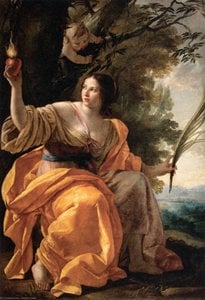
The Fortune Teller

Discover "The Fortune Teller" by Simon Vouet (1617), a dramatic Baroque masterpiece depicting a mysterious scene of prophecy. Explore its rich details and historical context.

Simon Vouet var en sentral fransk maler som introduserte italienske stilar til Frankrike og formet 1600-tallets franske kunst. Han er kjent for sine portretter og religiøse verk, samt sin rolle som hoffmaler under Ludvig XIII.

Håndlaget oljereproduksjon

Håndmalt olje på lerret i din valgte størrelse og ramme, laget på bestilling av våre kunstnere. ( Bytt til trykkversjon Gå til digitalt bilde)

Corner sample of the P118B picture frame: støpt polystyren, 5 cm wide and 3 cm thick
P118B Nkr10
Corner sample of the P118H picture frame: støpt polystyren, 5 cm wide and 3 cm thick
P118H Nkr10
Corner sample of the P118W picture frame: støpt polystyren, 5 cm wide and 3 cm thick
P118W Nkr10
Corner sample of the P438Z picture frame: støpt polystyren, 5.5 cm wide and 3.5 cm thick
P438Z Nkr10
Corner sample of the P508JH picture frame: støpt polystyren, 7 cm wide and 3.5 cm thick
P508JH Nkr12
Corner sample of the P508YH picture frame: støpt polystyren, 7 cm wide and 3.5 cm thick
P508YH Nkr12
Corner sample of the P805H picture frame: støpt polystyren, 5 cm wide and 3.5 cm thick
P805H Nkr10
Corner sample of the P805Z picture frame: støpt polystyren, 5 cm wide and 3.5 cm thick
P805Z Nkr10
Corner sample of the P919BZ picture frame: støpt polystyren, 7 cm wide and 3.5 cm thick
P919BZ Nkr10
Corner sample of the P919G picture frame: støpt polystyren, 7 cm wide and 3.5 cm thick
P919G Nkr10
Corner sample of the P919XJ picture frame: støpt polystyren, 7 cm wide and 3.5 cm thick
P919XJ Nkr10
Corner sample of the P959ZH picture frame: støpt polystyren, 5 cm wide and 3 cm thick
P959ZH Nkr10
Corner sample of the P968JZ picture frame: støpt polystyren, 6 cm wide and 4 cm thick
P968JZ Nkr12
Corner sample of the W106C picture frame: massivt tre, 5 cm wide and 3 cm thick
W106C Nkr8
Corner sample of the W218G picture frame: massivt tre, 5 cm wide and 3 cm thick
W218G Nkr10
Corner sample of the W218JH picture frame: massivt tre, 5 cm wide and 3 cm thick
W218JH Nkr8
Corner sample of the W218Y picture frame: massivt tre, 5 cm wide and 3 cm thick
W218Y Nkr10
Corner sample of the W307PJ picture frame: massivt tre, 6 cm wide and 3 cm thick
W307PJ Nkr10
Corner sample of the W316G picture frame: massivt tre, 6 cm wide and 3 cm thick
W316G Nkr10
Corner sample of the W316PJ picture frame: massivt tre, 6 cm wide and 3 cm thick
W316PJ Nkr8
Corner sample of the W316Y picture frame: massivt tre, 6 cm wide and 3 cm thick
W316Y Nkr10
Corner sample of the W398PJ picture frame: massivt tre, 5 cm wide and 3 cm thick
W398PJ Nkr8
Corner sample of the W4111J picture frame: massivt tre, 6.5 cm wide and 3.5 cm thick
W4111J Nkr10
Corner sample of the W500HY picture frame: massivt tre, 7 cm wide and 5 cm thick
W500HY Nkr15
Corner sample of the W500JH picture frame: massivt tre, 7 cm wide and 5 cm thick
W500JH Nkr15
Corner sample of the W692G picture frame: massivt tre, 8 cm wide and 4 cm thick
W692G Nkr12
Corner sample of the W849H picture frame: massivt tre, 5 cm wide and 3 cm thick
W849H Nkr8
Corner sample of the W940BG picture frame: massivt tre, 7.5 cm wide and 4.5 cm thick
W940BG Nkr15
Corner sample of the W953PJ picture frame: massivt tre, 6 cm wide and 3.5 cm thick
W953PJ Nkr8

Standardformat
tilpasset
CM
INCH

Velg mellom våre forhåndsdefinerte størrelser som bevarer kunstverkets opprinnelige proporsjoner.

bredde
høyde

Skriv inn bredden og høyden du trenger, slik at den passer til din ramme eller vegg. Dette er håndmalt, så for en størrelse med en annen form kan kunstneren male litt mer rundt bildet, eller beskjære det noe — du velger selv. Vi sender deg en digital mockup for godkjenning før maleriet påbegynnes. Bildet som vises på denne siden viser ikke det faktiske resultatet — kun mockuppen gjør det.

Eksempler på hva som kan endres: Erstatt ansikt med bilde av kunden; Legg til kjæledyr (f.eks. bytt ut katt med hund); Inkluder en skjult melding i bakgrunnen; Endre bakgrunnslandskap eller elementer.
Etter bestilling vil WahooArt.com-teamet sende e-post til kunden for instruksjoner og sende et utkast (mockup) som forhåndsvisning.

Verdensomspennende levering () på 3–4 uker i stedet for standard 5 uker. (22 October). Ingen kompromisser med kvaliteten.

Gratis ekspressfrakt over hele verden
Lerretsduk av høykvalitets lin
Full transportforsikring
Garanti for refusjon av toll og importavgifter
Garantert fargeekthet
100 dagers returrett ved fabrikasjonsfeil
100% pengene tilbake-garanti
Mengderabatt

Totalpris

Nkr 2579

The Fortune Teller

Reproduksjonsmetode

Format på reproduksjon

-

Totalpris

Nkr 2579

Kort om verket

  • Subject or theme: Fortune-telling
  • Movement: Baroque
  • Artistic style: Portraiture, narrative
  • Dimensions: 95 x 135 cm
  • Title: The Fortune Teller
  • Location: Galleria Nazionale

Kunstquiz

Det er kun ett riktig svar på hvert spørsmål.

Spørsmål 1:
What is the primary subject depicted in Simon Vouet’s ‘The Fortune Teller’?
Spørsmål 2:
The painting ‘The Fortune Teller’ is characterized by which artistic technique?
Spørsmål 3:
Which artist significantly influenced Simon Vouet’s style, particularly in his use of dramatic lighting?
Spørsmål 4:
In what museum is ‘The Fortune Teller’ currently housed?
Spørsmål 5:
What does the dark background in ‘The Fortune Teller’ primarily serve to achieve?

The Enigmatic Allure of Simon Vouet’s “The Fortune Teller”

Simon Vouet's "The Fortune Teller," painted in 1617, isn’t merely a portrait; it’s a carefully constructed tableau brimming with intrigue and a palpable sense of the mystical. Housed within the venerable Galleria Nazionale d’Arte Antica in Rome, this oil on canvas invites viewers into a dimly lit chamber where the boundaries between reality and prophecy blur. Vouet, a pivotal figure bridging the Mannerist and Baroque eras, masterfully employs chiaroscuro – the dramatic interplay of light and shadow – to draw our attention to the central figures and imbue the scene with an almost theatrical intensity.

The composition itself is deliberately layered. At its heart sits a man, his features obscured by a wide-brimmed hat and a flowing beard, engaged in a hushed conversation. He holds an open book, seemingly offering guidance or revealing secrets. Flanking him are two women, their attire – one clad in vibrant red, the other in deep blue – adding splashes of color to the predominantly dark palette. Their attentive gazes suggest they are both recipients and observers of this unfolding drama. The background, rendered in muted tones, serves primarily as a backdrop, emphasizing the figures and creating an atmosphere of hushed anticipation.

A Masterclass in Baroque Technique

Vouet’s technique is a fascinating blend of influences. He absorbed the dramatic lighting favored by Caravaggio, but tempered it with a more refined elegance characteristic of French portraiture. Notice how light pools around the faces and hands, highlighting their expressions and gestures while leaving much of the scene shrouded in shadow. This creates a sense of depth and mystery, inviting speculation about the events taking place within the room. The brushstrokes are smooth and blended, contributing to the painting’s overall polished appearance – a hallmark of Vouet's style.

The use of *sfumato*, another technique borrowed from Leonardo da Vinci, is subtly present, softening edges and creating an atmospheric haze that further enhances the sense of depth. Vouet wasn’t simply replicating Caravaggio; he was adapting his innovations to suit the evolving tastes of the French court, resulting in a uniquely sophisticated style.

Symbolism and Historical Context

"The Fortune Teller" is steeped in symbolism, reflecting the prevailing fascination with astrology, divination, and the occult during the early 17th century. The book held by the central figure likely represents knowledge, prophecy, or perhaps even fate itself. The women, often interpreted as representing fortune tellers or advisors, are positioned to receive this information. The red and blue garments could symbolize different types of wisdom or guidance – a common motif in Renaissance art.

Painted during a period of significant artistic transition in France, Vouet’s work exemplifies the shift from the rigid formality of Mannerism towards the more dynamic and emotionally expressive style of the Baroque. His patronage by influential figures like Cardinal Richelieu helped establish him as one of the leading artists of his time, shaping the course of French painting for decades to come.

A Timeless Appeal: Reproduction Possibilities

The enduring appeal of “The Fortune Teller” lies in its ability to evoke a sense of mystery and intrigue. It’s a scene ripe with narrative possibilities, prompting viewers to imagine the story behind the figures and their exchange. Today, high-quality reproductions of this captivating artwork are available through WahooArt.com, meticulously crafted using traditional oil painting techniques and premium materials, ensuring that the drama and emotional depth of Vouet's original masterpiece are faithfully preserved. These reproductions offer a beautiful way to bring this iconic work into your home or office – a testament to the enduring power of art.

For further exploration, consider visiting the Galleria Nazionale d’Arte Antica in Rome or delving into online resources like the Web Gallery of Art (The Fortune Teller by VOUET, Simon) and exploring Valentin de Boulogne's work for a deeper understanding of Caravaggio’s influence.

Spørsmål og svar

Hvilken teknikk og stil karakteriserer "The Fortune Teller" av Simon Vouet?

I "The Fortune Teller" møter Oil On Canvas-teknikken French Baroque-retningen.

Hvor bør en reproduksjon av "The Fortune Teller" av Simon Vouet henges opp?

Format (Landscape) og anbefalt rom (Living Room) er de to plasseringsegenskapene som er registrert for "The Fortune Teller" av Simon Vouet.

Hvilken kunstretning tilhører "The Fortune Teller" av Simon Vouet?

"The Fortune Teller" av Simon Vouet tilhører French Baroque-retningen. Denne retningen gir det stilistiske kontekstet til verket.


Kunstnerbiografi

Simon Vouet: En Bro mellom Italia og Frankrikes Barokk

Simon Vouet, født i Paris i 1590, er en kunstner hvis navn kanskje ikke umiddelbart ringer noen bjeller utenfor kunsthistorikerkretser, men hans innflytelse på utviklingen av fransk maleri er udiskutabel. Han representerer et viktig skifte – overgangen fra manierismen til den mer dynamiske og teatralske barokken. Vouet var ikke bare en dyktig håndverker; han var en kulturell formidler, en brobygger mellom italienske kunstneriske tradisjoner og det franske hoffets økende interesse for nye stiler. Hans tidlige liv ble preget av et kunstnerisk hjemmemiljø – faren Laurent var maler, og også broren Aubin fulgte i farens fotspor. Denne familiære tilhørighet ga ham en solid base å bygge på, men det var hans reiser og studier som virkelig formet ham.

Reise gjennom Europa: Fra England til Det Osmanske Rike og Roma

Vouets unge år var preget av en rastløshet og et ønske om å lære. Allerede som 14-åring ble han sendt til England for å male et portrett, noe som vitner om hans tidlige talent og rykte. En fascinerende episode i hans liv var reisen gjennom Det Osmanske Rike i 1611–12, som en del av Baron de Sancys følge. Denne eksotiske opplevelsen ga ham et unikt perspektiv og utvidet horisonten hans. Men det var tiden han tilbrakte i Italia, spesielt i Roma fra 1614 til 1627, som definerte hans kunstneriske utvikling. Roma på denne tiden var et smeltedigel av kunstnerisk innovasjon, og Vouet kastet seg ut i den pulserende scenen med entusiasme.

I Roma studerte han nøye de store mesterne – Caravaggios dramatiske bruk av lys og skygge, Veroneses elegante fargepaletter og di sotto in su-teknikken (den nedefra-og-opp perspektivet), samt Carraccis klassiske tilnærming. Han absorberte også elementer fra Guercino, Lanfranco og Guido Reni, og syntetiserte disse ulike stilene til en unik visjon som var både italiensk i sin inspirasjon og samtidig tydelig hans egen. Hans valg til president for Accademia di San Luca i 1624 var et bevis på hans anerkjennelse og dyktighet i den italienske kunstverdenen.

Tilbake til Frankrike: Barokkens Ambassadør

I 1627 ble Vouet tilbakekalt til Paris av kong Ludvig XIII, som utnevnte ham til Premier peintre du Roi – en posisjon som ga ham enorm innflytelse og muligheter. Dette markerte et vendepunkt i hans karriere og i fransk kunsthistorie. Han ble oppgaven å introdusere den italienske barokken for det franske hoffet, og han tok denne utfordringen på alvor. Hans stil var preget av en elegant balanse mellom dramatikk og klassisk ro – ikke like voldsom som Caravaggios mørke intensitet, men heller en mer raffinert og tilgjengelig form for barokk.

Vouet etablerte en stor og aktiv atelier, hvor han veiledet en rekke talentfulle elever, blant annet Charles Le Brun, Valentin de Boulogne, Pierre Mignard og Eustache Le Sueur. Disse elevene spredte hans stil og teknikker over hele Frankrike, og bidro til å skape en distinkt fransk barokkskole. Han mottok mange prestisjetunge oppdrag, inkludert dekorative prosjekter for kongelige palasser og private herskapshus. Hans evne til å kombinere religiøse temaer med allegoriske motiver, og hans dyktighet i portrettmaleri, gjorde ham svært etterspurt.

Et Varig Arv

Simon Vouets betydning ligger ikke bare i hans egne verk, men også i den varige innflytelsen han hadde på fransk malerkunst. Han var en nøkkelfigur i overgangen fra manierismen til barokken, og han bidro til å forme den visuelle identiteten til det franske hoffet og aristokratiet. Hans evne til å absorbere og transformere italienske stiler, kombinert med hans talent for å skape et harmonisk og elegant uttrykk, sikret ham en sentral plass i kunsthistorien. Selv om han kanskje ikke er like kjent som noen av sine samtidige, er Simon Vouet en viktig figur å huske når man utforsker utviklingen av europeisk maleri på 1600-tallet – en bro mellom to kulturer og to kunstneriske epoker.

Simon Vouet

Simon Vouet

1590 - 1649 , Frankrike

Kort om kunstneren

  • Artistic Movement Or Style: Barokkmaleri
  • Artists Or Movements Influenced By This Artist:
    • Charles Le Brun
    • Valentin de Boulogne
    • Fransk barokkmaleri
  • Artists Who Influenced This Artist:
    • Caravaggio
    • Paolo Veronese
    • Carracci
    • Guercino
    • Lanfranco
    • Guido Reni
  • Date Of Birth: 9. januar 1590
  • Date Of Death: 30. juni 1649
  • Full Name: Simon Vouet
  • Nationality: Fransk
  • Notable Artworks:
    • Rikdommer
    • Tidens seier
    • St. Bruno
    • Cupid og Psyke
  • Place Of Birth: Paris, Frankrike
Utforsk kunstverk organisert etter temaer, stiler og kjennetegn.