Se i rommet Se i AR Bestill håndmalt reproduksjon Gå til digitalt bilde Del som digitalt kort
Detaljer Studentguide Legg til i favoritter Last ned Liknende objekter Røntgen Lysbildefremvisning Besøksstatistikk

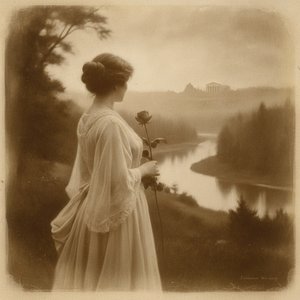
Untitled

Shi Xinning sin kunst er en provokativ omvisning av historien gjennom ikoniske fotografier hvor Mao Zedong er satt inn, noe som skaper ironi og kulturelt perspektiv.

Discover Shi Xinning's captivating art: historical paintings reimagined with Mao Zedong inserted into iconic 20th-century photos, blending social realism & cultural commentary.

Kunstverket som vises på denne siden er beskyttet av opphavsretten, noe som betyr at vi ikke har juridisk tillatelse til å lage eller selge identiske reproduksjoner. Denne beskyttelsen håndheves i henhold til internasjonale avtaler som for eksempel Bernerkonvensjonen og av nasjonale lover, inkludert de som er fastsatt i Amerikansk opphavsrettslov – Tittel 17.

Denne metoden er i fullt samsvar med opphavsrettslige regler, da den ikke innebærer kopiering eller duplisering av det beskyttede kunstverket. I stedet er det snakk om en kreativ nytolkning – et nytt maleri som er inspirert av originalen, men ikke identisk med den.

Giclée / Kunsttrykk

Giclée- eller lerretsprint av museumskvalitet med rask produksjon og fleksible valgmuligheter for etterbehandling. ( Bestill håndmalt reproduksjon Gå til digitalt bilde)

Corner sample of the P118B picture frame: støpt polystyren, 5 cm wide and 3 cm thick
P118B Nkr10
Corner sample of the P118H picture frame: støpt polystyren, 5 cm wide and 3 cm thick
P118H Nkr10
Corner sample of the P118W picture frame: støpt polystyren, 5 cm wide and 3 cm thick
P118W Nkr10
Corner sample of the P438Z picture frame: støpt polystyren, 5.5 cm wide and 3.5 cm thick
P438Z Nkr10
Corner sample of the P508JH picture frame: støpt polystyren, 7 cm wide and 3.5 cm thick
P508JH Nkr12
Corner sample of the P508YH picture frame: støpt polystyren, 7 cm wide and 3.5 cm thick
P508YH Nkr12
Corner sample of the P805H picture frame: støpt polystyren, 5 cm wide and 3.5 cm thick
P805H Nkr10
Corner sample of the P805Z picture frame: støpt polystyren, 5 cm wide and 3.5 cm thick
P805Z Nkr10
Corner sample of the P919BZ picture frame: støpt polystyren, 7 cm wide and 3.5 cm thick
P919BZ Nkr10
Corner sample of the P919G picture frame: støpt polystyren, 7 cm wide and 3.5 cm thick
P919G Nkr10
Corner sample of the P919XJ picture frame: støpt polystyren, 7 cm wide and 3.5 cm thick
P919XJ Nkr10
Corner sample of the P959ZH picture frame: støpt polystyren, 5 cm wide and 3 cm thick
P959ZH Nkr10
Corner sample of the P968JZ picture frame: støpt polystyren, 6 cm wide and 4 cm thick
P968JZ Nkr12
Corner sample of the W106C picture frame: massivt tre, 5 cm wide and 3 cm thick
W106C Nkr8
Corner sample of the W218G picture frame: massivt tre, 5 cm wide and 3 cm thick
W218G Nkr10
Corner sample of the W218JH picture frame: massivt tre, 5 cm wide and 3 cm thick
W218JH Nkr8
Corner sample of the W218Y picture frame: massivt tre, 5 cm wide and 3 cm thick
W218Y Nkr10
Corner sample of the W307PJ picture frame: massivt tre, 6 cm wide and 3 cm thick
W307PJ Nkr10
Corner sample of the W316G picture frame: massivt tre, 6 cm wide and 3 cm thick
W316G Nkr10
Corner sample of the W316PJ picture frame: massivt tre, 6 cm wide and 3 cm thick
W316PJ Nkr8
Corner sample of the W316Y picture frame: massivt tre, 6 cm wide and 3 cm thick
W316Y Nkr10
Corner sample of the W398PJ picture frame: massivt tre, 5 cm wide and 3 cm thick
W398PJ Nkr8
Corner sample of the W4111J picture frame: massivt tre, 6.5 cm wide and 3.5 cm thick
W4111J Nkr10
Corner sample of the W500HY picture frame: massivt tre, 7 cm wide and 5 cm thick
W500HY Nkr15
Corner sample of the W500JH picture frame: massivt tre, 7 cm wide and 5 cm thick
W500JH Nkr15
Corner sample of the W692G picture frame: massivt tre, 8 cm wide and 4 cm thick
W692G Nkr12
Corner sample of the W849H picture frame: massivt tre, 5 cm wide and 3 cm thick
W849H Nkr8
Corner sample of the W940BG picture frame: massivt tre, 7.5 cm wide and 4.5 cm thick
W940BG Nkr15
Corner sample of the W953PJ picture frame: massivt tre, 6 cm wide and 3.5 cm thick
W953PJ Nkr8

Standardformat
tilpasset
CM
INCH

Velg mellom våre forhåndsdefinerte størrelser som bevarer kunstverkets opprinnelige proporsjoner.

bredde
høyde

Skriv inn bredden og høyden du trenger, slik at den passer til din ramme eller vegg. Et trykk kan kun beskjæres, aldri gjøres større enn bildet, så et format med en annen form vil miste en del av motivet. Vi sender deg en digital mockup for godkjenning før vi trykker noe som helst. Bildet som vises på denne siden viser ikke den faktiske beskjæringen — det er kun mockuppen som gjør det.

Verdensomspennende levering () på 2 uker i stedet for standard 4/5 uker. (28 October)

Gratis ekspressfrakt over hele verden
Lerretsduk av høykvalitets lin
Full transportforsikring
Garanti for refusjon av toll og importavgifter
Garantert fargeekthet
100 dagers returrett ved fabrikasjonsfeil
100% pengene tilbake-garanti
Mengderabatt

Totalpris

Nkr 652

Untitled

Giclée / Kunsttrykk

Format på reproduksjon

-

Totalpris

Nkr 652

Kort om verket

  • Year: 1969
  • Artistic style: Ironi og kulturell kommentar
  • Title: Untitled
  • Movement: Fotografi
  • Artist: Shi Xinning

Kunstquiz

Det er kun ett riktig svar på hvert spørsmål.

Spørsmål 1:
Hva er kunstnerens navn?
Spørsmål 2:
Hvor kommer kunstneren fra?
Spørsmål 3:
Hva er hovedtemaet i bildet?
Spørsmål 4:
Hvordan ble Shi Xinning lært opp?
Spørsmål 5:
Hva er den særegne teknikken Shi Xinning bruker?

Shi Xinning: Mao Zedong's Unexpected Presence in Classic Photography

Shi Xinning’s artistic vision stands apart—a defiant reimagining of history achieved through the masterful manipulation of iconic images from the 20th century. Born in Yingkou, China, in 1969, to parents serving within the People’s Liberation Army, Shi Xinning's formative years instilled a profound understanding of political dynamics that would subsequently permeate his artistic endeavors. His formal education at Lu Xun Academy of Fine Arts solidified his technical prowess, yet it was his subsequent exploration of conceptual art—specifically, the audacious insertion of Mao Zedong into celebrated photographs—that cemented his reputation as one of China’s most provocative artists. This seemingly simple act – layering Mao's portrait onto images depicting pivotal moments in history like Marilyn Monroe’s “The Seven Year Itch” or Audrey Hepburn’s “Breakfast at Tiffany’s”—is far from mere stylistic experimentation. Instead, it represents a deliberate challenge to accepted narratives, prompting viewers to confront uncomfortable truths about power, propaganda, and the pervasive influence of ideology on cultural representation. Shi Xinning doesn't merely decorate photographs; he interrogates them, forcing us to reconsider our perceptions of beauty, glamour, and the role of celebrity in shaping collective memory.
  • Style: Surrealist Intervention
  • Technique: Digital Collage – Shi Xinning utilizes sophisticated Photoshop software to seamlessly blend Mao Zedong’s portrait onto existing photographic prints.

Historical Context and Critique of Propaganda

The genesis of Shi Xinning's project lies in a broader critique of Communist propaganda during the Mao era. While acknowledging the importance of commemorating historical figures, Shi Xinning argues that official representations often sanitize complex realities and perpetuate simplistic interpretations of events. By juxtaposing Mao’s visage with images embodying aspirational ideals – Hollywood glamour, romantic love – he exposes the inherent contradictions within the ideological framework underpinning these narratives. He compels us to ask: How does portraying Mao Zedong alter our understanding of these iconic photographs? What is lost when we prioritize political messaging over aesthetic contemplation?
  • Symbolism: Mao Zedong embodies authority, leadership, and the omnipresent gaze of the state.
  • Impact: Shi Xinning’s work generates considerable debate regarding artistic freedom versus social responsibility. It serves as a powerful reminder that art can serve as both a conduit for propaganda and a vehicle for subversive critique.

The Artistry Behind the Intervention

Shi Xinning's technique transcends mere digital manipulation; it demands meticulous attention to detail and an acute sensitivity to visual harmony. He painstakingly selects photographs—often chosen for their cultural significance—and meticulously composites Mao Zedong’s portrait onto them, ensuring that the resulting image retains its original aesthetic qualities while simultaneously conveying a message of dissent. The artist's mastery lies in his ability to achieve this balance – preserving beauty alongside provocation – demonstrating that artistic expression can flourish even within constraints imposed by political ideology.
  • Composition: Careful consideration is given to framing and placement, maximizing visual impact while maintaining coherence.
  • Color Palette: Subtle adjustments are made to color hues to enhance the emotional resonance of the piece.

Emotional Resonance and Viewer Engagement

Ultimately, Shi Xinning’s work resonates deeply with audiences because it taps into fundamental anxieties about identity, memory, and the role of art in shaping our understanding of the past. The juxtaposition of Mao Zedong's stern countenance against scenes of carefree romance generates a palpable tension—a confrontation between idealized aspirations and inescapable reality. By prompting viewers to question accepted narratives and confront uncomfortable truths, Shi Xinning’s project transcends mere artistic innovation; it engages us in a profound dialogue about the complexities of history and the enduring power of visual symbolism. It invites contemplation on how art can illuminate hidden dimensions of experience and challenge our assumptions about the world around us.

Spørsmål og svar

Er "Untitled" av Shi Xinning et velkjent kunstverk?

Popularitetsnivået som er registrert for "Untitled" av Shi Xinning, er Ikonisk.

Hvilken bruk og hvilket rom anbefales for "Untitled" av Shi Xinning?

"Untitled" anbefales til Fargeaksent, og det anbefalte rommet er et Stue og oppholdsrom.

Hvilken trykkstørrelse av "Untitled" av Shi Xinning passer til det anbefalte rommet?

I et Stue og oppholdsrom anbefales det å trykke "Untitled" i størrelsen Stor.


Kunstnerbiografi

A Subversive Reimagining of History: The Art of Shi Xinning

Born in 1969 in Yingkou, China, to parents serving within the People’s Liberation Army, Shi Xinning's artistic trajectory is deeply interwoven with the socio-political currents of his homeland. His upbringing instilled a unique perspective, one that would later manifest in a compelling body of work challenging conventional historical narratives. Formal training at the Lu Xun Academy of Fine Arts in Shenyang provided him with a solid technical foundation, but it was the decade following his graduation in 1990 that proved crucial in honing his distinctive artistic voice. Initially exploring various avenues, Shi Xinning eventually arrived at the signature style for which he is now celebrated: the audacious insertion of Mao Zedong into iconic photographs from the 20th century. This wasn’t merely a stylistic choice; it was a deliberate act of historical revisionism, imbued with layers of irony and cultural commentary.

Blending Realism and Anachronism

Shi Xinning's artistic approach is characterized by a masterful blend of social realism and European art influences. He doesn’t simply paint portraits; he constructs elaborate scenarios, meticulously recreating the atmosphere and aesthetic of historical moments before subtly – yet powerfully – introducing Mao Zedong as an unexpected participant. The effect is often jarring, even humorous, forcing viewers to confront the incongruity of his presence. This deliberate disruption isn't intended as a simple provocation but rather as a catalyst for deeper reflection on history, memory, and power dynamics. His palette predominantly favors black and white, occasionally accented with sepia tones, deliberately evoking the look of historical press photography or aged newsprint. This stylistic choice reinforces the sense of authenticity while simultaneously highlighting the fabricated nature of his interventions. Mao and McCarthy, for example, presents a surreal juxtaposition – Mao observing the HUAC hearings, an image that immediately challenges established ideological boundaries. Similarly, Yalta reimagines the pivotal conference with Mao seated amongst Roosevelt and Churchill, questioning alternative geopolitical outcomes.

Themes of Isolation, Eurocentrism, and Alternative Histories

At the heart of Shi Xinning’s work lies a complex exploration of several interconnected themes. He grapples with China's historical isolationism, particularly its relationship with the West, and critiques Western Eurocentrism by subtly suggesting alternative trajectories for global events. His paintings often pose a provocative question: what if China had not followed its chosen path? What if Mao Zedong had been a participant – or even an influencer – in key moments of 20th-century history? These aren’t presented as definitive answers but rather as thought experiments, inviting viewers to reconsider their understanding of the past. The recurring motif of inserting Mao into impossible scenarios serves as a commentary on the potential for different outcomes and the constructed nature of historical narratives. His work isn't about glorifying Mao; it’s about using his image as a symbolic tool to deconstruct established power structures and challenge conventional wisdom.

Recognition and Legacy

Shi Xinning’s innovative approach has garnered significant international recognition, with exhibitions at prestigious venues including the Kunstmuseum Bern, Marella Gallery Milan, and Fondazione Carisbo Bologna. He is currently represented by leading galleries in Beijing, Milan, Shanghai, and Berlin, solidifying his position within the contemporary art world. His paintings have also achieved considerable commercial success, demonstrating a growing appreciation for his unique vision. Mao and McCarthy, valued between $50,000 and $70,000 in 2007, and Yalta, fetching between $98,020 and $137,227 in 2008, are testaments to the market’s recognition of his artistic merit. Furthermore, he has been featured in prominent publications such as “China Art Book” and "The 80 Most Renowned Chinese Artists," cementing his legacy as a significant figure in contemporary Chinese art. His work continues to provoke dialogue and inspire critical thinking about history, identity, and the enduring power of images.

Continuing Influence

Shi Xinning’s contribution extends beyond mere aesthetic innovation; he has opened up new avenues for exploring historical representation and challenging established narratives. He demonstrates how art can serve as a powerful tool for questioning authority, deconstructing ideologies, and prompting viewers to engage with the past in a more critical and nuanced way. His work resonates particularly strongly in an era marked by increasing globalization and a growing awareness of diverse perspectives. By subtly subverting familiar images, Shi Xinning compels us to look beyond the surface and consider the hidden layers of meaning embedded within our collective memory.
  • Born: Yingkou, China (1969)
  • Education: Lu Xun Academy of Fine Arts, Shenyang
  • Signature Style: Inserting Mao Zedong into iconic 20th-century photographs.

Shi Xinning

Shi Xinning

1969 - , China

Kort om kunstneren

  • Artistic Movement Or Style: Social Realism, European styles
  • Artists Who Influenced This Artist:
    • Social Realism
    • European Art Styles
  • Date Of Birth: 1969
  • Full Name: Shi Xinning
  • Nationality: Chinese
  • Notable Artworks:
    • Duchamp Retrospective Exhibition
    • Mao and McCarthy
    • Yalta
  • Place Of Birth: Yingkou, China