Se i rommet Se i AR Bestill håndmalt reproduksjon Gå til digitalt bilde Del som digitalt kort
Detaljer Studentguide Legg til i favoritter Last ned Liknende objekter Røntgen Lysbildefremvisning Besøksstatistikk

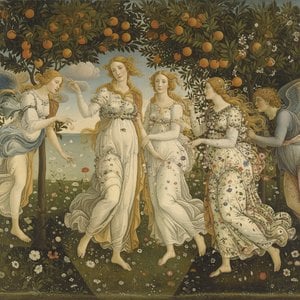
Mystic Nativity

Botticelli’s Mystic Nativity captures the serene beauty of the nativity scene with intricate detail and graceful figures, showcasing the artist's signature style from the Early Renaissance period – a timeless masterpiece to cherish and own.

Sandro Botticelli (1445-1510): En italiensk maler kjent for 'Skapelsen' og 'Våren'. Hans elegante stil og mytologiske temaer er et symbol på renessansen.

Giclée / Kunsttrykk

Giclée- eller lerretsprint av museumskvalitet med rask produksjon og fleksible valgmuligheter for etterbehandling. ( Bestill håndmalt reproduksjon Gå til digitalt bilde)

Corner sample of the P118B picture frame: støpt polystyren, 5 cm wide and 3 cm thick
P118B Nkr10
Corner sample of the P118H picture frame: støpt polystyren, 5 cm wide and 3 cm thick
P118H Nkr10
Corner sample of the P118W picture frame: støpt polystyren, 5 cm wide and 3 cm thick
P118W Nkr10
Corner sample of the P438Z picture frame: støpt polystyren, 5.5 cm wide and 3.5 cm thick
P438Z Nkr10
Corner sample of the P508JH picture frame: støpt polystyren, 7 cm wide and 3.5 cm thick
P508JH Nkr12
Corner sample of the P508YH picture frame: støpt polystyren, 7 cm wide and 3.5 cm thick
P508YH Nkr12
Corner sample of the P805H picture frame: støpt polystyren, 5 cm wide and 3.5 cm thick
P805H Nkr10
Corner sample of the P805Z picture frame: støpt polystyren, 5 cm wide and 3.5 cm thick
P805Z Nkr10
Corner sample of the P919BZ picture frame: støpt polystyren, 7 cm wide and 3.5 cm thick
P919BZ Nkr10
Corner sample of the P919G picture frame: støpt polystyren, 7 cm wide and 3.5 cm thick
P919G Nkr10
Corner sample of the P919XJ picture frame: støpt polystyren, 7 cm wide and 3.5 cm thick
P919XJ Nkr10
Corner sample of the P959ZH picture frame: støpt polystyren, 5 cm wide and 3 cm thick
P959ZH Nkr10
Corner sample of the P968JZ picture frame: støpt polystyren, 6 cm wide and 4 cm thick
P968JZ Nkr12
Corner sample of the W106C picture frame: massivt tre, 5 cm wide and 3 cm thick
W106C Nkr8
Corner sample of the W218G picture frame: massivt tre, 5 cm wide and 3 cm thick
W218G Nkr10
Corner sample of the W218JH picture frame: massivt tre, 5 cm wide and 3 cm thick
W218JH Nkr8
Corner sample of the W218Y picture frame: massivt tre, 5 cm wide and 3 cm thick
W218Y Nkr10
Corner sample of the W307PJ picture frame: massivt tre, 6 cm wide and 3 cm thick
W307PJ Nkr10
Corner sample of the W316G picture frame: massivt tre, 6 cm wide and 3 cm thick
W316G Nkr10
Corner sample of the W316PJ picture frame: massivt tre, 6 cm wide and 3 cm thick
W316PJ Nkr8
Corner sample of the W316Y picture frame: massivt tre, 6 cm wide and 3 cm thick
W316Y Nkr10
Corner sample of the W398PJ picture frame: massivt tre, 5 cm wide and 3 cm thick
W398PJ Nkr8
Corner sample of the W4111J picture frame: massivt tre, 6.5 cm wide and 3.5 cm thick
W4111J Nkr10
Corner sample of the W500HY picture frame: massivt tre, 7 cm wide and 5 cm thick
W500HY Nkr15
Corner sample of the W500JH picture frame: massivt tre, 7 cm wide and 5 cm thick
W500JH Nkr15
Corner sample of the W692G picture frame: massivt tre, 8 cm wide and 4 cm thick
W692G Nkr12
Corner sample of the W849H picture frame: massivt tre, 5 cm wide and 3 cm thick
W849H Nkr8
Corner sample of the W940BG picture frame: massivt tre, 7.5 cm wide and 4.5 cm thick
W940BG Nkr15
Corner sample of the W953PJ picture frame: massivt tre, 6 cm wide and 3.5 cm thick
W953PJ Nkr8

Standardformat
tilpasset
CM
INCH

Velg mellom våre forhåndsdefinerte størrelser som bevarer kunstverkets opprinnelige proporsjoner.

bredde
høyde

Skriv inn bredden og høyden du trenger, slik at den passer til din ramme eller vegg. Et trykk kan kun beskjæres, aldri gjøres større enn bildet, så et format med en annen form vil miste en del av motivet. Vi sender deg en digital mockup for godkjenning før vi trykker noe som helst. Bildet som vises på denne siden viser ikke den faktiske beskjæringen — det er kun mockuppen som gjør det.

Verdensomspennende levering () på 2 uker i stedet for standard 4/5 uker. (26 October)

Gratis ekspressfrakt over hele verden
Lerretsduk av høykvalitets lin
Full transportforsikring
Garanti for refusjon av toll og importavgifter
Garantert fargeekthet
100 dagers returrett ved fabrikasjonsfeil
100% pengene tilbake-garanti
Mengderabatt

Totalpris

Nkr 647

Mystic Nativity

Giclée / Kunsttrykk

Format på reproduksjon

-

Totalpris

Nkr 647

Kort om verket

  • Artistic style: Renaissance
  • Movement: Early Renaissance
  • Artist: Sandro Botticelli

Kunstquiz

Det er kun ett riktig svar på hvert spørsmål.

Spørsmål 1:
What is the central theme depicted in the artwork 'Mystic Nativity'?
Spørsmål 2:
Which famous Renaissance artist is associated with the style and period suggested by this artwork's context?
Spørsmål 3:
Besides Mary, Joseph, and the baby Jesus, what animals are specifically mentioned as being present in the scene?
Spørsmål 4:
The setting of the painting includes what natural element, adding depth to the composition?
Spørsmål 5:
Botticelli's early life and artistic development were deeply rooted in which Italian city?

A Celestial Vision Amidst Earthly Turmoil

In the twilight of the Quattrocento, as the political landscape of Italy fractured under the weight of papal ambitions and dynastic strife, Sandro Botticelli captured something far more profound than a mere religious milestone. His Mystic Nativity serves as an eloquent distillation of Renaissance ideals interwoven with the palpable anxieties of a world in flux. At first glance, the painting presents the serene, familiar scene of the Nativity—Mary cradling the infant Jesus amidst a pastoral landscape—yet the work breathes with a much deeper, more unsettling spiritual energy. It is not merely a depiction of a birth, but a complex theological vision that bridges the gap between the historical event of Christ's arrival and the apocalyptic prophecies of the Book of Revelation.

The composition guides the viewer’s eye upward through multiple narrative layers, emphasizing the sacredness of the moment while inviting contemplation of divine intervention and human humility. The central figures of Mary, Joseph, and the infant Jesus radiate divine grace, surrounded by celestial angels and humble earthly witnesses. There is a shimmering brilliance to the hues that seems to emanate from within the panel itself, creating a sense of divine light that transcends the physical medium. This luminosity serves to elevate the scene from a rustic outdoor setting into a celestial realm, where the boundaries between the earthly and the divine become beautifully blurred.

Symbolism, Technique, and the Divine Order

To gaze upon the Mystic Nativity is to engage in a silent dialogue with a dense web of symbolism. Botticelli meticulously constructed the composition to reflect a cosmic order. At the top of the work, a celestial dome of twelve angels encircles the heavens, representing both the twelve hours of the day and the twelve months of the year, acting as divine guardians over the unfolding drama. These angelic figures, draped in robes of white, red, and green, embody the virtues of faith, hope, and charity. Below this heavenly host, the landscape is punctuated by olive branches entwined with scrolls—symbols of peace and wisdom that stand in poignant contrast to the darker elements lurking in the shadows.

The emotional depth of the piece lies in its tension between salvation and peril. Beneath the rocky outcrops, demons emerge, embodying the evil forces that threaten the world. The painting employs a fascinating blend of styles; while it utilizes the emerging Renaissance naturalism, it also retains the earlier medieval convention of showing the Virgin Mary and infant Jesus on a larger scale than other figures. This deliberate distortion creates a powerful effect, emphasizing their importance above all else. Botticelli’s technical mastery is evident in his ability to manipulate oil on canvas to achieve an ethereal, luminous quality, capturing intricate textures—from flowing fabrics to natural foliage—that bring this biblical story to life.

For the discerning collector or interior designer, this masterpiece offers a profound sense of spiritual reverence and historical weight. Whether placed in a sacred space or an elegant, contemplative interior, the Mystic Nativity acts as a captivating focal point, inviting viewers to contemplate the sacred mystery of Christ’s birth and the enduring promise of peace amidst the darkness of the world.

Spørsmål og svar

Hvilket rom passer til fargene i "Mystic Nativity" av Sandro Botticelli?

De Earthy fargene i "Mystic Nativity" av Sandro Botticelli harmonerer med det anbefalte rommet: et Living Room.

Hva er den dominerende fargetonen i "Mystic Nativity" av Sandro Botticelli?

"Mystic Nativity" har en tendens til en Ochre to Sepia tone.

Er Sandro Botticelli, skaperen av "Mystic Nativity", kjent under andre navn?

Andre navn registrert for Sandro Botticelli, skaperen av "Mystic Nativity", inkluderer Alessandro di Mariano Filipepi.


Kunstnerbiografi

Early Life and Florentine Beginnings

Sandro Botticelli, egentlig Alessandro di Mariano di Vanni Filipepi, ble født i Firenze rundt 1445 – en tid preget av enestående kulturell oppblomstring, den tidlige renessansen. Hans liv var dypt forankret i byens kunstneriske og sosiale stoff, uten å ha tråkket langt fra sitt nabolag Ognissanti, et bevis på både familiære bånd og det levende kreative økosystemet som pleiet ham. Faren hans, Mariano Filipepi, startet som guldsmed og senere tanner, og ga ham en tidlig eksponering for håndverk og metisjon – kvaliteter som ville påvirke Botticellis kunstneriske tilnærming i stor grad. Selv om første rapporter antydet at han fikk utdanning som gulssmed, fant han snart sin kall under veiledningen av Fra Filippo Lippi, en fremtredende maler av sin tid. Dette lærerskapet var avgjørende, og dyptet ham i teknikkene og estetikkene til den florentinske skolen, samtidig som det knyttet ham til innflytelsesrike mecenater som familien Medici.

A Style Defined by Grace and Myth

Botticellis kunstneriske stil er umiddelbart gjenkjennelig for sin lyriske skjønnhet, preget av elegant linje, flytende konturer og en delikat bruk av farger. Han mestret gapet mellom de sene gotiske tradisjonene og den gryende renessanseæstetikken, og absorberte innflytelser fra mestere som Fra Angelico og Paolo Uccello, men skapte likevel en unik personlig visjon. Hans figurer har en eterisk kvalitet, ofte avbildet med forlengers proporsjoner og elegante positurer som formidler både ro og en subtil melankoli. En definerende egenskap ved hans arbeid er den hyppige inkluderingen av klassisk mytologi – et speilbilde av de humanisteriske interessene som strømmet gjennom renessanse-Firenze. Han illustrerte ikke bare disse gamle fortellingene; han innpreget dem med nye lag av mening, og utforsket temaer som kjærlighet, skjønnhet og åndelig lengsel.

Botticellis teknikk var innovativ for sin tid. Han brukte ofte en sølvstift-tegningsmetode under maling av sine lerret, noe som bidro til luminøsiteten og den delikate detaljeringen i hans ferdige verk. Hans bruk av temperafarger tillot presis gjengivelse og livlige farger, mens hans senere eksperimenter med oljemaling utvidet hans uttrykksmuligheter.

Iconic Masterpieces and Artistic Development

Botticelli’s arv hviler på en håndfull ikoniske malerier som fortsatt fengsler publikum århundrer etter. The Birth of Venus, ferdigstilt rundt 1486, står som kanskje hans mest berømte verk – en allegorisk fremstilling av gudinnen som stiger ut av en sjøpelyd, og representerer renessanseidéene om skjønnhet og harmoni. Dens elegante komposisjon, delikate fargepalett og suggestive symbolikk har gjort den til et vedvarende symbol på epoken. Like berømt er Primavera, skapt rundt 1482, en kompleks og gåtefull maleri som feirer vår og kjærlighet, befolket av symbolske figurer hentet fra klassisk mytologi. Disse verkene viser Botticellis mesterskap i komposisjon, hans evne til å skape atmosfærisk dybde og hans dype forståelse for menneskelige følelser.

Hans kunstneriske reise utfoldet seg i distinkte faser. De tidlige 1470-årene så han fokusere på religiøse emner, og finpusset sine tekniske ferdigheter og etablerte en rykte for dyktig utførelse. 1480-tallet markerte toppen av hans kreative krefter, med skapelsen av hans mest berømte mytologiske malerier. Likevel vitnet de sene 1490-årene om et skifte i stilen hans, påvirket av den lidenskapelige prekenen til Girolamo Savonarola – en dominikanerklosterordens prest som fordømte det han så på som dekadanse og moralsk korrupsjon i Firenze. Denne perioden resulterte i mer austere og emosjonelt ladde verk, reflektert av økende åndelig intensitet.

Major Works

  • The Birth of Venus (c. 1486): An iconic depiction embodying Renaissance ideals of beauty.
  • Primavera (c. 1482): A complex allegorical painting celebrating spring and love.
  • Adoration of the Magi (1475-1476): Demonstrates early mastery of composition and perspective.
  • Mystic Nativity (1501): Reflects a shift towards spiritual themes in his later career.

Legacy and Rediscovery

Etter sin død i 1510, forsvant Botticelli’s rykte gradvis inn i glemselen. I nesten tre hundre år ble hans verk stort sett gjenkjent, overskygget av prestasjonene til renessanse-mestere som Leonardo da Vinci og Michelangelo. Likevel skjedde det en bemerkelsesverdig gjenoppdagelse i sen 1800-tall med fremveksten av Pre-Raphaelittene – en gruppe engelske kunstnere som avviste akademiske konvensjoner og søkte inspirasjon i kunsten fra den tidlige italienske renessansen. De ble fascinert av Botticellis lineære eleganse, livlige farger og poetiske sans, og anerkjente ham som en slektning. Denne gjenoppblomstringen utløste en omfattende omsynsvurdering av hans arbeid, etablerte ham som en av de viktigste kunstnerne i den tidlige renessansen. I dag feires han for sin unike kunstneriske visjon, hans mesterskapsteknik og hans vedvarende evne til å fremkalle skjønnhet, følelser og åndelig kontemplasjon. Hans innflytelse kan sees i etterfølgende generasjoner av kunstnere som har søkt å fange den samme følelsen av eleganse og raffinement i sitt eget arbeid. Han er et symbol på florentinsk kunstnerisk prestasjon og et vitnesbyrd om renessansen humanistiske kraft.

Sandro Botticelli

Sandro Botticelli

1445 - 1510 , Italia

Kort om kunstneren

  • Artistic Movement Or Style: Tidlig renessanse
  • Artists Or Movements Influenced By This Artist: ['Pre-Raphaelitter']
  • Artists Who Influenced This Artist:
    • Fra Angelico
    • Paolo Uccello
  • Date Of Birth: c. 1445
  • Date Of Death: 1510
  • Full Name: Alessandro di Mariano Filipepi
  • Nationality: Italiensk
  • Notable Artworks:
    • Venus' fødsel
    • Våren
  • Place Of Birth: Florence, Italia
Utforsk kunstverk organisert etter temaer, stiler og kjennetegn.