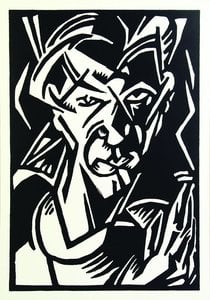
Sandor Bortnyik: Skyggenes og symbolismens vever
Sandor Bortnyik (1893-1976) forblir en dypt gåtefull skikkelse i den ungarske kunsthistorien, en kunstner hvis hjemsøkte verk fortsetter å resonnere med en kraftfull blanding av symbolisme, ekspresjonisme og arkitektonisk presisjon. Født i Marosvásárhely i Transilvania – som den gang var en del av Kongeriket Ungarn – ble Bortnyiks liv preget av fordrivelse og kunstnerisk evolusjon, noe som til slutt formet ham til en av sin generasjons mest særpregede stemmer. Hans ettermæle ligger ikke bare i en omfattende produksjon av malerier og grafisk design, men også i hans avgjørende rolle som pedagog, der han fostret en ny bølge av ungarske kunstnere innenfor rammene av Bauhaus-prinsippene.
Tidlig liv og påvirkninger
Bortnyiks tidlige kunstneriske opplæring begynte i Budapest, hvor han umiddelbart ble trukket mot den vibrerende energien i fauvist-bevegelsen. Imidlertid tvang de politiske omveltningene etter første verdenskrig ham i eksil, noe som til slutt førte ham til Weimar i 1922. Denne relokaliseringen viste seg å være transformativ og omsluttet ham i det revolusjonære miljøet ved Bauhaus-skolen. Prinsippene om funksjonalisme, geometrisk abstraksjon og fokus på håndverk preget hans kunstneriske utvikling dypt. Han studerte under mestere som Johannes Itten og Lyonel Feininger, og absorberte deres filosofier mens han samtidig smidde sitt eget unike visuelle språk. Innflytelsen fra kubismen er lett gjenkjennelig i hans tidlige verk, særlig gjennom fragmenteringen av former og utforskningen av multiple perspektiver – en teknikk han senere skulle mestre å integrere med symbolsk bildebruk.
En mester av kommersiell kunst og grafisk design
Til tross for hans engasjement i avantgarde-bevegelser, var Bortnyiks karriere uadskillelig knyttet til den kommersielle kunstens verden. Han etablerte seg raskt som en ettertraktet designer av plakater, og skapte slående visuell kommunikasjon for et bredt spekter av klienter – fra parfymeprodusenter som Savoly til sigarettselskaper som Modiano. Disse plakatene er ikke bare reklame; de er miniatyrkunstverk, karakterisert av dristige farger, dynamiske komposisjonsformer og ofte gjennomsyret av en følelse av melankoli eller varsel om noe uunngåelig. Hans design var bemerkelsesverdig innovative for sin tid, og introduserte modernistisk-konstruktivistisk estetikk på det ungarske markedet.
Verkstedet og Bauhaus-arven
I 1928 etablerte Bortnyik «Verkstedet» (Mühely), en privat kunstskole i Budapest som ble en avgjørende inkubator for ungarsk kunstnerisk talent. Med tung inspirasjon fra Bauhaus-prinsippene la han vekt på eksperimentering med materialer, teknikker og konseptuelle tilnærminger. Hans læreplan fremmet en innovasjonsånd og oppmuntret studentene til å utfordre tradisjonelle forestillinger om kunstnerisk skapelse. Han fungerte også som direktør for det ungarske akademiet for bildende kunst fra 1949 til 1956, og formet det kunstneriske landskapet i etterkrigstidens Ungarn. Hans engasjement for utdanning strakte seg langt utover formell undervisning; han søkte aktivt å eksponere sine studenter for internasjonale utviklinger innen kunst og design, og fremmet en tverrkulturell dialog som beriket deres kreative praksis.
Temaer om død, transformasjon og det urbane landskapet
Bortnyiks virke er dypt opptatt av temaer som død, forfall og transformasjon. Hans mest berømte verk – ofte omtalt som «tunnelmalerier» – skildrer klaustrofobiske rom fylt med forvrengte figurer, fragmenterte former og en gjennomtrengende følelse av ubehag. Disse bildene fremmaner modernitetens psykologiske angst og reflekterer en fascinasjon for dødelighet og menneskelig eksistens' skjørhet. Bruken av mørke farger, dramatisk lyssetting og symbolsk bildebruk—som hodeskaller, visnende blomster og ensomme skikkelser—skaper en atmosfære av dyp melankoli. Likevel finnes det midt i dette mørket ofte et glimt av håp eller motstandskraft, som antyder muligheten for fornyelse og gjenfødelse. Hans malerier skildrer ofte urbane landskap, hvor han fanger isolasjonen og fremmedgjøringen i det moderne liv, samtidig som han utforsker skjønnheten og mystikken som skjuler seg i byens skygger.
Bortnyiks arbeid fortsetter å bli studert og beundret for sin hjemsøkte skjønnhet, tekniske mesterskap og dype utforskning av menneskets tilstand. Han forblir en sentral skikkelse i ungarsk kunsthistorie, et vitnesbyrd om den kunstneriske visjonens kraft og den varige arven etter Bauhaus-bevegelsen.



 Se i rommet
 Bytt til trykkversjon
 Del som digitalt kort
 Del
Del
 Detaljer
 Studentguide

 Last ned
 Liknende objekter
 Røntgen
 Lysbildefremvisning
 Besøksstatistikk
 Les mer