Kunstnerbiografi
A Life Immersed in the Animal World
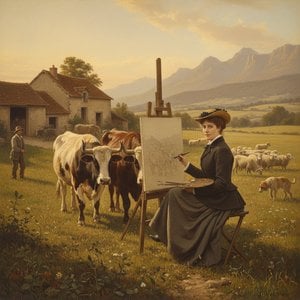
Rosa Bonheur, født Marie-Rosalie Bonheur i Bordeaux i 1822, var langt mer enn bare en maler av dyr; hun var en tolk av deres essens. Hennes navn runger gjennom kunsthistorien som et fyrtårn av realisme og et vitnesbyrd om kvinnelig kunstnerisk ambisjon i en periode dominert av mannlige figurer. Født inn i en familie dypt forankret i kunsttradisjoner – hennes far, Oscar-Raymond Bonheur, var landskaps- og portrettmaler – ble den unge Rosalie ikke bestemt av skjebnen, men pleiet. Familieens omfavnelse av Saint-Simonianismen, en progressiv sosialistisk filosofi som argumenterte for lik utdanning for både kjønn, spilte en spesielt dannelse rolle, og la til grunn for Rosa en følelse av uavhengighet og intellektuell nysgjerrighet som ville definere livet hennes og arbeidet hennes. En tragisk hendelse tidlig i livet – tapet av moren sin da hun bare var elleve år gammel – men familien Bonheur forble et fristed for kreativitet og ukonvensjonelt tenkning. Denne unike oppveksten la grunnlaget for en kunstner som ville utfordre samfunnsnormer like tappert som hun fanget den rå skjønnheten i den naturlige verden.
Fra Humble Beginnings til Salon Success
Familienes flytting til Paris i 1828 markerte et vendepunkt, og ga Rosa tilgang til formell kunstutdanning. I utgangspunktet fulgte studiene hennes konvensjonelle linjer – kopiering fra tegninger og skissering av leiremodeller. Men det var dyrene som omgikk Paris som virkelig fanget hennes fantasi. Hester, kyr, sauer, geiter—hun observerte dem utrettelig, ikke bare som motiver for kunst, men som levende vesener verdt grundig studie. Denne dedikasjonen til direkte observasjon ble grunnsteinen i hennes kunstneriske stil. Faren hennes oppmuntret aktivt denne lidenskapen, og tok slett ikke sjansen på å bringe levende dyr inn i studioet deres for Rosa å dissekere og analysere. Dette praktiske tilnærmingen, kombinert med besøk på Paris’ slakterier for å forstå dyreanatomi, skilte henne fra mange samtidige som stolte på andrehånds representasjoner. Gjennombruddet hennes kom i 1849 med *Ploughing in the Nivernais*, et verk som umiddelbart tiltrakk seg oppmerksomhet på Salon de Paris og signaliserte ankomsten av en ny talentfull kunstner. Men det var *The Horse Fair*, ferdigstilt mellom 1853 og 1855, som solid etablerte hennes internasjonale rykte. Denne monumentale lerretet, nå utstilt i New Yorks Metropolitan Museum of Art, pulserer av energi og anatomisk presisjon, og skildrer det kaotiske, men fengslende spekteret til et travlt heste marked. Selv dronning Victoria selv ble betatt av dets kraft og realisme.
En Stil Fundamentert på Realisme og Observasjon
Rosa Bonheurs kunstneriske stil var ikke ment å romantisere dyr; den var ment å portrettere dem med urokkelig ærlighet og detalj. Hun unngikk sentimentalitet, og foretrakk i stedet en vitenskapelig tilnærming til sine motiver. Hennes malerier er preget av deres anatomiske nøyaktighet, dynamiske komposisjoner og evnen til å fange hver dyrs unike personlighet. Denne dedikasjonen til realisme utvidet seg utover bare fysisk representasjon. Bonheur søkte å forstå dyrenes bevegelser, atferder og til og med deres følelsesmessige tilstander. Hun arbeidet ofte *en plein air*, direkte observerte sine motiver i deres naturlige omgivelser, en praksis som ytterligere forbedret autentisiteten til hennes arbeid. Denne forpliktelsen til sannhet resonerte med den voksende Realistbevegelsen på midten av det 19. århundre, som avviste idealiserte representasjoner til fordel for å skildre livet slik det virkelig var. Hennes teknikk involverte nøye lagdeling av maling og en mesterlig bruk av lys og skygge for å skape dybde og tekstur, og bringe hvert dyr levende frem på lerretet.
En Pioner for Kvinner i Kunst
Rosa Bonheurs arv strekker seg langt utover hennes kunstneriske prestasjoner; hun ble et ikon for kvinner som kjempet for anerkjennelse i en mannlig dominert kunstverden. Hun utfordret konvensjonene ikke bare gjennom sin profesjonelle suksess, men også gjennom sine personlige valg. Sjelden tok hun seg friheten til å kle seg som en mann når hun jobbet med dyr, og begrunnet det med praktisk hensikt og frihet til bevegelse – et dristig uttrykk som utfordret samfunnsmessige forventninger. Hun sikret seg bestillinger fra regjeringen og private samlere, og beviste at kvinnelige kunstnere kunne oppnå samme anerkjennelse som deres mannlige motparter. Hennes suksess banet vei for fremtidige generasjoner av kvinnelige kunstnere, og inspirerte dem til å forfølge sine lidenskaper uten kompromiss. Bonheurs liv og arbeid ble symboler på kunstnerisk talent, utholdenhet og en urokkelig forpliktelse til sitt håndverk. Hennes malerier feires fortsatt i store museer over hele verden, og minner oss om hennes vedvarende bidrag til kunsthistorien og hennes ubetingede engasjement for å portrettere dyrenes skjønnhet og verdighet.
Enduring Influence and Lasting Legacy
Rosa Bonheurs innflytelse fortsetter å resonere i dag. Hennes dedikasjon til realisme har påvirket utallige kunstnere, og hennes malerier blir fortsatt beundret for deres tekniske dyktighet og emosjonelle dybde. Hun demonstrerte at kunst kunne være både vitenskapelig nøyaktig og dyptgripende. Ut over sine kunstneriske bidrag tjener Bonheurs livshistorie som et kraftfullt eksempel på kvinners makt og kunstnerisk uavhengighet. Hun utfordret samfunnsnormer, nektet å bli begrenset av forventninger og oppnådd varig anerkjennelse på sine egne premisser. Hennes arv er ikke bare en av vakre malerier, men også et vitnesbyrd om mot, utholdenhet og en ubetinget forpliktelse til sitt håndverk. Hennes arbeid inspirerer fortsatt kunstnere og kunstelskere over hele verden, og minner oss om kraften i observasjon, skjønnheten i den naturlige verden og viktigheten av å følge sine lidenskaper med overbevisning.



 Se i rommet
 Bytt til trykkversjon
 Del som digitalt kort
 Del
Del
 Detaljer
 Studentguide

 Last ned
 Liknende objekter
 Røntgen
 Lysbildefremvisning
 Besøksstatistikk


 Les mer






































 Glassalternativet er kun tilgjengelig i størrelser under 110 cm