The Luminous Evolution of Rodrigo Bivar
Born in Lisbon, Portugal, in 1965, Rodrigo Bivar de Vasconcelos has cultivated a career defined by a profound dialogue between form and feeling. His artistic journey began within the hallowed halls of the Faculty of Fine Arts at Universidade Lisboa, an environment that provided him with a rigorous foundation in painting, drawing, and sculpture. This multidisciplinary training allowed Bivar to develop a visual language that is as much about the physical texture of the medium as it is about the ephemeral nature of thought. Throughout his development, he has demonstrated a rare ability to balance meticulous craftsmanship with a spirit of expressive experimentation, creating works that invite the viewer into a deeply contemplative space.
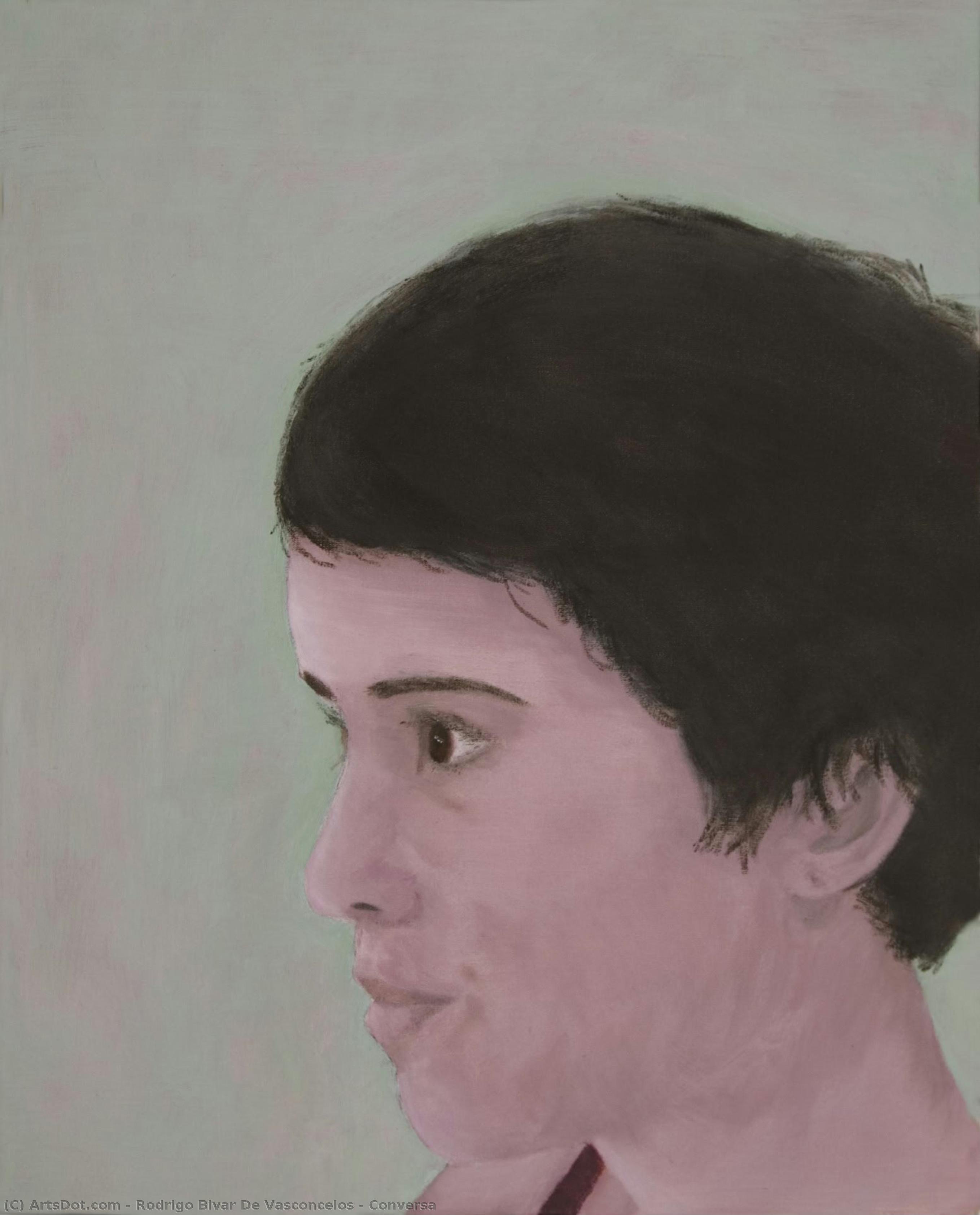
The early sensibilities of Bivar were significantly shaped by the giants of modernism, particularly the surrealist whimsy of Joan Miró and the raw, gestural energy of Willem de Kooning. These influences are palpable in his ability to navigate the boundary between the subconscious and the tangible. His early work often leaned toward the figurative, utilizing photographic references to anchor his compositions. However, as his career progressed, Bivar underwent a transformative "abstract raid," a period where he intentionally abandoned established systems to explore the purity of color and shape. This transition was not merely an aesthetic shift but a philosophical one, moving away from the representation of external reality toward an exploration of internal, emotional landscapes.
Texture, Light, and the Architecture of Memory
Bivar’s technique is characterized by a sophisticated manipulation of light and materiality. In his more recent abstract explorations, he has embraced a unique method of paint preparation, incorporating egg yolk into his oils to achieve a heightened transparency and an expanded luminous range. To temper the brilliance of these colors, he often utilizes beeswax, which removes excess shine and lends a matte, organic quality to the surface. This careful layering creates a sense of depth that mirrors his thematic preoccupations with memory and the passage of time.
Much of his recent inspiration can be traced to the architectural textures of the Lapa neighborhood in São Paulo, where he maintains his studio. The decay of walls, the geometry of doors, and the rhythmic patterns of windows in this historic district serve as a catalyst for his compositions. In these works, Bivar translates urban residue into abstract motifs—fragmented figures and geometric shapes that seem to drift across the canvas. His art seeks to counteract the rapid pace of modern perception with a deliberate slowness, forcing the viewer to linger on the subtle imperfections and asymmetrical passages that define his oeuvre.
A Legacy of Contemplative Dialogue
The significance of Rodrigo Bivar’s work lies in its ability to engage the viewer in a silent, profound conversation about the human experience. His exhibitions have traveled far beyond the borders of Portugal, reaching prestigious galleries in Spain, France, and the United States, including notable presentations in New York City’s Chelsea district. Whether through the expansive color fields showcased at the Museu Nacional de Arte Contemporânea – Serralves or his more intimate, symbolic sculptures, Bivar continues to push the boundaries of contemporary art.
His achievements are marked by a consistent commitment to exploring the following themes:
- Identity and Memory: Using fragmented forms to represent the elusive nature of the self.
- The Interplay of Light and Matter: Utilizing experimental mediums like egg yolk and beeswax to create depth.
- Urban Inspiration: Finding abstract beauty in the architectural decay and historical layers of the city.
- Emotional Resonance: Moving beyond mere representation to capture the visceral essence of human emotion.
Ultimately, Bivar stands as a pivotal figure in contemporary Portuguese art, an artist whose work serves as a bridge between the structured traditions of the past and the spontaneous, abstract possibilities of the future.


 Se i rommet
 Bestill håndmalt reproduksjon
 Del som digitalt kort
 Del
Del
 Detaljer
 Studentguide

 Last ned
 Liknende objekter
 Røntgen
 Lysbildefremvisning
 Besøksstatistikk

 Les mer






































 Glassalternativet er kun tilgjengelig i størrelser under 110 cm


