x
Gelatin Silver Print
Photo
Contemporary Realism
Modern
35.0 x 45.0 cm
George Eastman MuseumHåndmalt olje på lerret i din valgte størrelse og ramme, laget på bestilling av våre kunstnere.
Velg mellom våre forhåndsdefinerte størrelser som bevarer kunstverkets opprinnelige proporsjoner.
Du kan angi egne mål for å tilpasse en spesifikk ramme eller plass. Dersom den valgte størrelsen ikke samsvarer med originalbildets proporsjoner, vil vi enten beskjære kunstverket eller utvide maleriet med ytterligere håndmalte elementer. En digital mockup vil bli sendt til din godkjenning før produksjonen starter.
Vennligst merk at forhåndsvisningen på skjermen ikke gjenspeiler den faktiske beskjæringen eller utvidelsen. Kun mockuppen vil vise den endelige komposisjonen nøyaktig.
Selv om tilpassede størrelser er tilgjengelige, anbefaler vi å velge et mål fra den forhåndsdefinerte listen for å bevare de originale proporsjonene.

Verdensomspennende levering () på 3–4 uker i stedet for standard 5 uker. (2 July). Ingen kompromisser med kvaliteten.
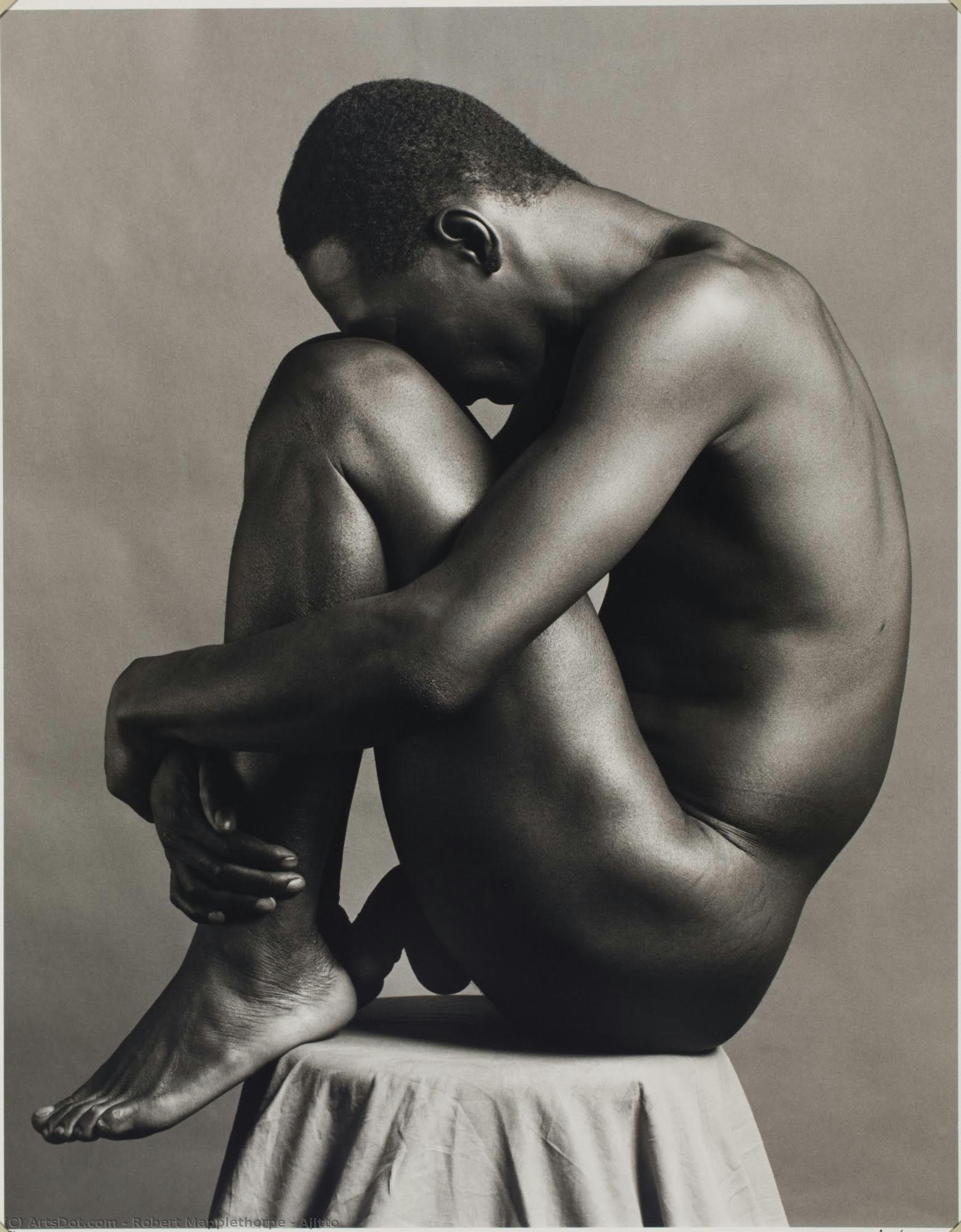
Ajitto
Størrelse på reproduksjon
Robert Mapplethorpe's "Ajitto," created in 1981, is not merely a photograph; it’s a distilled essence of vulnerability and introspection. The image, rendered in stark black and white gelatin silver print, depicts a young man seated on a simple stool, his hands clasped together between his legs – a pose that immediately evokes both shame and profound contemplation. The blurred background subtly emphasizes the subject's isolation, drawing our attention entirely to his posture and expression, which is one of quiet sadness and perhaps even a touch of defiance. This photograph transcends its literal depiction; it’s a powerful meditation on masculinity, sexuality, and the complexities of human experience.
Born in Floral Park, New York, in 1946, Robert Mapplethorpe was a revolutionary figure in photography. He rejected the prevailing trends of his time, eschewing documentary or narrative approaches for a rigorously formalist style. Influenced by artists like Marcel Duchamp and Joseph Cornell, he sought to elevate photography to the level of sculpture, meticulously controlling every element within the frame – lighting, composition, and subject matter. “Ajitto” exemplifies this philosophy; it’s a study in geometry, line, and texture, where the human form becomes an object of aesthetic contemplation rather than a vehicle for storytelling. Mapplethorpe famously stated his goal was to "look for perfection in form," and this pursuit is strikingly evident in the photograph's precise arrangement.
The pose itself – hands clasped between the legs – carries a significant weight of symbolism. It’s a gesture often associated with shame, vulnerability, and self-consciousness. However, Mapplethorpe deliberately avoids sentimentality, presenting this posture not as an expression of weakness but rather as a moment of quiet resistance. The man's downward gaze suggests introspection, perhaps even a struggle to reconcile his inner world with external expectations. The photograph’s starkness amplifies this ambiguity, leaving the viewer to grapple with the unspoken emotions conveyed by the subject’s stillness. It invites us to consider the private moments of self-reflection that often go unseen.
“Ajitto” was created during a period of significant social and cultural upheaval in America, marked by evolving attitudes towards sexuality and gender roles. Mapplethorpe’s work, particularly his explorations of male beauty and intimacy, often provoked controversy but also challenged conventional notions of artistic representation. The photograph's enduring power lies not only in its aesthetic qualities but also in its ability to resonate with contemporary audiences who continue to grapple with issues of identity, vulnerability, and the complexities of human connection. It’s a testament to Mapplethorpe’s lasting influence on the art world, solidifying his place as one of the most important photographers of the 20th century. Reproductions of “Ajitto” are highly sought after by collectors and interior designers alike, valued for their ability to inject a sense of quiet intensity into any space.
1946 - 1989 , USA
Fortell oss om prosjektet ditt, så vil våre kunsteksperter gi deg 3 personlige kunstforslag.
Vi velger ut 3 alternativer kun for deg – helt gratis!