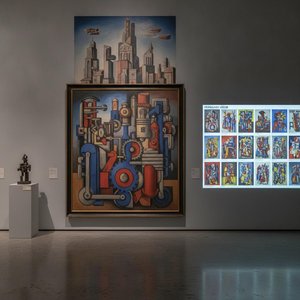
En pioner innen abstrakt farge: Robert Delaunays liv og kunst
Robert Delaunay, født i Paris i 1885, trådte frem som en sentral skikkelse i de radikale kunstneriske omveltningene tidlig i det tyvende århundre. Selv om han i begynnelsen ble trukket mot mer tradisjonelle maleriformer, ledet hans reise ham mot en utforskning av farge og lys som til slutt skulle definere hans ettermæle og bidra betydelig til fødselen av den abstrakte kunsten. Delaunay var ikke bare interessert i å *representere* verden; han søkte å fange selve dens essens gjennom et levende språk av geometriske former og lysende nyanser, og han grunnla orfismen sammen med sin kone, Sonia Delaunay, og andre som delte deres visjon. Hans tidlige liv var preget av en viss ustabilitet – foreldrene skilte seg da han var ung, og han ble oppdratt av slektninger – men dette kan ha fostret en uavhengig ånd som tjente ham godt i utfordringen av kunstneriske konvensjoner. Han begynte med dekorativ kunst, men beveget seg raskt mot maleriet og stilte ut på Salon des Indépendants allerede i 1904, noe som vitnet om et spirende talent og store ambisjoner.
Fra divisjonisme til orfismens daggry
Delaunays kunstneriske utvikling var preget av konstant eksperimentering. Han begynte med neoimpresjonismen, eller divisjonismen, hvor han absorberte prinsippene om å påføre små, distinkte prikker av farge for å skape en glitrende effekt. Likevel beveget han seg snart forbi det å bare gjenskape optiske fenomener; han begynte å undersøke selve fargens ekspressive potensial. Et avgjørende vennskap med Jean Metzinger viste seg å være formende i denne perioden, da de utforsket mulighetene i fragmenterte former og mosaikkaktige komposisjoner. Disse tidlige samarbeidene la grunnlaget for deres senere involvering i kubismen, selv om Delaunay til slutt ville skille lag med dens mer analytiske tilnærming. Han var ikke interessert i å dissekere objekter i geometriske komponenter; snarere søkte han å syntetisere dem i dynamiske arrangementer av farge og lys. Dette skiftet kulminerte i utviklingen av orfismen – et begrep skapt av poeten Guillaume Apollinaire – som hadde som mål å skape en rent abstrakt kunst som fremkalte emosjonelle responser gjennom sin kromatiske intensitet.
Simultane kontraster: Sol og måne eksemplifiserer denne tilnærmingen, og viser Delaunays mesterlige manipulasjon av farge for å formidle en følelse av energi og bevegelse.
Kraften i «simultanéité» og kunstnerisk innflytelse
Sentralt i Delaunays kunstneriske filosofi sto konseptet om «simultanéité» – ideen om at farger samhandler med hverandre og skaper nye sansninger og persepsjoner. Han trodde at farge ikke bare var et beskrivende element, men en aktiv kraft kapabel til å forme vår opplevelse av virkeligheten. Denne overbevisningen preget hans serie malerier som avbilder Eiffeltårnet, hvor han dekonstruerte den ikoniske strukturen til et nettverk av kryssende plan og vibrerende nyanser. Dette var ikke fremstillinger *av* tårnet, men snarere utforskninger av hvordan lys og farge transformerte dets utseende. Delaunays teorier resonnerte dypt hos andre kunstnere i hans samtid, og påvirket skikkelser som Paul Klee, Franz Marc, August Macke og til og med de russiske avantgarde-bevegelsene. Hans vektlegging av abstraksjon og fargens ekspressive kraft bidro til å bane vei for en ny generasjon kunstnere som forkastet representative konvensjoner til fordel for rent visuelle former. Han skapte ikke bare malerier; han utviklet et teoretisk rammeverk for å forstå forholdet mellom farge, lys og persepsjon.
De senere år og et varig ettermæle
Utbruddet av første verdenskrig tvang Delaunay og hans kone til å søke tilflukt i Spania og Portugal, hvor de fortsatte å arbeide og stille ut. Etter at han vendte tilbake til Paris på 1920-tallet, utforsket han et bredt spekter av motiver, inkludert portretter og figurative scener, men forble alltid tro mot sine kjerneprinsipper om farge og abstraksjon. I sine senere år vendte Delaunay tilbake til tidligere temaer og skapte stadig mer komplekse og dynamiske komposisjoner. Han tok også på seg ambisiøse prosjekter, som å designe storskala fargede relieffer for verdensutstillingen i Paris i 1937, noe som demonstrerte hans evne til å overføre sin kunstneriske visjon til arkitektoniske kontekster. Robert Delaunays tidlige død i 1941 markerte et tap for kunstverdenen, men hans innflytelse merkes den dag i dag. Hans banebrytende arbeid la fundamentet for mange påfølgende utviklinger innen abstrakt kunst, og hans utforskning av farge forblir en kilde til inspirasjon for kunstnere på tvers av disipliner.
Hans ettermæle er ikke bare preget av estetisk innovasjon, men også av intellektuell søken – et vitnesbyrd om kunstens kraft til å transformere vår forståelse av verden rundt oss.
Merkverdige verk
- Eiffeltårnet (1909-1911)
- Simultane kontraster: Sol og måne (1913)
- Vinduer som åpnes samtidig, 1. del, 3. motiv (1912)
- Vei i Laon (1910)
- Rytmer (1934)



 Se i rommet
 Bytt til trykkversjon
 Del som digitalt kort
 Del
Del
 Detaljer
 Studentguide

 Last ned
 Liknende objekter
 Røntgen
 Lysbildefremvisning
 Besøksstatistikk


 Les mer






































 Glassalternativet er kun tilgjengelig i størrelser under 110 cm