Se i rommet Se i AR Bestill håndmalt reproduksjon Gå til digitalt bilde Del som digitalt kort
Detaljer Studentguide Legg til i favoritter Last ned Liknende objekter Røntgen Lysbildefremvisning Besøksstatistikk

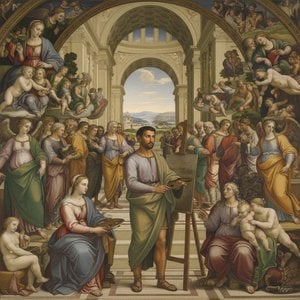
The parnassus (detail)7

Witness Raphael's mastery in 'The Parnassus (detail)'! This High Renaissance fresco captures classical mythology & musical beauty with vibrant colors & intricate detail – a Vatican masterpiece.

Raphael (1483-1520): En høyrenessanse mester kjent for sin myke skjønnhet, arkitektur og ikoniske verk som «Skolen i Athen». Utforsk hans Urbino opprinnelse og kunstneriske arv.

Giclée / Kunsttrykk

Giclée- eller lerretsprint av museumskvalitet med rask produksjon og fleksible valgmuligheter for etterbehandling. ( Bestill håndmalt reproduksjon Gå til digitalt bilde)

Corner sample of the P118B picture frame: støpt polystyren, 5 cm wide and 3 cm thick
P118B Nkr10
Corner sample of the P118H picture frame: støpt polystyren, 5 cm wide and 3 cm thick
P118H Nkr10
Corner sample of the P118W picture frame: støpt polystyren, 5 cm wide and 3 cm thick
P118W Nkr10
Corner sample of the P438Z picture frame: støpt polystyren, 5.5 cm wide and 3.5 cm thick
P438Z Nkr10
Corner sample of the P508JH picture frame: støpt polystyren, 7 cm wide and 3.5 cm thick
P508JH Nkr12
Corner sample of the P508YH picture frame: støpt polystyren, 7 cm wide and 3.5 cm thick
P508YH Nkr12
Corner sample of the P805H picture frame: støpt polystyren, 5 cm wide and 3.5 cm thick
P805H Nkr10
Corner sample of the P805Z picture frame: støpt polystyren, 5 cm wide and 3.5 cm thick
P805Z Nkr10
Corner sample of the P919BZ picture frame: støpt polystyren, 7 cm wide and 3.5 cm thick
P919BZ Nkr10
Corner sample of the P919G picture frame: støpt polystyren, 7 cm wide and 3.5 cm thick
P919G Nkr10
Corner sample of the P919XJ picture frame: støpt polystyren, 7 cm wide and 3.5 cm thick
P919XJ Nkr10
Corner sample of the P959ZH picture frame: støpt polystyren, 5 cm wide and 3 cm thick
P959ZH Nkr10
Corner sample of the P968JZ picture frame: støpt polystyren, 6 cm wide and 4 cm thick
P968JZ Nkr12
Corner sample of the W106C picture frame: massivt tre, 5 cm wide and 3 cm thick
W106C Nkr8
Corner sample of the W218G picture frame: massivt tre, 5 cm wide and 3 cm thick
W218G Nkr10
Corner sample of the W218JH picture frame: massivt tre, 5 cm wide and 3 cm thick
W218JH Nkr8
Corner sample of the W218Y picture frame: massivt tre, 5 cm wide and 3 cm thick
W218Y Nkr10
Corner sample of the W307PJ picture frame: massivt tre, 6 cm wide and 3 cm thick
W307PJ Nkr10
Corner sample of the W316G picture frame: massivt tre, 6 cm wide and 3 cm thick
W316G Nkr10
Corner sample of the W316PJ picture frame: massivt tre, 6 cm wide and 3 cm thick
W316PJ Nkr8
Corner sample of the W316Y picture frame: massivt tre, 6 cm wide and 3 cm thick
W316Y Nkr10
Corner sample of the W398PJ picture frame: massivt tre, 5 cm wide and 3 cm thick
W398PJ Nkr8
Corner sample of the W4111J picture frame: massivt tre, 6.5 cm wide and 3.5 cm thick
W4111J Nkr10
Corner sample of the W500HY picture frame: massivt tre, 7 cm wide and 5 cm thick
W500HY Nkr15
Corner sample of the W500JH picture frame: massivt tre, 7 cm wide and 5 cm thick
W500JH Nkr15
Corner sample of the W692G picture frame: massivt tre, 8 cm wide and 4 cm thick
W692G Nkr12
Corner sample of the W849H picture frame: massivt tre, 5 cm wide and 3 cm thick
W849H Nkr8
Corner sample of the W940BG picture frame: massivt tre, 7.5 cm wide and 4.5 cm thick
W940BG Nkr15
Corner sample of the W953PJ picture frame: massivt tre, 6 cm wide and 3.5 cm thick
W953PJ Nkr8

Standardformat
tilpasset
CM
INCH

Velg mellom våre forhåndsdefinerte størrelser som bevarer kunstverkets opprinnelige proporsjoner.

bredde
høyde

Skriv inn bredden og høyden du trenger, slik at den passer til din ramme eller vegg. Et trykk kan kun beskjæres, aldri gjøres større enn bildet, så et format med en annen form vil miste en del av motivet. Vi sender deg en digital mockup for godkjenning før vi trykker noe som helst. Bildet som vises på denne siden viser ikke den faktiske beskjæringen — det er kun mockuppen som gjør det.

Verdensomspennende levering () på 2 uker i stedet for standard 4/5 uker. (25 October)

Gratis ekspressfrakt over hele verden
Lerretsduk av høykvalitets lin
Full transportforsikring
Garanti for refusjon av toll og importavgifter
Garantert fargeekthet
100 dagers returrett ved fabrikasjonsfeil
100% pengene tilbake-garanti
Mengderabatt

Totalpris

Nkr 646

The parnassus (detail)7

Giclée / Kunsttrykk

Format på reproduksjon

-

Totalpris

Nkr 646

Kort om verket

  • Subject or theme: Classical mythology
  • Location: Vatican Museums
  • Artistic style: Neoplatonic ideals
  • Title: The Parnassus (detail)
  • Influences:
    • Piero della Francesca
    • Plato

Kunstquiz

Det er kun ett riktig svar på hvert spørsmål.

Spørsmål 1:
The painting ‘The Parnassus (detail)7’ primarily depicts:
Spørsmål 2:
The figure in the red hat with green leaves is most likely representing:
Spørsmål 3:
Considering Raphael’s artistic style and the context of the High Renaissance, what is a key characteristic of ‘The Parnassus (detail)7’?
Spørsmål 4:
The presence of leaves in the painting suggests:
Spørsmål 5:
Raphael’s work often drew inspiration from which classical tradition?

The Parnassus (Detail) by Raphael: A Window into Renaissance Ideals

Raphael’s “The Parnassus (detail)” offers a breathtaking glimpse into the heart of High Renaissance artistry, specifically as it manifests within the opulent setting of the Vatican Palace. This intricate fresco fragment, meticulously recreated in our hand-painted reproductions, isn't merely a depiction of mythological figures; it’s a carefully constructed allegory brimming with Neoplatonic philosophy and humanist ideals – a testament to Raphael’s mastery of composition, color, and psychological depth. The detail presented here focuses on the central figure, a man radiating an aura of serene contemplation as he gazes downwards, seemingly lost in thought amidst the vibrant chaos of the scene. His posture, his expression, immediately draws the viewer into this world of intellectual pursuit.

The painting’s genesis lies within the ambitious project commissioned by Pope Julius II to decorate the *Stanza della Segnatura* – a room intended as the papal library and a symbolic representation of the four branches of knowledge: philosophy, theology, poetry, and law. Raphael was tasked with creating a series of frescoes that would embody these disciplines, and “The Parnassus” served as the centerpiece, illustrating the realm of mythology and music, closely linked to philosophical contemplation. It’s crucial to remember that Raphael wasn't simply copying classical sources; he was actively engaging with them, imbuing them with a distinctly Renaissance sensibility – a blend of ancient wisdom and contemporary humanism.

A Symphony of Figures and Symbols

The fresco is populated by a remarkable array of figures: Apollo, the god of music and poetry, stands proudly at the center, playing his lyre; Mercury, messenger of the gods, flutes a panpipe; Thalia, goddess of comedy, holds a tympanum; and Calliope, muse of epic poetry, guides the composition with her caduceus. Each figure is rendered with exquisite detail, showcasing Raphael’s unparalleled skill in capturing human anatomy and emotion. Notice the subtle variations in their gestures, expressions, and clothing – elements that contribute to the overall dynamism and narrative complexity of the scene. The inclusion of musicians, poets, and philosophers underscores the fresco's central theme: the pursuit of knowledge and artistic inspiration.

Beyond the mythological figures, the painting is rich with symbolic details. The presence of a young man, partially obscured by Apollo, has been interpreted as representing the ideal artist – a figure dedicated to intellectual pursuits and creative expression. His downward gaze suggests introspection and a connection to the divine source of inspiration. The leaves scattered throughout the composition, particularly those visible on the right side of this detail, subtly evoke the natural world—a vital element in Renaissance thought, symbolizing harmony, growth, and the interconnectedness of all things. The use of color is equally significant; Raphael masterfully employs a vibrant palette to create depth, atmosphere, and visual interest.

Technique and Legacy

Raphael’s technique in “The Parnassus” exemplifies the High Renaissance ideal of *disegno*, emphasizing line and form over mere color. He employed meticulous layering of thin glazes of tempera paint on a gesso ground, creating surfaces that shimmer with luminosity and depth. The detail presented here highlights this careful attention to texture and modeling – particularly evident in the folds of the figures’ clothing and the intricate details of their instruments. His mastery of perspective and spatial relationships is equally impressive, drawing the viewer into the scene and creating a sense of immersive realism.

“The Parnassus” stands as one of Raphael's most celebrated works, alongside “The School of Athens,” and it profoundly influenced generations of artists. Its harmonious composition, balanced color palette, and profound symbolic content established a new standard for High Renaissance painting. The work’s enduring appeal lies in its ability to evoke a sense of intellectual curiosity, artistic inspiration, and the timeless pursuit of beauty – qualities that continue to resonate with viewers today. Our hand-painted reproductions strive to capture not just the visual appearance of this masterpiece but also the spirit and emotional depth that make it so profoundly moving.

Bringing “The Parnassus” into Your Space

Whether you’re an art enthusiast, a collector seeking a significant addition to your collection, or simply someone drawn to the beauty and elegance of Renaissance art, our hand-painted reproduction of Raphael's "The Parnassus (detail)" offers a unique opportunity to experience this iconic masterpiece firsthand. Each reproduction is created by skilled artisans using traditional techniques, ensuring that it faithfully captures the nuances of color, texture, and detail of the original fresco. Consider how this vibrant scene would complement your interior design – adding a touch of intellectual sophistication and timeless beauty to any room.

Explore Raphael’s ‘The Parnassus (detail)’ | Discover Raphael’s ‘The Parnassus’ detail – a stunning Renaissance fresco showcasing mythology & musical beauty.

Spørsmål og svar

Hvor kan jeg kjøpe et digitalt bilde av "The parnassus (detail)7" av Rafael?

"The parnassus (detail)7" er tilgjengelig som nedlasting av et digitalt bilde i høy oppløsning, kjøpt direkte på siden for Digitalt bilde.

Kan bildet av "The parnassus (detail)7" av Rafael gjenskapes fritt?

"The parnassus (detail)7" av Rafael er i det frie domene – opphavsretten har utløpt. Denne statusen avgjør hvordan bildet av verket kan reproduseres.

Er "The parnassus (detail)7" et kjent kunstverk innen High Renaissance?

Innenfor High Renaissance-retningen har "The parnassus (detail)7" et Iconic popularitetsnivå.


Kunstnerbiografi

Raffael Sanzio: Renessansens Mester av Harmoni og Skjønnhet

Raffaello Sanzio da Urbino, kjent for verden som Raffael, trådte frem fra et usedvanlig fruktbart kulturelt landskap. Født i 1483 innenfor murene av Urbino, en liten, men intellektuelt levende bystat i Sentral-Italia, ble hans tidlige år preget av en atmosfære som verdsatte både kunstnerisk dyktighet og humanistisk lærdom. Hans far, Giovanni Santi, var ikke bare en maler ansatt av hertug Federico da Montefeltro – han var en mann dypt engasjert i renessansens strømninger, en poet som kroniserte hertugens liv og aktivt søkte innovative kunstneriske ideer fra hele Italia og utover. Denne fordypningen i et hoffmiljø, som verdsatte raffinement og intellektuell diskurs, formet dypt den unge Raffaels følsomhet. Farens bortgang i en alder av elleve år påla ham ansvar, men ga også en mulighet til å finpusse sine ferdigheter innenfor familieverkstedet, absorbere teknikker og tradisjoner under veiledning av lokale kunstnere. Selv i disse tidlige verkene begynte en mild ynde og omhyggelig oppmerksomhet på detaljer – kjennetegn på hans modne stil – å dukke opp.

Fra Umbria til Firenze: Å Tilegne Seg Nye Innflytelser

Raffaels kunstneriske reise var en kontinuerlig evolusjon, preget av perioder med intens studie og assimilering. Hans første trening under Pietro Perugino i Perugia la et solid grunnlag for den umbriske stilen – karakterisert av myk modellering, harmoniske komposisjoner og rolige religiøse scener. Raffael besatt imidlertid en umettelig nysgjerrighet som drev ham til å søke nye utfordringer og utvide sine kunstneriske horisonter. I 1504 reiste han til Firenze, en by som pulserte med energi av kunstnerisk innovasjon. Her møtte han mesterverkene til Leonardo da Vinci og Michelangelo, kunstnere som presset grensene for maleriet på et utenkelig vis. Han studerte nøye deres teknikker – Leonardos sfumato, hans subtile graderinger av lys og skygge, og Michelangelos kraftige anatomiske presisjon og dramatiske komposisjoner. Denne florentinske perioden var en smeltedigel for Raffael, tvang ham til å konfrontere nye kunstneriske muligheter og syntetisere dem inn i sin egen unike visjon. Innflytelsen er synlig i den økte dynamikken og psykologiske dybden i hans verk fra denne tiden, spesielt i serien med Madonna-bilder.

Det Romerske Triumfen: Bestillinger og Mesterverk

I 1508 mottok Raffael en innkalling som ville endre løpet av hans karriere – en invitasjon fra pave Julius II til å komme til Roma. Dette markerte begynnelsen på hans mest produktive og feirede periode. Den evige byen ga ham en enestående mulighet til å vise frem sine talenter i stor skala, pryde de pavelige leilighetene i Vatikanet med fantastiske fresker. Skolen i Athen, kanskje hans mest berømte verk, står som et vitnesbyrd om hans mesterskap innen komposisjon, perspektiv og filosofisk allegori. Innenfor sitt majestetiske rom samlet Raffael figurer fra klassisk antikk – Platon, Aristoteles, Pythagoras, Euklid – og skapte et levende tableau som feiret menneskelig fornuft og jakten på kunnskap. Han fortsatte å arbeide for etterfølgende paver, Leo X blant dem, og påtok seg monumentale prosjekter som dekorasjonen av Stanze della Segnatura og Stanza d'Eliodoro. Freskene hans i disse rommene er ikke bare dekorative; de er dype uttalelser om pavelig makt, religiøs tro og renessansens idealer.

En Syntese av Ynde og Storhet: Raffaels Kunstneriske Stil

Raffaels kunstneriske stil beskrives ofte som en harmonisk blanding av ynde, klarhet og ideell skjønnhet. Han besatt en ekstraordinær evne til å syntetisere ulike innflytelser – den umbriske tradisjonen, florentinske innovasjoner, klassisk antikk – inn i en unikt balansert estetikk. Hans komposisjoner er omhyggelig planlagt, og viser en følelse av orden og proporsjon som gjenspeiler hans dype forståelse av renessanseprinsipper. Hans figurer utstråler verdighet og emosjonell uttrykksfullhet, legemliggjør det humanistiske idealet om menneskelig perfeksjon. Han var også en mester i fargebruk, brukte rike, lysende nyanser for å skape verk som er både visuelt fengslende og intellektuelt stimulerende. I motsetning til Michelangelos ofte dramatiske og turbulente stil, utstråler Raffaels arbeid en følelse av ro og harmoni – en kvalitet som har gjort ham elsket av publikum i århundrer.

Et Varig Arv

Raffaels for tidlige død i 1520 i en alder av trettisju år avsluttet en karriere full av potensial. Likevel består hans arv som en av de mest betydningsfulle figurene i vestlig kunsthistorie. Hans arbeid ble en hjørnestein i den høye renessansens estetikk, og tjente som en modell for generasjoner av kunstnere. Mens Michelangelos innflytelse senere ville dominere kunstnerisk diskurs, opplevde Raffaels vektlegging på klarhet, harmoni og ideell skjønnhet en renessanse under nyklassisismeperioden, fremmet av kritikere som Johann Joachim Winckelmann. I dag fortsetter maleriene hans å inspirere ærefrykt og beundring, fengsle seerne med sin tekniske briljans, emosjonelle dybde og varige appell. Hans innflytelse kan sees i utallige kunstverk som fulgte, og befester hans plass som en sann mester av renessansen – en maler som fanget ikke bare sine motivers fysiske likhet, men også essensen av menneskelig ynde og verdighet.

Rafael

Rafael

1483 - 1520 , Italia

Kort om kunstneren

  • Artistic Movement Or Style: Høyrenessansen
  • Artists Or Movements Influenced By This Artist: ['Neoklassisisme']
  • Artists Who Influenced This Artist:
    • Leonardo da Vinci
    • Michelangelo
  • Date Of Birth: 1483
  • Date Of Death: 1520
  • Full Name: Raffaello Sanzio
  • Nationality: Italiensk
  • Notable Artworks:
    • Skolen i Athen
    • Sistine Madonna
  • Place Of Birth (City And Country): Urbino, Italia
Utforsk kunstverk organisert etter temaer, stiler og kjennetegn.