En Livshistorie Avslørt: Piet Mondrians Reise
Piet Mondrian, født Pieter Cornelis Mondriaan i 1872 i den stille nederlandske byen Amersfoort, fulgte ikke en umiddelbar vei til kunstnerisk åpenbaring, men en gradvis utvikling. Hans tidlige liv var dypt forankret i tradisjon; hans onkel, Frits Mondriaan, var allerede en etablert maler, og denne familiære forbindelsen styrte innledningsvis ham mot landskapsmaleri. Disse formative verkene, som minner om Haag-skolen og nederlandsk impresjonisme – arbeider som *Den røde møllen* – avslører en ung kunstner som flittig studerte naturen, mestret teknikken, men subtilt søkte etter noe utover ren representasjon. Selv da syntes et lengsel etter forenkling å trekke i hans penselstrøk. Han var ikke fornøyd med bare å speile verden; han ønsket å destillere dens essens. Denne tidlige perioden bød på eksperimentering med pointillisme og fauvisme, hver stil ga et annet perspektiv for å se farge og form, men ingen fullt ut tilfredsstilte hans spirende kunstneriske visjon. Det var en tid med utforskning, en nødvendig preludium til det radikale bruddet som skulle definere hans arv.
Det Parisiske Oppvåknet og Neoplastisismens Fødsel
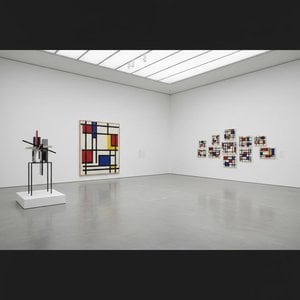
Et vendepunkt kom i 1912 med Mondrians flytting til Paris. Byen pulserte av avantgarde-energi, og han befant seg fordypet i den revolusjonerende verdenen av kubismen. Dette møtet viste seg å være transformativt. Han begynte å dekonstruere former, bryte ned objekter i deres geometriske komponenter, bevege seg bort fra å skildre *hva* han så mot å utforske *hvordan* han så det. Men Mondrian adopterte ikke bare en ny stil; han begikk seg på et spirituelt søk. Dypt påvirket av teosofi – en mystisk filosofi som understreker underliggende universelle prinsipper – trodde han at kunsten kunne være et middel for å uttrykke disse skjulte sannhetene. Denne troen drev hans nådeløse jakt etter abstraksjon, og drev ham til å redusere farge og form til deres mest grunnleggende elementer. Rundt 1917 kulminerte denne reisen i formuleringen av neoplastisismen, ofte referert til som ‘ren plastisk kunst’. Det var en radikal estetikk basert på essensielle former – rette linjer, rette vinkler – og et begrenset fargevalg: primærfarger (rød, blå, gul), svart, hvitt og grå. For Mondrian handlet denne reduksjonen ikke om tomhet; det handlet om å avsløre universets underliggende harmoni, en visuell manifestasjon av spirituell orden. Han var med på å grunnlegge *De Stijl*-bevegelsen sammen med Theo van Doesburg for å fremme disse ideene, og befeste neoplastisismen som en definerende kraft i moderne kunst. Mesterverk som *Komposisjon med rød, blå og gul* og *Tableau nr. 2 Komposisjon nr. V* står som vitnesbyrd om denne perioden, ikoniske representasjoner av hans urokkelige engasjement for geometrisk renhet.
New York-rytmer: En Senblomstring
Utbruddet av andre verdenskrig tvang Mondrian til å flykte fra Europa i 1940 og finne tilflukt i den travle metropolen New York City. Denne omplasseringen viste seg uventet stimulerende. Byens rigide rutenett – en skarp kontrast til de mer organiske landskapene han hadde kjent – resonerte med hans kunstneriske prinsipper. Hans senere verk, mest bemerkelsesverdig *Broadway Boogie Woogie* (1943), gjenspeiler denne innflytelsen. Mens han beholdt kjerneelementene i neoplastisismen, introduserer maleriet en dynamisk energi, en levende rytme inspirert av byens pulserende liv og jazzmusikk. De rette linjene er fortsatt til stede, men de danser og krysser nå med større frihet, og skaper en følelse av bevegelse og glede. Det var som om Mondrian hadde funnet et nytt språk innenfor sitt etablerte vokabular, en måte å uttrykke kompleksiteten i moderne urbane eksistens gjennom enkelheten i geometrisk abstraksjon. Han fortsatte å forfine sin stil til sin død i 1944 og etterlot seg et verk som fortsetter å fange og inspirere.
En Varig Arv: Mondrians Vedvarende Innflytelse
Piet Mondrians innvirkning på kunstverdenen er umålelig. Han var ikke bare en kunstner; han var en visjonær som fundamentalt endret vår forståelse av abstraksjon og dens potensial for å uttrykke universelle sannheter. Hans arbeid har dypt påvirket utallige kunstnere, bevegelser og disipliner. Abstrakt ekspresjonisme, minimalisme og Color Field-maleri skylder alle en gjeld til hans banebrytende ånd. Men hans innflytelse strekker seg langt utover lerretet. Prinsippene i neoplastisismen – enkelhet, klarhet, geometrisk orden – har gjennomtrengt arkitektur, design og mote. Fra møbler og tekstiler til bygningsfasader og grafiske layouter fortsetter Mondrians estetikk å forme vår visuelle verden. Han er fortsatt en ikonisk figur i moderne kunst, et symbol på den nådeløse jakten etter abstraksjon og den varige kraften i kunstnerisk innovasjon. Som designhistoriker Stephen Bayley treffende bemerket, har Mondrian blitt et “totem for alt modernismen satte seg fore å være.” Hans arv er ikke bare en av estetisk skjønnhet, men av intellektuell strenghet, spirituell dybde og en urokkelig tro på kunstens transformative potensial.
Innflytelser og Nøkkelverk
- Tidlige Innflytelser: Haag-skolen, nederlandsk impresjonisme, pointillisme, fauvisme ga et grunnlag for hans innledende kunstneriske utforskninger.
- Transformativ Innflytelse: Kubismen i Paris var avgjørende for hans skifte mot abstraksjon og geometriske former.
- Filosofisk Grunnlag: Teosofi informerte dypt hans tro på at kunst kunne uttrykke universelle spirituelle prinsipper.
- Nøkkelverk: *Den røde møllen* (tidlig naturalistisk periode), *Komposisjon med rød, blå og gul* (essensiell neoplastisisme), *Tableau nr. 2 Komposisjon nr. V* (demonstrerer reduksjonen til essensielle former), *Broadway Boogie Woogie* (senblomstring dynamikk påvirket av New York City).
- Varig Innflytelse: Mondrians arbeid fortsetter å inspirere kunstnere, arkitekter og designere, og forme moderne estetikk på tvers av ulike disipliner.
Hans estetiske prinsipper strakte seg utover maleri for å påvirke arkitektur, design og mote. Han er fortsatt en ikonisk figur i moderne kunst, som representerer jakten etter abstraksjon og universell harmoni.



 Se i rommet
 Bestill håndmalt reproduksjon
 Del som digitalt kort
 Del
Del
 Detaljer
 Studentguide

 Last ned
 Liknende objekter
 Røntgen
 Lysbildefremvisning
 Besøksstatistikk
 Les mer






































 Glassalternativet er kun tilgjengelig i størrelser under 110 cm