Om kunstneren
A Renaissance Master of Saxony: The Life and Art of Lucas Cranach the Elder
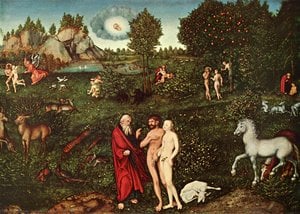
Lucas Cranach den eldre, født rundt 1472 i Kronach, er en sentral figur i den tyske renessansen. Hans liv utfoldet seg under en periode med enorm religiøs og politisk omveltning, og hans kunst ble uadskillelig knyttet til både den voksende protestantiske reformasjonen og de overdådige rettene han tjente. I utgangspunktet ble han trent av sin far, Hans Maler, men hans tidlige kunstnerutvikling er i dag noe skjult i mystikk, selv om man ser innflytelser fra sør-tyske mestere i hans utviklende stil. Han skilte seg raskt ut ikke bare som en dyktig håndverker, men også som en kunstner i stand til å fange psykologisk dybde ved siden av teknisk presisjon – kvaliteter som snart tiltrakk seg oppmerksomheten til mektige mecenater. I 1504 gikk han inn i tjentjeneste hos Fredrik III, elektoren av Sachsen, et forhold som definerte mye av hans karriere og ga ham både stabilitet og tilgang til innflytelsesrike kretser. Denne utnevnelsen som hoffmaler i Wittenberg var ikke bare for å produsere dekorative verk; det plasserte Cranach midt i en av de mest transformatoriske bevegelsene i europeisk historie.
Patronage, Reformation, and Artistic Innovation
Cranachs posisjon innen den saksiske retten var ikke bare viktig for hans levebrød, men også for hans kunstnerutvikling. Han dokumenterte ikke bare hendelser; han formet aktivt visuelle narrativer i en tid med dypgående endring. Hans mest vedvarende arv er sannsynligvis hans nære tilknytning til Martin Luther, den sentrale figuren i den protestantiske reformasjonen. Cranach skapte ingen færre enn elleve portretter av Luther, hver som gir et unikt innblikk i reformatorens personlighet og utviklende rolle. Disse var ikke bare likheter; de var nøye konstruerte bilder designet for å projisere autoritet, fromhet og intellektuell styrke – essensielle kvaliteter for en leder som utfordret den etablerte religiøse ordenen. Ut over portrettkunst skapte Cranach visuelle uttrykk for reformasjonen, produserte trykk og malerier som spredde protestantiske ideer bredt. Hans fremstillinger av bibelske scener forlot tradisjonell katolsk ikonografi og understreket direkte engasjement med Skriften, og fremmet en mer personlig relasjon mellom betrakteren og troen. Annunciation to Joachim, for eksempel, utstråler en glede som gjenspeiler den nye vektleggingen av individuell fromhet i den reformerte kirken. Denne innovative tilnærmingen strekte seg utover religiøse motiver; Cranachs mytologiske malerier, som fremstillinger av Venus og andre klassiske figurer, bar ofte allegoriske betydninger relevante for aktuelle politiske og sosiale spørsmål.
A Workshop Dynasty: Style and Technique
Lucas Cranach den eldre var ikke en isolert kunstner som arbeidet i isolasjon. Han drev et bemerkelsesverdig produktivt verksted, hvor han ansatte mange assistenter og lærlinger som bidro betydelig til hans utgangspunkt. Denne samarbeidsmessige tilnærmingen betød at mange arbeider tilskrevet Cranach faktisk ble produsert under hans veiledning eller av medlemmer av hans sirkel – inkludert hans sønn, Lucas Cranach den yngre. Cranach-verkstedet ble kjent for sin distinkte stil: elegante figurer med utstrakte proporsjoner, livlige farger og nøye oppmerksomhet på detaljer. Hans teknikk involverte en kombinasjon av oljemaling, treblokktrykk og messingtrykk, noe som tillot ham å nå et bredt publikum gjennom både originale kunstverk og rimelige trykk. Stag Hunt of Elector Friedrich III the Wise illustrerer hans mesterskap i den nord-tyske renessansestilen, og viser detaljert realisme ved siden av nobel symbolikk. Komposisjonen er dynamisk, og fanger energien i jakten samtidig som den formidler elektorens makt og status. Cranachs bruk av lys og skygge skaper en følelse av dybde og atmosfære, og trekker betrakteren inn i scenen. Hans portretter er like overbevisende, karakterisert ved deres psykologiske innsikt og raffinerte utførelse.
Early Life and Training
Lucas Cranach ble født Lucas Maler, og var den eldste av Hans Malers ni barn. Sannsynligvis mottok Lucas sin første kunstneriske utdannelse fra sin far, Hans Maler, deretter er det rimelig å anta at han reiste rundt som lærling hos sør-tyske malere, slik tilfellet var for hans samtidige Matthias Grünewald. I 1501 reiste Cranach som 29 år gammel mann til Wien og ble der til 1504. Malerier fra denne tiden viser tydelige spor av innflytelse fra Donauskolen. I Wien knyttet han de første kontaktene med ledende humanister. Allerede mot slutten av oppholdet i Wien signerte Cranach bildene med Lucas Cranach (dvs Lucas (fra) Kronach). Rundt 1505 gikk han inn i tjentjeneste hos Fredrik den vise, elektoren av Sachsen, en posisjon han okkuperte nesten uten avbrudd til sin død. Han flyttet til Wittenberg hvor hans oppgaver ikke bare inkluderte produksjon av malerier, graveringer og treblokktrykk, men også omfattet alt fra design og utførelse av dekorative skjemaer til overvåking av håndverkere og utsmykning av brylluper, turneringer og andre rettssamlinger. Kort sagt var Cranach ansvarlig for nesten hele den estetiske atmosfæren i retten. For å møte disse omfattende kravene etablerte han et verksted, som opprinnelig befant seg i Wittenberg slott og senere flyttet til lokaler i byen. I 1508 utnevnte elektoren ham til å bruke en bevinget slange med en rubinring i snuten som familievåpen. På et tidlig tidspunkt identifiserte Cranach sin kunstneriske produksjon med retten og brukte dette seglet som godkjennelse på malerier produsert av ham selv og hans utvoksende verksted. Samme år reiste han i diplomatisk tjeneste for elektoren til Nederlandene, hvor han besøkte rettssamlingen i Mechelen under Margaret av Østerrike. Her møtte han den romerske keiseren Maximilian I ved seremoniell sverge av sin etterfølger, den åtteårige arveprins Charles, senere Karl V. Flere år senere ble Maximilian I sammen med kunstneren Albrecht Dürer bedt om å illustrere hans bibel.
Legacy and Historical Significance
Lucas Cranach den eldre døde i 1553, og etterlot seg en ekstraordinær kunstnerisk arv som fortsatt resonerer i dag. Han var en mester i portrettkunst, en dyktig tolk av religiøse temaer og en skarp forretningsmann som forsto kraften i visuell kommunikasjon. Hans verk reflekterer ikke bare den kulturelle og intellektuelle strømningen i sin tid, men hjalp også med å forme dem. Cranach-verkstedet blomstret videre etter hans død, og sikret at hans stil og teknikker ble videreført i flere generasjoner. Hans innflytelse kan sees i arbeidet til mange senere kunstnere, og hans malerier er fortsatt høyt ettertraktet av samlere og museer over hele verden. Fra de ikoniske portrettene av Martin Luther til de fengslende mytologiske scenene tilbyr Cranachs kunst et fascinerende innblikk i den tyske renessansen – en tid preget av både dyp åndelig tvil og kunstnerisk innovasjon. Hans evne til å blande religiøs lidenskap, politisk skarphet og kunstnerisk talent sikret ham en plass blant de viktigste artistene på sin tid, og hans bidrag fortsetter å inspirere og fange publikum i århundrene som følger.



 Forhåndsvisning
 Kjøp håndlaget maleri
 Send
Send Del med andre
 Vis detaljer
 Veiledning

 Last ned bildet
 Liknende objekter
 Røntgenundersøkelse
 Lysbildefremvisning
 Statistikk


 Vis hele teksten






































 Glassalternativet er kun tilgjengelig i størrelser under 110 cm