Se i rommet Se i AR Bestill håndmalt reproduksjon Gå til digitalt bilde Del som digitalt kort
Detaljer Studentguide Legg til i favoritter Last ned Liknende objekter Røntgen Lysbildefremvisning Besøksstatistikk

Man

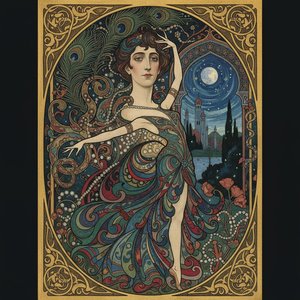
Léon Bakst Delve into Léon Bakst’s masterful depiction of a man—a striking Cubist portrait reflecting the Ballets Russes aesthetic. Explore textures, form, and color in this iconic piece.

Léon Bakst (1866-1924) var en russisk kunstner kjent for sine revolusjonerende kostymedesigner og scenografi for Ballets Russes, som blandet Art Nouveau med orientalske elementer og endret teaterdesign for alltid.

Giclée / Kunsttrykk

Giclée- eller lerretsprint av museumskvalitet med rask produksjon og fleksible valgmuligheter for etterbehandling. ( Bestill håndmalt reproduksjon Gå til digitalt bilde)

Corner sample of the P118B picture frame: støpt polystyren, 5 cm wide and 3 cm thick
P118B Nkr10
Corner sample of the P118H picture frame: støpt polystyren, 5 cm wide and 3 cm thick
P118H Nkr10
Corner sample of the P118W picture frame: støpt polystyren, 5 cm wide and 3 cm thick
P118W Nkr10
Corner sample of the P438Z picture frame: støpt polystyren, 5.5 cm wide and 3.5 cm thick
P438Z Nkr10
Corner sample of the P508JH picture frame: støpt polystyren, 7 cm wide and 3.5 cm thick
P508JH Nkr12
Corner sample of the P508YH picture frame: støpt polystyren, 7 cm wide and 3.5 cm thick
P508YH Nkr12
Corner sample of the P805H picture frame: støpt polystyren, 5 cm wide and 3.5 cm thick
P805H Nkr10
Corner sample of the P805Z picture frame: støpt polystyren, 5 cm wide and 3.5 cm thick
P805Z Nkr10
Corner sample of the P919BZ picture frame: støpt polystyren, 7 cm wide and 3.5 cm thick
P919BZ Nkr10
Corner sample of the P919G picture frame: støpt polystyren, 7 cm wide and 3.5 cm thick
P919G Nkr10
Corner sample of the P919XJ picture frame: støpt polystyren, 7 cm wide and 3.5 cm thick
P919XJ Nkr10
Corner sample of the P959ZH picture frame: støpt polystyren, 5 cm wide and 3 cm thick
P959ZH Nkr10
Corner sample of the P968JZ picture frame: støpt polystyren, 6 cm wide and 4 cm thick
P968JZ Nkr12
Corner sample of the W106C picture frame: massivt tre, 5 cm wide and 3 cm thick
W106C Nkr8
Corner sample of the W218G picture frame: massivt tre, 5 cm wide and 3 cm thick
W218G Nkr10
Corner sample of the W218JH picture frame: massivt tre, 5 cm wide and 3 cm thick
W218JH Nkr8
Corner sample of the W218Y picture frame: massivt tre, 5 cm wide and 3 cm thick
W218Y Nkr10
Corner sample of the W307PJ picture frame: massivt tre, 6 cm wide and 3 cm thick
W307PJ Nkr10
Corner sample of the W316G picture frame: massivt tre, 6 cm wide and 3 cm thick
W316G Nkr10
Corner sample of the W316PJ picture frame: massivt tre, 6 cm wide and 3 cm thick
W316PJ Nkr8
Corner sample of the W316Y picture frame: massivt tre, 6 cm wide and 3 cm thick
W316Y Nkr10
Corner sample of the W398PJ picture frame: massivt tre, 5 cm wide and 3 cm thick
W398PJ Nkr8
Corner sample of the W4111J picture frame: massivt tre, 6.5 cm wide and 3.5 cm thick
W4111J Nkr10
Corner sample of the W500HY picture frame: massivt tre, 7 cm wide and 5 cm thick
W500HY Nkr15
Corner sample of the W500JH picture frame: massivt tre, 7 cm wide and 5 cm thick
W500JH Nkr15
Corner sample of the W692G picture frame: massivt tre, 8 cm wide and 4 cm thick
W692G Nkr12
Corner sample of the W849H picture frame: massivt tre, 5 cm wide and 3 cm thick
W849H Nkr8
Corner sample of the W940BG picture frame: massivt tre, 7.5 cm wide and 4.5 cm thick
W940BG Nkr15
Corner sample of the W953PJ picture frame: massivt tre, 6 cm wide and 3.5 cm thick
W953PJ Nkr8

Standardformat
tilpasset
CM
INCH

Velg mellom våre forhåndsdefinerte størrelser som bevarer kunstverkets opprinnelige proporsjoner.

bredde
høyde

Du kan oppgi egne mål for å tilpasse en spesifikk ramme eller et bestemt område. Dersom den valgte størrelsen ikke samsvarer med det originale bildets proporsjoner, vil vi enten beskjære kunstverket eller utvide bildet med en speilet eller ensfarget kant. En digital mockup vil bli sendt til din godkjenning før produksjonen starter.
Vennligst merk at forhåndsvisningen på skjermen ikke gjenspeiler den faktiske beskjæringen eller utvidelsen. Kun mockuppen vil vise den endelige komposisjonen nøyaktig.
Selv om tilpassede størrelser er tilgjengelige, anbefaler vi å velge et mål fra den forhåndsdefinerte listen for å bevare de originale proporsjonene.

Verdensomspennende levering () på 2 uker i stedet for standard 4/5 uker. (12 October)

Gratis ekspressfrakt over hele verden
Lerretsduk av høykvalitets lin
Full transportforsikring
Garanti for refusjon av toll og importavgifter
Garantert fargeekthet
100 dagers returrett ved fabrikasjonsfeil
100% pengene tilbake-garanti
Mengderabatt

Totalpris

Nkr 632

Man

Giclée / Kunsttrykk

Format på reproduksjon

-

Totalpris

Nkr 632

Kort om verket

  • Notable elements or techniques: Fragmented forms & dynamic composition
  • Influences: Russian Avant-garde
  • Artistic style: Stylized portraiture
  • Movement: Cubism
  • Location: Private Collection

Kunstquiz

Det er kun ett riktig svar på hvert spørsmål.

Spørsmål 1:
What artistic movement is Léon Bakst’s ‘Man’ primarily associated with?
Spørsmål 2:
The photograph depicts a man wearing attire reminiscent of what historical period?
Spørsmål 3:
Bakst created ‘Man’ for which influential theatrical company?
Spørsmål 4:
What stylistic technique is evident in the depiction of the man’s clothing and background?
Spørsmål 5:
Considering Bakst's artistic influences, where would one find similar stylistic approaches?

A Fragmented Reflection: Examining Léon Bakst’s “Man”

Léon Bakst's "Man," created in 1910, stands as a striking testament to the burgeoning Cubist movement and its influence on theatrical design. Captured in a monochrome photograph—a deliberate choice reflecting the aesthetic sensibilities of the era—the image depicts a solitary figure rendered with fractured geometric forms against a muted backdrop. This seemingly simple composition belies a profound exploration of artistic innovation and psychological depth, encapsulating the spirit of Ballets Russes’ ambitious undertaking to redefine ballet as an art form.

The Cubist Influence: Breaking Down Reality

Bakst's approach aligns seamlessly with the core tenets of Cubism pioneered by Pablo Picasso and Georges Braque. Rather than striving for realistic representation—a hallmark of Impressionism—Cubists sought to depict subjects from multiple viewpoints simultaneously, fracturing them into interlocking planes that challenged conventional perceptions of space and form. In “Man,” this is evident in the deliberate distortion of the figure’s torso and limbs, presenting a fragmented portrait that prioritizes conceptual exploration over visual accuracy. The artist skillfully employs geometric shapes—primarily cubes and rectangles—to construct the man's body, mirroring the broader Cubist preoccupation with dissecting and reconstructing reality.

A Stage for Innovation: Context Within Ballets Russes

“Man” wasn’t merely an artistic exercise; it served as a crucial element within Sergei Diaghilev’s groundbreaking Ballets Russes productions. Diaghilev, a visionary impresario determined to elevate ballet beyond mere entertainment, assembled an unparalleled roster of artists—including Picasso, Matisse, Nijinsky, and Vasili Kandinsky—to collaborate on projects that pushed the boundaries of artistic expression. Bakst's costume design for “Schéhérazade,” inspired by Prospero Merimée’s novella, exemplifies this collaborative spirit. The costume itself—a brown outfit accented with a green vest—was conceived as a visual embodiment of the narrative’s themes of illusion and transformation, mirroring the fractured perspective adopted in the artwork.

Symbolism Beyond Geometry: Hints of Emotion

Despite its geometric rigidity, “Man” possesses an understated emotional resonance. The muted color palette—primarily shades of brown and gray—contributes to a sense of solemn contemplation, inviting viewers to consider the figure’s inner state alongside his external appearance. The pose itself—hands behind his back—suggests confidence yet also conveys a subtle vulnerability, hinting at unspoken anxieties or aspirations. These nuances underscore Bakst's mastery in conveying psychological complexity through formal innovation, demonstrating that Cubism wasn’t solely concerned with geometric abstraction but also with capturing the essence of human experience.

A Legacy Enduring: Inspiration for Interior Design

Today, reproductions of “Man” offer a captivating glimpse into the artistic fervor of the early 20th century and provide valuable inspiration for interior designers seeking to infuse their spaces with intellectual curiosity and stylistic sophistication. The artwork’s geometric abstraction—a cornerstone of Cubism—translates beautifully into minimalist patterns and textures, creating harmonious compositions that celebrate simplicity and elegance. Consider incorporating shades reminiscent of Bakst's palette—earthy browns and muted greens—to evoke the moodiness and contemplative spirit of this iconic masterpiece.

Spørsmål og svar

Hvem selger håndmalte kopier av "Man" av Léon Bakst?

Du kan bestille en håndmalt reproduksjon av "Man" av Léon Bakst direkte på denne siden: en håndmalt oljereproduksjon på linlerret, laget på bestilling.

Oppbevares "Man" av Léon Bakst i kunstnerens hjemland?

Nei – kunstverket oppbevares i utlandet. Kunstneren ble født i Belarus; det originale verket befinner seg i United States of America.

Hvem har skapt "Man", og hvilken stil er det i?

Léon Bakst skapte "Man" innenfor Cubist Portrait-bevegelsen.

Er "Man" fri for opphavsrett?

"Man" av Léon Bakst er i det frie domene – opphavsretten har utløpt. Denne statusen avgjør hvordan bildet av verket kan reproduseres.

Hvilken fargeharmoni utviser "Man" av Léon Bakst?

"Man" av Léon Bakst viser en Strong Color Unity fargeharmoni.

Hvilken orientering har "Man" av Léon Bakst?

"Man" av Léon Bakst har et Portrait-format. Formatet beskriver komposisjonens proporsjoner.

Hvilket oppsett for trykk anbefales for "Man" av Léon Bakst?

Large størrelse, Portrait orientering: dette er den anbefalte trykkinnstillingen for "Man" av Léon Bakst.

Hva anbefales en reproduksjon av "Man" av Léon Bakst til?

Anbefalt bruk av et trykk av "Man" er Accent.


Kunstnerbiografi

Early Life and the Seeds of Artistic Rebellion

Léon Bakst, originally named Lev Samoylovich Rosenberg, was born in Grodno, a city within the Russian Empire (now part of Belarus) on May 10, 1866. His upbringing was rooted in a modest Jewish family, yet he benefited from connections to the imperial court through his grandfather, a respected tailor who had gained favor with Tsar Alexander III. This familial background instilled in young Lev a keen awareness of cultural nuances and an early fascination with drawing—a talent that quickly manifested itself when he won a competition at just twelve years old. However, this burgeoning artistic inclination initially faced resistance from his parents, who were hesitant to embrace such an unconventional path for their son. Despite their reservations, Bakst persevered, ultimately enrolling in the prestigious St. Petersburg Academy of Arts as a non-credit student while simultaneously earning income through illustration work—a practical necessity that honed his skills and provided financial independence. This early experience instilled in him a pragmatic approach to art, balancing formal training with real-world application. It was in 1889 that he adopted the surname “Bakst,” a deliberate choice motivated by concerns about potential prejudice against Jewish individuals within a society often marked by antisemitism—a strategic decision reflecting the challenges faced by artists from marginalized communities during that era.

The World of Art and Embracing Modernity

Bakst’s artistic development truly blossomed through his involvement in the influential “World of Art” movement, a collective dedicated to exploring new aesthetic possibilities and challenging traditional artistic conventions. He swiftly became a pivotal figure alongside luminaries such as Sergei Diaghilev and Alexandre Benois, contributing significantly to the group's eponymous periodical, *Mir iskusstva* (The World of Art). This association brought him widespread recognition and firmly established him as a rising star within Russia’s vibrant artistic circles. His early works encompassed compelling portraits of prominent figures—including Filipp Maljavin, Vasily Rozanov, Andrei Bely, and Zinaida Gippius—demonstrating his ability to capture not only physical likeness but also the intellectual and emotional essence of his subjects. Bakst's style during this period was a fascinating synthesis of Russian artistic traditions with burgeoning European influences—particularly Orientalism and early Modernism. He embraced vibrant colors, exotic themes, and stylized forms, foreshadowing the revolutionary aesthetic he would later bring to the stage. This willingness to experiment and synthesize diverse influences marked him as an artist attuned to the shifting currents of his time. His work began to whisper of a new visual language, one that moved beyond strict representation toward evocative suggestion.

Revolutionizing Ballet with the Ballets Russes

The pivotal moment in Bakst’s career arrived in 1908 when he began designing sets and costumes for theatrical productions—a transformative shift that would forever alter the landscape of stage design. His collaboration with Sergei Diaghilev's Ballets Russes proved revolutionary, catapulting both artists to international fame. Bakst’s designs were groundbreaking; they moved away from realistic depictions, embracing stylized forms, bold colors, and a sense of opulent fantasy. Productions like *Cleopatra*, *Scheherazade* (1910)—arguably his most iconic work—*Carnaval* (1910), *Narcisse* (1911), and particularly *L’Après-midi d'un Faune* (1912) became legendary for their visual splendor. L’Après-midi d'un Faune, in particular, was a seminal work that profoundly influenced the development of ballet and stage design, establishing a new aesthetic language for the art form. He didn’t merely create backdrops; he constructed immersive worlds that heightened the emotional impact of the choreography and music. The costumes were equally innovative, often incorporating exotic fabrics, shimmering embellishments, and daring silhouettes that challenged conventional notions of theatrical attire. Bakst's designs weren't simply decorative; they actively contributed to the narrative and atmosphere of each production, creating a holistic artistic experience for the audience.

Legacy and Enduring Influence

Léon Bakst’s legacy extends far beyond his contributions to ballet. He is rightfully considered one of the most important figures in the history of theatrical design, significantly impacting both set and costume creation for generations to come. His designs also contributed to the development of the Art Deco style with their emphasis on stylized forms, rich colors, and exotic themes—a testament to his far-reaching influence on visual culture. Despite facing some criticism during his lifetime for perceived extravagance, Bakst’s work was widely celebrated, and his funeral in 1924 was attended by a remarkable gathering of prominent artists, poets, musicians, dancers, and critics—a poignant demonstration of the esteem in which he was held. Today, his artwork can be found in museums worldwide and continues to inspire through reproductions available on platforms like WahooArt.com, ensuring that his innovative spirit and artistic vision endure for audiences around the globe. Bakst’s ability to synthesize diverse influences, embrace experimentation, and create visually stunning worlds cemented his place as a true visionary of the 20th century.
  • A master of color and composition.
  • Pioneered new approaches to theatrical design.
  • Influenced Art Deco aesthetics.

Key Works

* **Cleopatra (1909):** A lavish production showcasing Bakst’s ability to create opulent sets and costumes that evoked the grandeur of ancient Egypt. * **Scheherazade (1910):** A visually stunning ballet inspired by *One Thousand and One Nights*, demonstrating Bakst's mastery of exotic themes and vibrant color palettes. * **Carnaval (1910):** A celebration of Parisian nightlife, featuring a playful and dynamic design that captured the spirit of the era. * **Narcisse (1911):** A ballet exploring themes of love and illusion, showcasing Bakst’s innovative use of form and color to create a dreamlike atmosphere. * **L'Après-midi d'un Faune (1912):** A groundbreaking ballet that redefined the possibilities of stage design, establishing a new visual language for modern dance.

Léon Bakst

Léon Bakst

1866 - 1924 , Belarus

Kort om kunstneren

  • Artistic Movement Or Style: Art Nouveau, Orientalisme
  • Artists Or Movements Influenced By This Artist: ['Ballets Russes']
  • Date Of Birth: 1866
  • Date Of Death: 1924
  • Full Name: Léon Bakst
  • Nationality: Russisk
  • Notable Artworks:
    • Scheherazade
    • L'Après-midi d'un Faune
    • Cleopatra
  • Place Of Birth: Grodno, Belarus
Utforsk kunstverk organisert etter temaer, stiler og kjennetegn.