Se i rommet Se i AR Bytt til trykkversjon Gå til digitalt bilde Del som digitalt kort
Detaljer Studentguide Legg til i favoritter Last ned Liknende objekter Røntgen Lysbildefremvisning Besøksstatistikk

Composition

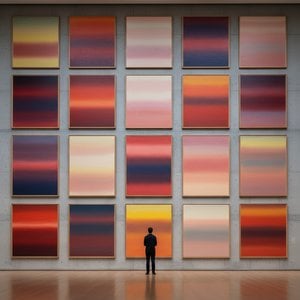
Kazimir Malevich’s "Composition" (1932) is a dynamic abstract painting featuring layered stripes & bold colors. Explore this Expressionistic/Constructivist masterpiece – a key work of 20th-century art.

Kazimir Malevich (1878-1935): Ukrainsk pioner innen abstrakt kunst & Suprematism. Oppdag ikoniske verk som Svart kvadrat, geometriske former og ren følelseskraftens innflytelse på 20. århundrets kunst.

Håndlaget oljereproduksjon

Håndmalt olje på lerret i din valgte størrelse og ramme, laget på bestilling av våre kunstnere. ( Bytt til trykkversjon Gå til digitalt bilde)

Corner sample of the P118B picture frame: støpt polystyren, 5 cm wide and 3 cm thick
P118B Nkr10
Corner sample of the P118H picture frame: støpt polystyren, 5 cm wide and 3 cm thick
P118H Nkr10
Corner sample of the P118W picture frame: støpt polystyren, 5 cm wide and 3 cm thick
P118W Nkr10
Corner sample of the P438Z picture frame: støpt polystyren, 5.5 cm wide and 3.5 cm thick
P438Z Nkr10
Corner sample of the P508JH picture frame: støpt polystyren, 7 cm wide and 3.5 cm thick
P508JH Nkr12
Corner sample of the P508YH picture frame: støpt polystyren, 7 cm wide and 3.5 cm thick
P508YH Nkr12
Corner sample of the P805H picture frame: støpt polystyren, 5 cm wide and 3.5 cm thick
P805H Nkr10
Corner sample of the P805Z picture frame: støpt polystyren, 5 cm wide and 3.5 cm thick
P805Z Nkr10
Corner sample of the P919BZ picture frame: støpt polystyren, 7 cm wide and 3.5 cm thick
P919BZ Nkr10
Corner sample of the P919G picture frame: støpt polystyren, 7 cm wide and 3.5 cm thick
P919G Nkr10
Corner sample of the P919XJ picture frame: støpt polystyren, 7 cm wide and 3.5 cm thick
P919XJ Nkr10
Corner sample of the P959ZH picture frame: støpt polystyren, 5 cm wide and 3 cm thick
P959ZH Nkr10
Corner sample of the P968JZ picture frame: støpt polystyren, 6 cm wide and 4 cm thick
P968JZ Nkr12
Corner sample of the W106C picture frame: massivt tre, 5 cm wide and 3 cm thick
W106C Nkr8
Corner sample of the W218G picture frame: massivt tre, 5 cm wide and 3 cm thick
W218G Nkr10
Corner sample of the W218JH picture frame: massivt tre, 5 cm wide and 3 cm thick
W218JH Nkr8
Corner sample of the W218Y picture frame: massivt tre, 5 cm wide and 3 cm thick
W218Y Nkr10
Corner sample of the W307PJ picture frame: massivt tre, 6 cm wide and 3 cm thick
W307PJ Nkr10
Corner sample of the W316G picture frame: massivt tre, 6 cm wide and 3 cm thick
W316G Nkr10
Corner sample of the W316PJ picture frame: massivt tre, 6 cm wide and 3 cm thick
W316PJ Nkr8
Corner sample of the W316Y picture frame: massivt tre, 6 cm wide and 3 cm thick
W316Y Nkr10
Corner sample of the W398PJ picture frame: massivt tre, 5 cm wide and 3 cm thick
W398PJ Nkr8
Corner sample of the W4111J picture frame: massivt tre, 6.5 cm wide and 3.5 cm thick
W4111J Nkr10
Corner sample of the W500HY picture frame: massivt tre, 7 cm wide and 5 cm thick
W500HY Nkr15
Corner sample of the W500JH picture frame: massivt tre, 7 cm wide and 5 cm thick
W500JH Nkr15
Corner sample of the W692G picture frame: massivt tre, 8 cm wide and 4 cm thick
W692G Nkr12
Corner sample of the W849H picture frame: massivt tre, 5 cm wide and 3 cm thick
W849H Nkr8
Corner sample of the W940BG picture frame: massivt tre, 7.5 cm wide and 4.5 cm thick
W940BG Nkr15
Corner sample of the W953PJ picture frame: massivt tre, 6 cm wide and 3.5 cm thick
W953PJ Nkr8

Standardformat
tilpasset
CM
INCH

Velg mellom våre forhåndsdefinerte størrelser som bevarer kunstverkets opprinnelige proporsjoner.

bredde
høyde

Skriv inn bredden og høyden du trenger, slik at den passer til din ramme eller vegg. Dette er håndmalt, så for en størrelse med en annen form kan kunstneren male litt mer rundt bildet, eller beskjære det noe — du velger selv. Vi sender deg en digital mockup for godkjenning før maleriet påbegynnes. Bildet som vises på denne siden viser ikke det faktiske resultatet — kun mockuppen gjør det.

Eksempler på hva som kan endres: Erstatt ansikt med bilde av kunden; Legg til kjæledyr (f.eks. bytt ut katt med hund); Inkluder en skjult melding i bakgrunnen; Endre bakgrunnslandskap eller elementer.
Etter bestilling vil WahooArt.com-teamet sende e-post til kunden for instruksjoner og sende et utkast (mockup) som forhåndsvisning.

Verdensomspennende levering () på 3–4 uker i stedet for standard 5 uker. (26 October). Ingen kompromisser med kvaliteten.

Gratis ekspressfrakt over hele verden
Lerretsduk av høykvalitets lin
Full transportforsikring
Garanti for refusjon av toll og importavgifter
Garantert fargeekthet
100 dagers returrett ved fabrikasjonsfeil
100% pengene tilbake-garanti
Mengderabatt

Totalpris

Nkr 2586

Composition

Reproduksjonsmetode

Format på reproduksjon

-

Totalpris

Nkr 2586

Kort om verket

  • medium: Oil paints on canvas (likely)
  • year: 1932
  • artist: Kazimir Severinovich Malevich
  • movement: Suprematism, Expressionism, Constructivism

Kunstquiz

Det er kun ett riktig svar på hvert spørsmål.

Spørsmål 1:
Kazimir Malevich is most famously associated with which art movement?
Spørsmål 2:
What is a defining characteristic of the technique used in 'Composition'?
Spørsmål 3:
The composition primarily utilizes what type of lines?
Spørsmål 4:
Which of the following stylistic influences is *not* explicitly mentioned in relation to Malevich's work?

A Symphony of Abstraction: The Pure Sensation of Malevich’s ‘Composition’

To step before Kazimir Malevich's 1932 Composition is to enter a realm where the noise of the material world falls into a profound, rhythmic silence. This horizontal masterpiece does not seek to mirror the landscapes or faces of our daily existence; instead, it invites the viewer into a universe of pure artistic sensation. As a pinnacle of his mature Suprematist style, the work functions as a visual symphony, where color and form dance in a carefully orchestrated tension. It is an exploration of the non-objective, stripping away the skin of reality to reveal a skeletal truth composed entirely of energy, weight, and movement.

The painting is defined by a captivating interplay of layered, rectangular stripes that vary in width and intensity. These are not merely flat bands of pigment but are perceived as dynamic planes existing within a shallow, compressed pictorial space. By deliberately minimizing traditional perspective, Malevich pushes the composition forward, demanding an immediate, visceral engagement from the observer. The eye is drawn into a rhythmic pulse created by the overlapping edges, where the boundaries between shapes become sites of subtle conflict and unexpected harmony.

A Palette of Emotion and Tactile Depth

The emotional resonance of the piece is anchored in its masterful use of color. Malevich employs a bold palette—dominated by deep reds, vibrant greens, cool blues, sun-drenched yellows, and grounding blacks—not to mimic nature, but to evoke a spectrum of human feeling. The juxtaposition of these hues creates a sense of kinetic energy; certain stripes seem to vibrate against their neighbors, while others provide moments of structural stability. This chromatic tension is further heightened by the artist's signature impasto technique. The thick, deliberate application of oil paint lends the canvas a rugged, tactile quality that transforms the surface into a sculptural landscape of its own.

For the discerning collector or interior designer, this texture offers a profound sense of authenticity and presence. The visible brushstrokes serve as a poignant reminder of the artist’s hand, ensuring that the work feels deeply personal rather than mechanically produced. When placed within a modern architectural setting, the interplay of light across these raised ridges of paint creates a living composition that changes with the time of day, offering a sophisticated focal point that embodies both strength and elegance.

Historical Resonance and Modern Legacy

Understanding Composition requires a glimpse into the revolutionary spirit of its era. Emerging from the transformative atmosphere of the Russian avant-garde, Malevich sought to create an art form that reflected a new, utopian world order. Through Suprematism, he believed that geometric abstraction could transcend political and social boundaries to express a universal spirituality. This work represents a radical break from centuries of representational tradition, standing as a monument to the courage of the modern spirit.

Today, this painting remains a cornerstone of abstract art history, offering endless inspiration for those who appreciate the beauty of structural order and emotional depth. Whether serving as a bold statement in a minimalist gallery or adding a layer of intellectual complexity to a curated residential space, Malevich’s Composition continues to captivate. It is more than a painting; it is an invitation to experience the sublime power of pure form.

Spørsmål og svar

Hva er produksjonsåret til "Composition" av Kazimir Malevich?

"Composition" av Kazimir Malevich ble skapt i 1932.

Er "Composition" av Kazimir Malevich i det frie domene (public domain), og hvorfor?

"Composition" av Kazimir Malevich er i det frie domene – opphavsretten har utløpt. Opphavsretten beregnes fra kunstnerens dødsår, og Kazimir Malevich døde i 1935.

Når ble "Composition" skapt, og hvilken kunstretning tilhører den?

"Composition" ble laget i 1932, innenfor Constructivism-retningen.


Kunstnerbiografi

Kazimir Malevich: En pioner innen abstrakt kunst

Tidlig liv og påvirkninger

  • Født i Kyiv-regionen i Ukraina i 1878 inn i en polsk familie, ble Kazimir Severinovich Malevichs tidlige år formet av det ukrainske kulturlandskapet og dets rike folkekultur.
  • Hans oppvekst ga ham en dyp verdsettelse for tradisjonelle kunstneriske uttrykk, noe som senere skulle prege hans verk på en subtil måtermåte.
  • Den formelle utdannelsen startet i Kyiv, men Malevich søkte raskt bredere kunstneriske horisonter ved å bevege seg mot Moskva, hvor han til slutt ble en del av de fremvoksende avantgarde-bevegelsene i Europa.
  • Viktige påvirkninger: Tidlig eksponering for folkekunst, kombinert med et ønske om moderne uttrykk, la selve fundamentet for hans unike stil.

Kunstnerisk utvikling og sentrale bevegelser

  • I begynnelsen utforsket Malevich ulike stiler, inkludert impresjonisme, symbolisme, fauvisme og kubisme. En avgjørende reise til Paris i 1912 eksponerte ham for de nyeste utviklingene innen europeisk kunst.
  • Han beveget seg gradvis bort fra representative former, i søken etter et rent kunstnerisk språk basert på geometriske former og farge.
  • Dette førte til utviklingen av suprematisme rundt 1915 – en abstrakt bevegelse fokusert på «det rene følelsens overlegenhet» i kunsten.
  • Suprematismen forkastet ethvert forsøk på å avbilde objekter fra den synlige verden, og prioriterte i stedet grunnleggende geometriske former som kvadrater, sirkler og rektangler.

Store bragder og bemerkelsesverdige verk

  • Svart kvadrat (1915): Hans kanskje mest berømte verk, som representerer et radikalt brudd med tradisjonell kunst og regnes som et grunnleggende stykke innen abstrakt maleri.
  • Hvit på hvit (1918): En serie som utforsker formens og fargens renhet, med hvite geometriske former mot en hvit bakgrunn – noe som presset abstraksjonen til dens ytterste grenser.
  • Stroyuschiysya dom [Hus under konstruksjon] (1916): Et tidlig eksempel på suprematisme som viser hans unike perspektiv på ukrainsk kultur gjennom abstrakte former.
  • Han skrev også omfattende om kunstteori, hvor han artikulerte de filosofiske prinsippene bak suprematismen og argumenterte for en ny kunstnerisk bevissthet.

Historisk betydning og ettermæle

  • Malevichs arbeid hadde en dyp innvirkning på utviklingen av det 20. århundrets abstrakte kunst, og påvirket bevegelser som minimalisme og konstruktivisme.
  • Han utfordret konvensjonelle forestillinger om representasjon og banet vei for ikke-objektiv kunst.
  • Hans ideer om ren følelse og geometrisk abstraksjon fortsetter å resonnere hos kunstnere den dag i dag.
  • Til tross for politisk forfølgelse under Stalin – hvor han først ble støttet, men deretter undertrykt – holdt Malevich ut i sin kunstneriske praksiv og undervisning.
  • Innflytelse på senere kunstnere: Han påvirket direkte kunstnere som El Lissitzky og formet indirekte utallige andre gjennom suprematismens varige arv.

Siste år og død

  • I sine senere år vendte Malevich tilbake til figurativt maleri, i et forsøk på å syntetisere sine abstrakte prinsipper med representative former.
  • Han fortsatte å undervise og skrive om kunst helt frem til sin død i Leningrad (nå St. Petersburg) i 1935.
  • Hans arbeid forble relativt ukjent i flere tiår etter hans død, men opplevde en renessanse i andre halvdel av det 20. århundre, noe som sementerte hans plass som en av de viktigste skikkelsene i moderne kunsthistorie.
Kazimir Malevich

Kazimir Malevich

1878 - 1935 , Ukraina

Kort om kunstneren

  • Artistic Movement Or Style: Suprematisme, Abstrakt kunst
  • Artists Or Movements Influenced By This Artist:
    • Minimalisme
    • Konstruktivisme
    • El Lissitzky
  • Artists Who Influenced This Artist:
    • Impressionisme
    • Fauvisme
    • Cubisme
  • Date Of Birth: 1878
  • Date Of Death: 1935
  • Full Name: Kazimir Severinovich Malevich
  • Nationality: Ukrainsk/Russisk
  • Notable Artworks:
    • Svart sirkel
    • Komposisjon
    • White on White
  • Place Of Birth: Kyiv, Ukraina
Utforsk kunstverk organisert etter temaer, stiler og kjennetegn.