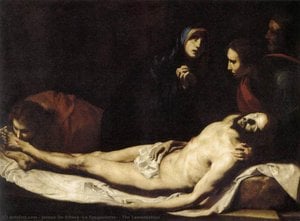
A Study in Shadow and Faith: Jusepe de Ribera’s “Saint Peter and Saint Paul”
Jusepe de Ribera's "Saint Peter and Saint Paul," painted circa 1630, is not merely a portrait; it’s a profound meditation on faith, mortality, and the enduring legacy of two pivotal figures in Christianity. Born in Xàtiva, Spain, in 1591, Jusepe de Ribera, or “Lo Spagnoletto” as he was known, forged a distinctive artistic path marked by dramatic chiaroscuro – an intense contrast between light and dark – and a brutally honest depiction of the human form. His time spent in Naples, under Spanish rule, profoundly shaped his style, imbuing it with a sense of gravitas and a fascination with religious subjects often rendered with unflinching realism.
The painting immediately commands attention through its masterful use of light. Ribera doesn’t shy away from the shadows; instead, he employs them to sculpt the figures, creating an almost sculptural quality. The deep, velvety blacks that envelop Peter and Paul are punctuated by shafts of brilliant illumination, highlighting their faces, hands, and the folds of their garments. This dramatic lighting isn't simply aesthetic; it serves to emphasize the spiritual weight of the scene, suggesting a divine presence casting its gaze upon these two venerable apostles.
The Figures: Dignity in Decay
Ribera’s depiction of Saint Peter and Saint Paul is remarkably unconventional for his time. Rather than presenting them as idealized saints radiating youthful beauty, he portrays them as men nearing the end of their lives – weathered, aged, and bearing the marks of earthly experience. Peter's face is lined with wrinkles, his beard thick and graying; Paul’s features are etched with a quiet sorrow. This deliberate choice to depict aging isn’t meant to diminish their importance but rather to underscore the universality of human suffering and the enduring power of faith in the face of mortality. The figures aren’t presented as triumphant heroes, but as men wrestling with doubt and seeking solace in their shared devotion.
Notice the subtle details: Peter holds a book open before him, suggesting his role as an interpreter of scripture; Paul clutches a scroll, perhaps representing his writings and teachings. Their hands are clasped together, symbolizing unity and fellowship within the Christian community. The posture of both men is one of quiet contemplation, inviting the viewer to join them in their silent dialogue with God.
Baroque Drama and Neapolitan Influence
“Saint Peter and Saint Paul” firmly establishes Ribera’s place within the Baroque movement, a period characterized by dramatic intensity, emotional depth, and an embrace of theatricality. His style was heavily influenced by Caravaggio, with whom he worked in Naples, adopting his signature use of tenebrism – extreme contrasts between light and dark – to create powerful visual effects. However, Ribera’s work possesses a unique character, rooted in the Spanish tradition of religious painting and infused with the gritty realism of life in Naples.
The background is deliberately indistinct, contributing to the overall sense of drama and focusing attention on the central figures. The muted colors – browns, grays, and ochres – further enhance the somber mood of the scene. Ribera’s meticulous attention to detail, particularly in rendering the textures of fabric and skin, adds a remarkable level of realism to the painting.
Symbolism and Spiritual Resonance
Beyond its technical brilliance, “Saint Peter and Saint Paul” is rich in symbolic meaning. The apostles' shared devotion represents the core tenets of Christianity – faith, hope, and charity. Their presence together speaks to the enduring power of community and the importance of mutual support in times of hardship. The painting serves as a poignant reminder that even in old age, faith can offer solace and guidance. It’s a testament to Ribera's ability to capture not just physical likeness but also the profound spiritual essence of his subjects.
Today, “Saint Peter and Saint Paul” remains a powerful and evocative work of art, captivating viewers with its dramatic lighting, realistic portrayal of aging, and enduring message of faith. It’s a piece that invites contemplation and offers a glimpse into the heart of the Baroque era – a time when artists sought to capture not only the beauty of the world but also the complexities of the human spirit.



 Se i rommet
 Bytt til trykkversjon
 Del som digitalt kort
 Del
Del
 Detaljer
 Studentguide

 Last ned
 Liknende objekter
 Røntgen
 Lysbildefremvisning
 Besøksstatistikk


 Les mer